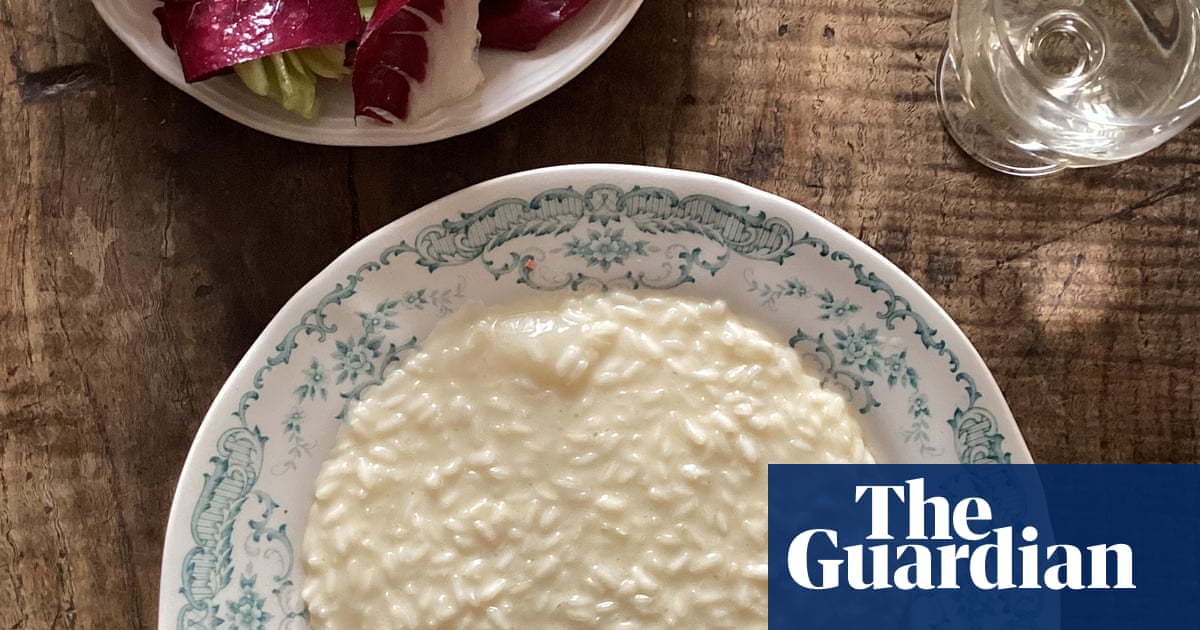
"That functions as a sort of highly flavoured and fatty stock cube that can be added to soups and stews. The best place to keep your precious rinds is in a plastic bag or airtight container in the freezer, which also preserves flavour and stops them drying out, until they're pulled out and added directly to whatever needs a boost, or to make one of the nicest, most delicately flavoured and cheesy broths."
"I know I am not alone in this, and was reassured by a friend from Bergamo, in Lombardy, who told me that, despite having made thousands of risotti, he feels much the same, that every pan is an adventure and personal challenge, and that he wouldn't have it any other way."
"The advice I collected from this version is mostly noisy: the rice should clatter around the pan when you first add it; the alcohol should whoosh as it hits the rice and evaporate significantly before you start adding the broth, which should also bubble noisily when it meets the hot pan."
Grana-type cheeses like Parmigiano Reggiano and Grana Padano are expensive, making it essential to use every part, including rinds. Cheese rinds with attached cheese function as flavorful stock cubes and should be frozen in airtight containers to preserve taste and prevent drying. These rinds can be added directly to soups and stews or used to make delicate cheese broths for risotto. Risotto requires mastering proportions of rice to broth and achieving proper consistency. The cooking process involves auditory cues: rice should clatter when added, alcohol should whoosh and evaporate, broth should bubble vigorously, and the final butter-and-cheese beating should produce a loose slapping sound indicating creamy, porridge-like texture.
Read at www.theguardian.com
Unable to calculate read time
Collection
[
|
...
]