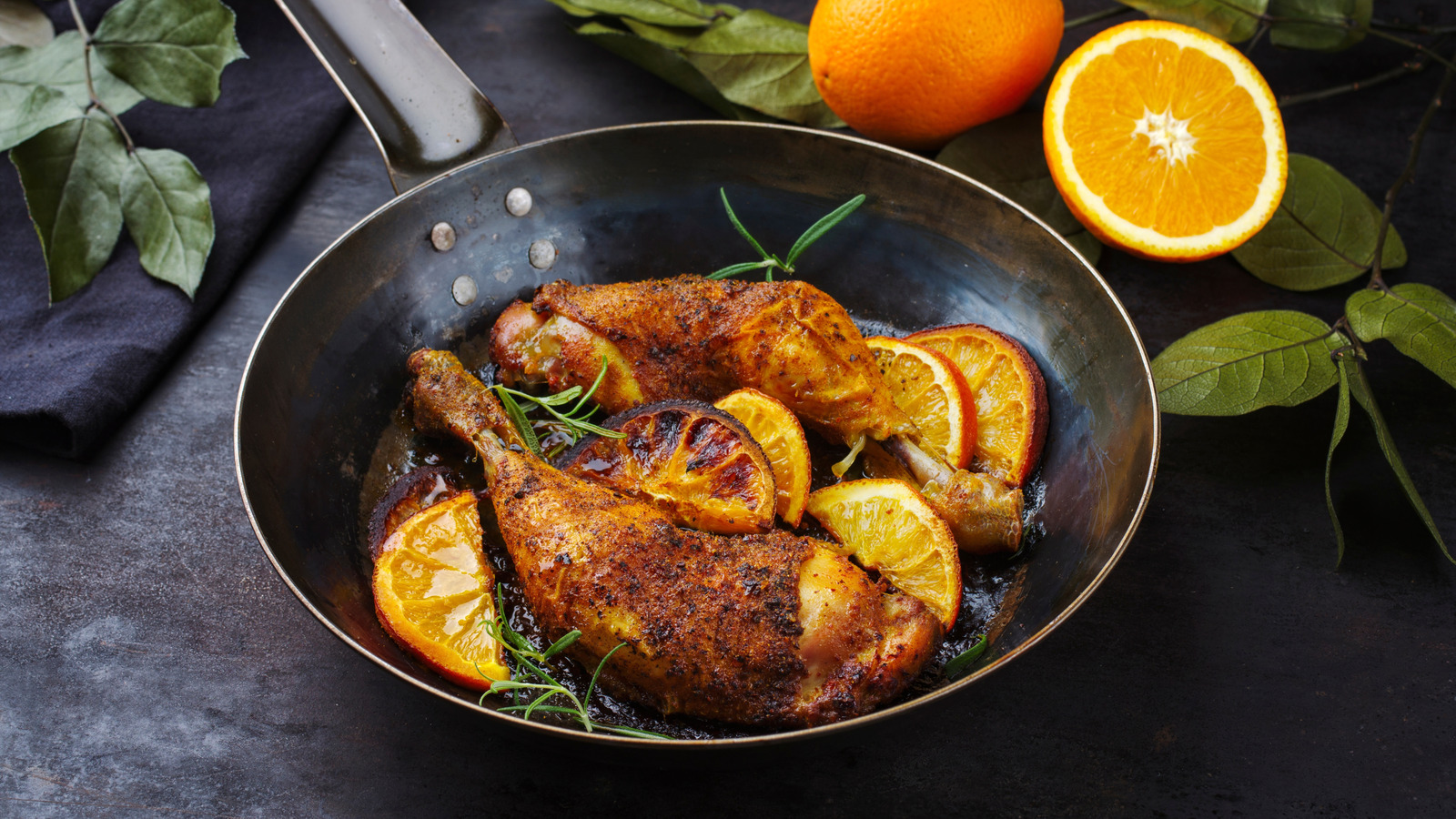
Deglazing with orange juice lifts and dissolves the fond, transforming caramelized bits into a nuanced pan sauce. Orange juice provides natural acidity to loosen the crust and abundant sugars that reduce into a lustrous glaze. The citrus oils bloom with heat, and the initial sour-sweetness softens as it intermingles with browned bits, yielding a cohesive cooked-orange flavor integrated into a savory base. Orange juice is directional rather than neutral, so it works best when the citrus element complements a dish. Vegetables that like caramelization—carrots, onions, fennel—and fatty proteins benefit most from this technique.
"After everything sears up nicely, a layer of caramelized bits sticks to the pan, and if you add liquid while the surface is still hot, you can lift and dissolve those remnants, incorporating them into a nuanced, rich pan sauce. It also makes washing up much easier, which is reason enough. You've probably encountered this technique utilizing wine or broth, which are the traditional go-to deglazing liquids, but hear me out: try it with orange juice."
"Like wine, orange juice has a natural acidity that loosens the crust, which is called the fond. Also like wine, the juice is high in natural sugars, which warm and tighten up, reducing into a lustrous glaze. Additionally, the flavor will round out as it matures; the initial sour-sweetness steps back and intermingles with the burned bits, the result of which is a cohesive, cooked-orange flavor integrated into the savory base that was already forming in the pan."
"You'll want to introduce orange juice deglazing to dishes where the citrusy sweetness won't feel out of place. In the veggie realm, anything that already likes caramelization, like carrots, onions, or fennel, will work especially well. Mushrooms might be weirder, but then again, an OJ pan sauce with dry-sautéed chanterelles and the right amount of butter served over a delicate white fish like turbot could be incredible."
Read at Tasting Table
Unable to calculate read time
Collection
[
|
...
]