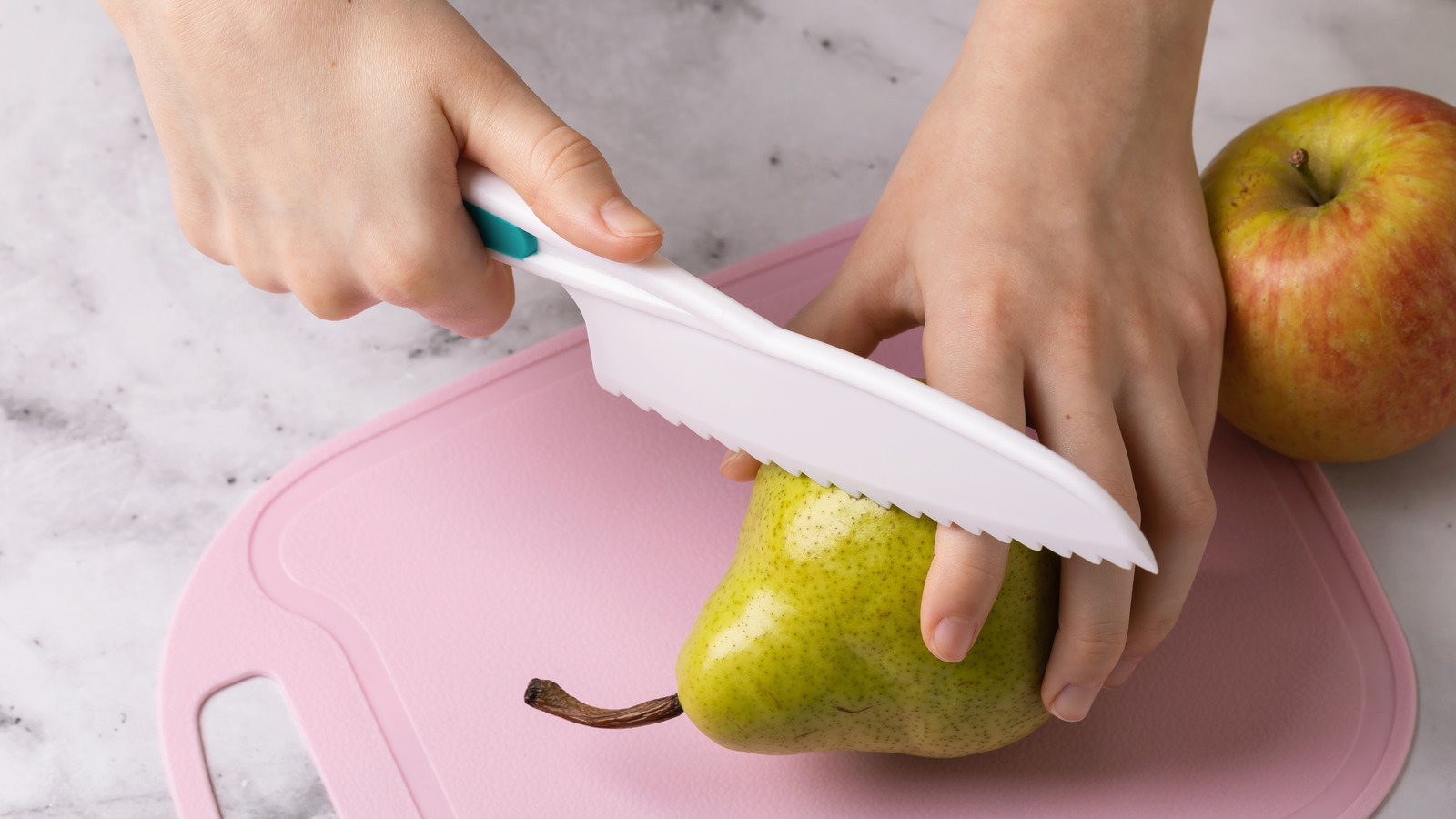
"HDPE is an FDA- and NSF-approved cutting board material. It is rigid, hard, and available in a range of thicknesses, colors, and designs. It is non-porous, which means that it is less likely to harbor dangerous bacteria, absorb odors, or develop stains. HDPE cutting boards are also easier to keep clean, and some are even dishwasher safe up to 200 degrees Fahrenheit. Since they are more resistant to impact, knife damage, and other scratches and gouges, they may last longer."
"LDPE is a softer plastic that is less rigid and more flexible, and also less damaging to knives. It is also non-porous, but it is more susceptible to scratches and damage, and can melt or get warped in high heat. For that reason, it's best used for short-term or light tasks. LDPE boards are also great for transferring chopped vegetables to a pot or pan on the stove, or for using a color-coding system to keep raw meat separate from other ingredients you're preparing."
HDPE (high-density polyethylene) cutting boards are rigid, hard, non-porous, FDA- and NSF-approved, available in various thicknesses and colors, and resistant to impact, knife damage, stains, and odors. Many HDPE boards are dishwasher-safe up to 200°F and endure heavy daily use. LDPE (low-density polyethylene) boards are softer, more flexible, and gentler on knives but are more susceptible to scratches, gouges, warping, and melting under high heat, making them better for short-term or light tasks and for transferring chopped ingredients or color-coding. Plastic boards can develop deep gouges that harbor bacteria and may transfer microplastics.
Read at Tasting Table
Unable to calculate read time
Collection
[
|
...
]