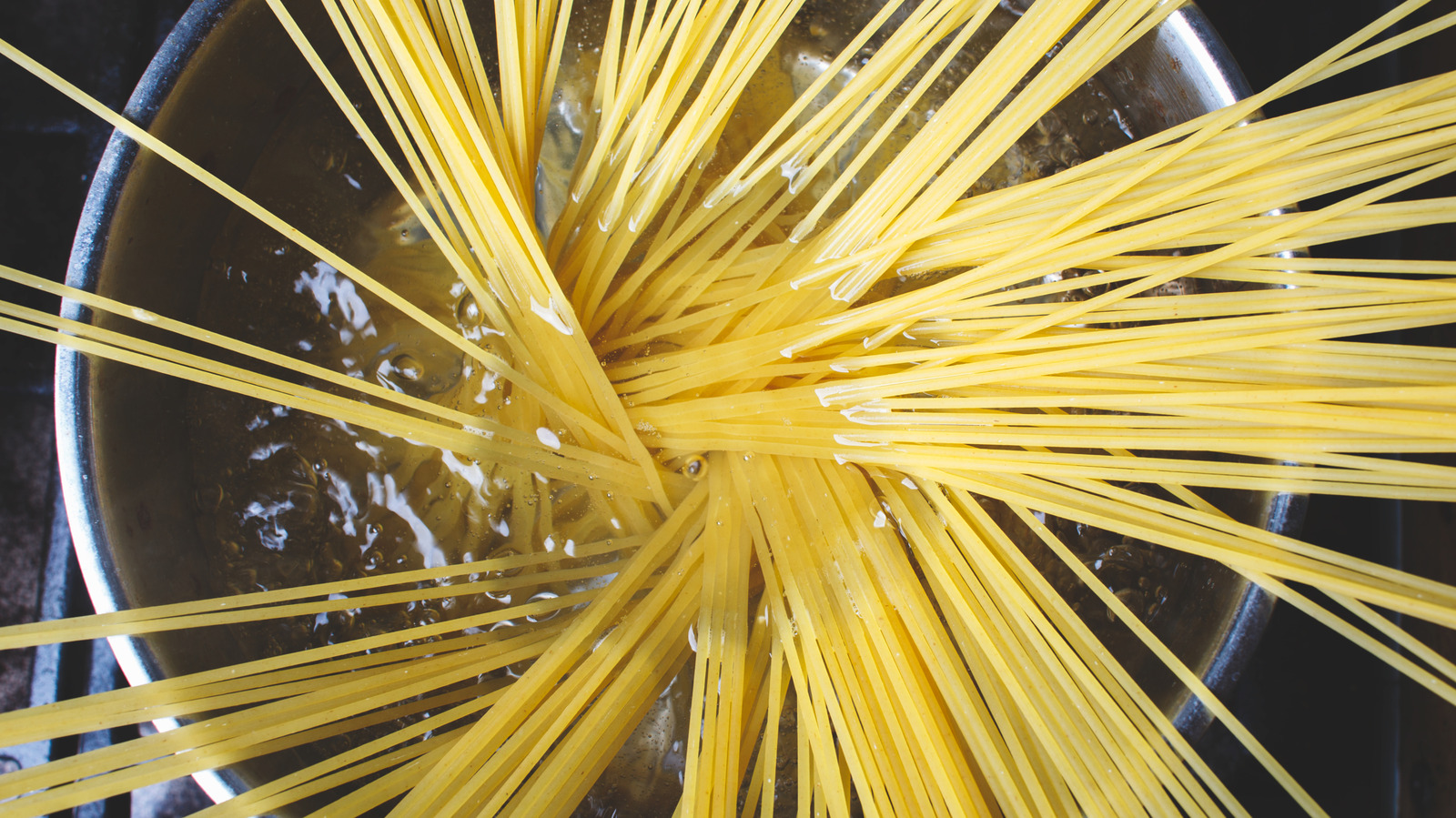
Cooking pasta directly in sauce produces deeply infused, flavorful noodles while releasing starch into the sauce to create a creamier texture. Combining sauce with broth or water and simmering the pasta in that mixture yields tender, al dente results across many pasta shapes. The method reduces the need for large pots of water and preserves starchy liquid for adjusting sauce consistency. Using roughly 3 to 4 cups of sauce and an equal amount of liquid per pound of pasta provides enough moisture for even cooking. The approach also minimizes cleanup by using a single pan.
"I've been a food writer for almost 30 years, so you can imagine how many times I've cooked spaghetti. Let's assume I've prepared pasta once per week - and I can assure you, I don't relegate pasta to once per week, I'm Italian - that equates to more than 1,560 instances. Over the last three decades, I've tried countless techniques for cooking the long, twisty noodles: I've boiled the strands in salted, unsalted, and olive oil-spiked water; I've gone old school and filled the pot with plain water; I've tried newer recommendations that suggest reducing how much water your put in your pasta pot so much that it barely covers the pasta; and I've also dabbled with the cold start method of cooking."
"All the cooking methods above worked just fine - the pasta was always al dente and the starchy pasta water was nice to have on hand in case I wanted to stretch or loosen my sauce. But I found a completely different technique that worked much better: cooking my spaghetti directly in the sauce. It's practically the only way I cook my pasta now, yielding perfectly tender and ultra-flavorful pasta every time, with just one pan to clean."
"Rather than water, I cook my pasta directly in the sauce, whatever sauce or pasta noodle that may be. Cooking spaghetti in pasta sauce infuses each noodle with deep, rich flavor. Pasta releases starch as it cooks, so the sauce becomes extra creamy and luxurious. I've used this method with every conceivable pasta shape, from long, thin strands to wide ribbons, twists, tubes, elbows, bowties, and wagon wheels. Not surprisingly, it also works with soup pastas too."
Read at Tasting Table
Unable to calculate read time
Collection
[
|
...
]