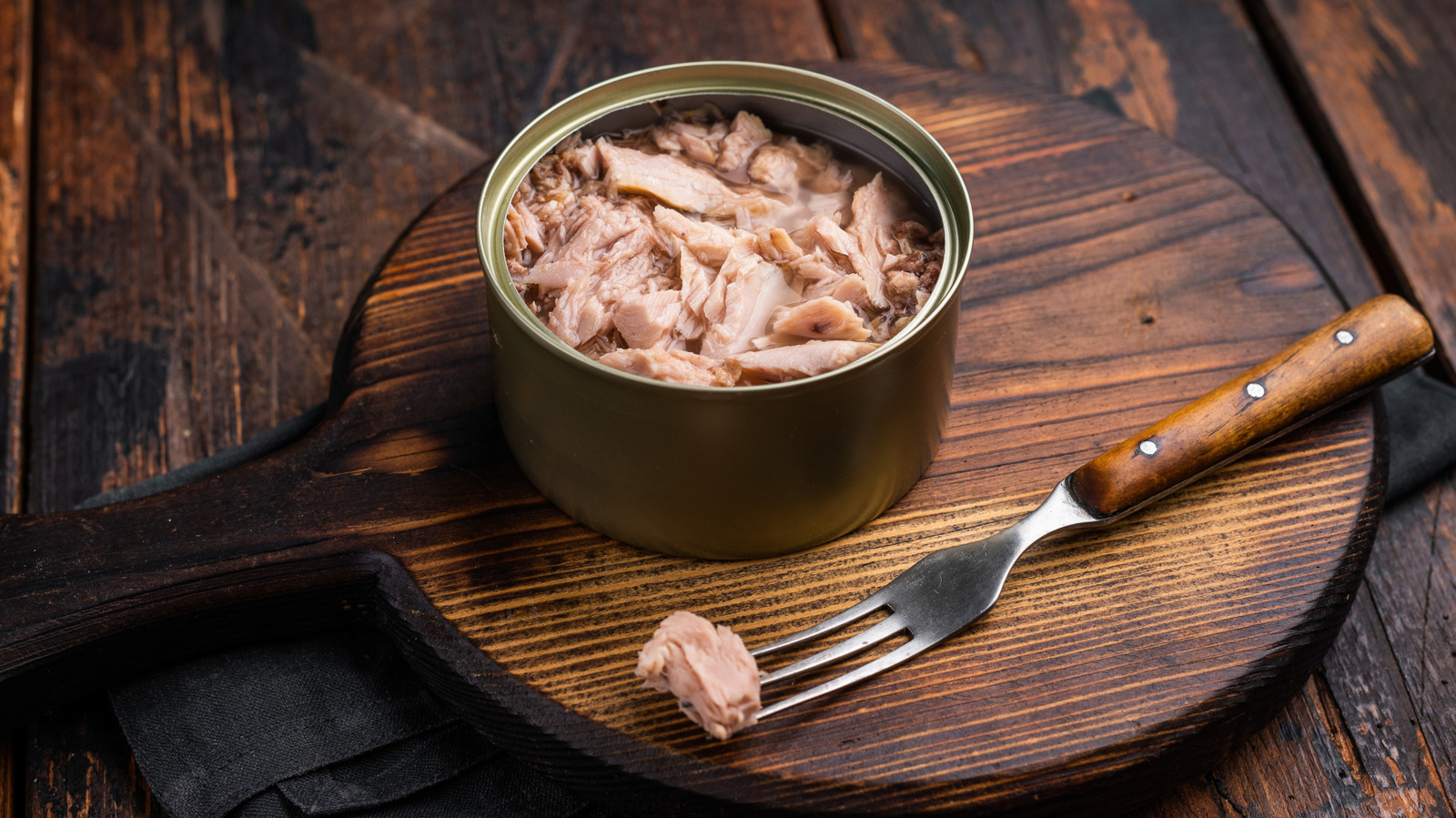
Sealed canned tuna remains safe for up to five years, but once opened spoilage begins and refrigerated leftovers should be consumed within three to four days. Exposure to air accelerates bacterial growth and quality deterioration, so transferring tuna to a plastic or glass airtight container, labeling it, and refrigerating immediately prevents contamination and odor absorption. Freezing drained tuna extends shelf life to about three months, though freezing and thawing can alter texture. To improve dry or lackluster tuna, incorporate it into sauce-based dishes, cheesy melts, or creamy casseroles to add moisture and revitalize flavor.
"Cracking that lid, the tuna is instantly exposed to air, and spoilage begins. Because of this, four days is the best possible scenario, but it's not a guarantee. Learning how you should really be storing tuna is a must. For instance, failing to transfer leftovers to an airtight container is a cardinal sin. Half-peeled lids are a nightmare for contamination, premature spoilage, and exposure to odors that sabotage your tuna's flavor. Instead, find a plastic or glass container, add a label, and refrigerate immediately"
"That countdown isn't just ticking towards expiration, but flavor and textural degradation. Facing a mediocre can of tuna, it's hard to imagine recipes capable of breathing life into this now-lackluster ingredient. Luckily, there are a few tricks to try. Tuna is notorious for drying out, which is why airtight containers are vital for preventing excessive moisture loss. However, sauce-based dishes can loosen things up, adding a much-needed dash of liquid to dry-feeling flakes."
Read at Tasting Table
Unable to calculate read time
Collection
[
|
...
]