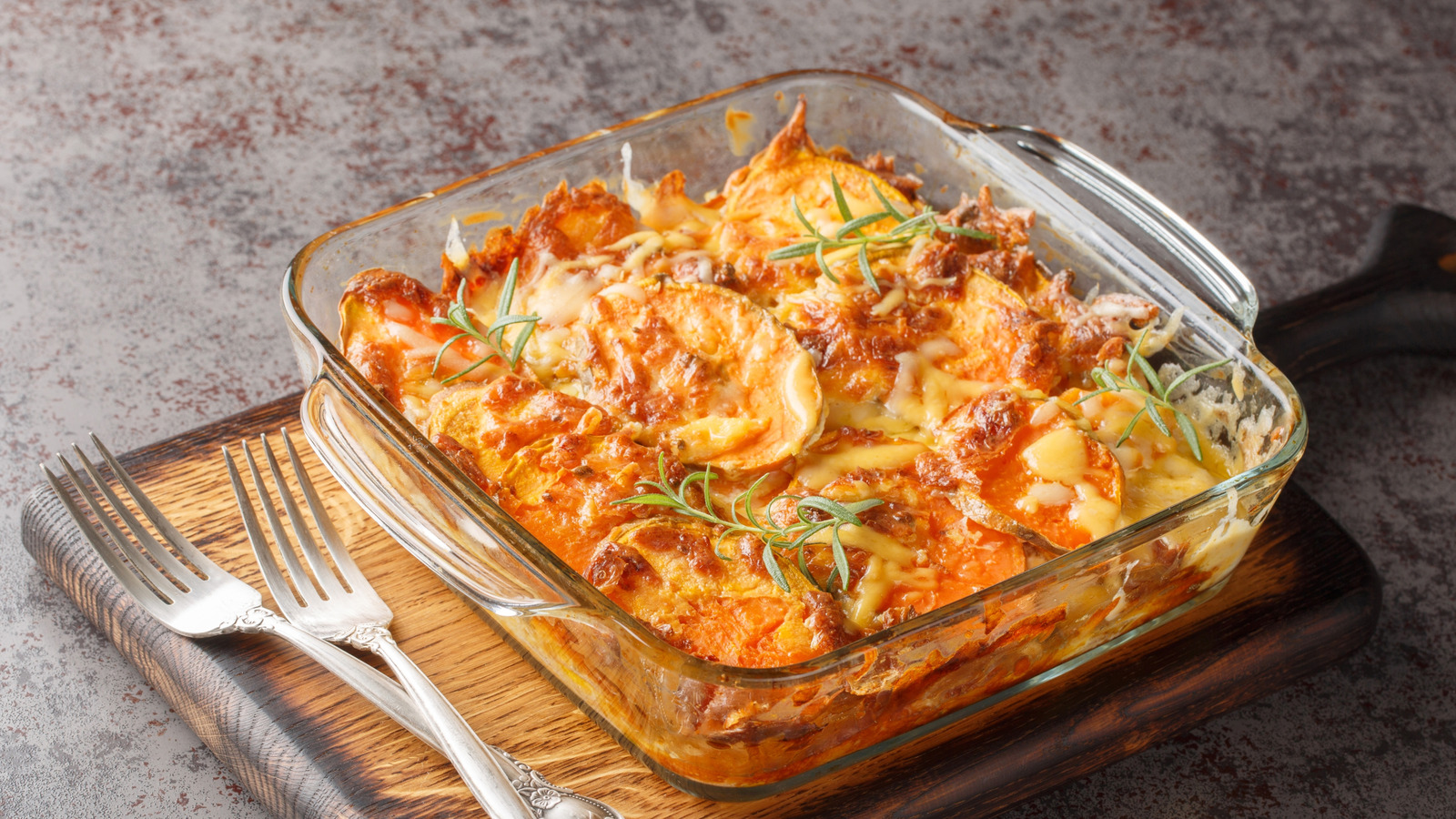
"While you might think that as long as your dish is labeled as oven-safe, you're good to go. Knowing when to choose metal or glass pans really does make a difference. It's not that one is better than the other, but each has its strengths and weaknesses. A couple of things glass shouldn't be used for are broiled dishes and baked sweets."
"In general, glass dishes are great for things like casseroles. They're slow to heat up, but keep things warmer for longer when they come out of the oven. They're also non-reactive, so if you're working with acidic foods such as tomato, reach for glass. Glass does have its downsides, however. It's not great for browning or cooking at very high temperatures, which limits what you can make in it. Here are some foods you should avoid cooking in glass dishes."
"We're getting this one out of the way first, as it will probably come as a surprise to many people. Even if your glass dish is labeled oven safe, it's not designed to withstand very high temperatures. The maximum temperature a glass dish can withstand varies by manufacturer but is often around 425 degrees Fahrenheit. Broilers typically operate at over 500 degrees Fahrenheit, so don't use that Pyrex dish for broiling, as it could shatter."
Glass bakeware suits casseroles and acidic foods because it is non-reactive, retains heat longer, and warms slowly. Glass struggles with browning and performing at very high temperatures, which constrains its use for recipes that require crisping or intense direct heat. Typical glass cookware tolerances often top out around 425°F, while broilers and grills exceed 500°F and deliver direct radiant heat. Rapid temperature changes and direct broiler heat can cause glass to shatter. Metal pans brown better, withstand higher temperatures, and better handle broiling and quick, high-heat applications.
Read at Tasting Table
Unable to calculate read time
Collection
[
|
...
]