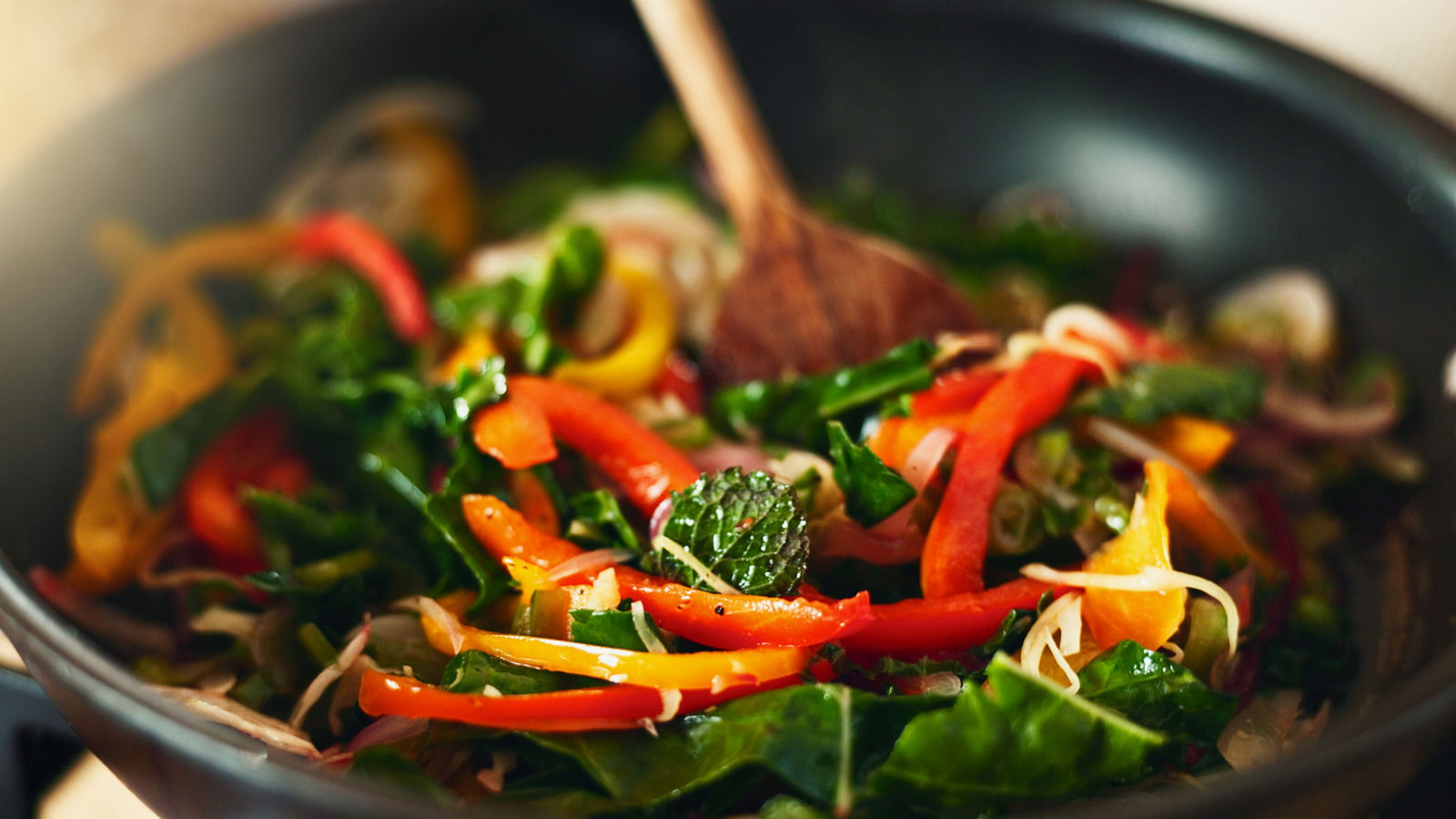
Stir-fry requires technique despite appearing quick and flexible. Common failures include mushy vegetables, underseasoned proteins, and inconsistent textures. Varied textures matter because all ingredients cook together in one pan. Beginners should follow recipes to learn ingredient selections and avoid overly liquid sauces or excessive sodium. Proper pan temperature is critical; start with a thoroughly preheated pan and use high heat to achieve the characteristic sizzle. A wok typically needs three to five minutes to reach medium-high heat. Flicking a tiny bit of water into the pan tests readiness. Adding ingredients too early can cause sticking and prevent proper seasoning.
"Although stir-fry has the appearance of a quick and easy, clean-out-the-fridge weeknight dinner, a quality stir-fry requires technique. This doesn't mean it will necessarily take longer, or that you can't use what you have on hand; however, it's essential to follow a few guidelines if you're hoping for a good outcome. Notable stir-fry flops include mushy veggies, underseasoned proteins, and a lack of consistency."
"If you're new to the stir-fry game, follow a few stir-fry recipes to get your toes wet. This will make selecting vegetables and proteins a no-brainer, and you won't find your ingredients drowning in a liquidy sauce or overpowered by sodium. Once you get your footing, remember the mistakes everyone makes with stir-fry so that you can avoid them before they become a habit."
"You cannot start with a cold pan, and you cannot stick to a low or medium level of heat. If you're not hearing that iconic sizzle the moment your aromatics hit the pan, then it's just not hot enough. This might mean a lengthy pre-heating process, depending on the type of pan you're using - although a wok should only take between three and five minutes to reach full medium-high heat."
Read at Tasting Table
Unable to calculate read time
Collection
[
|
...
]