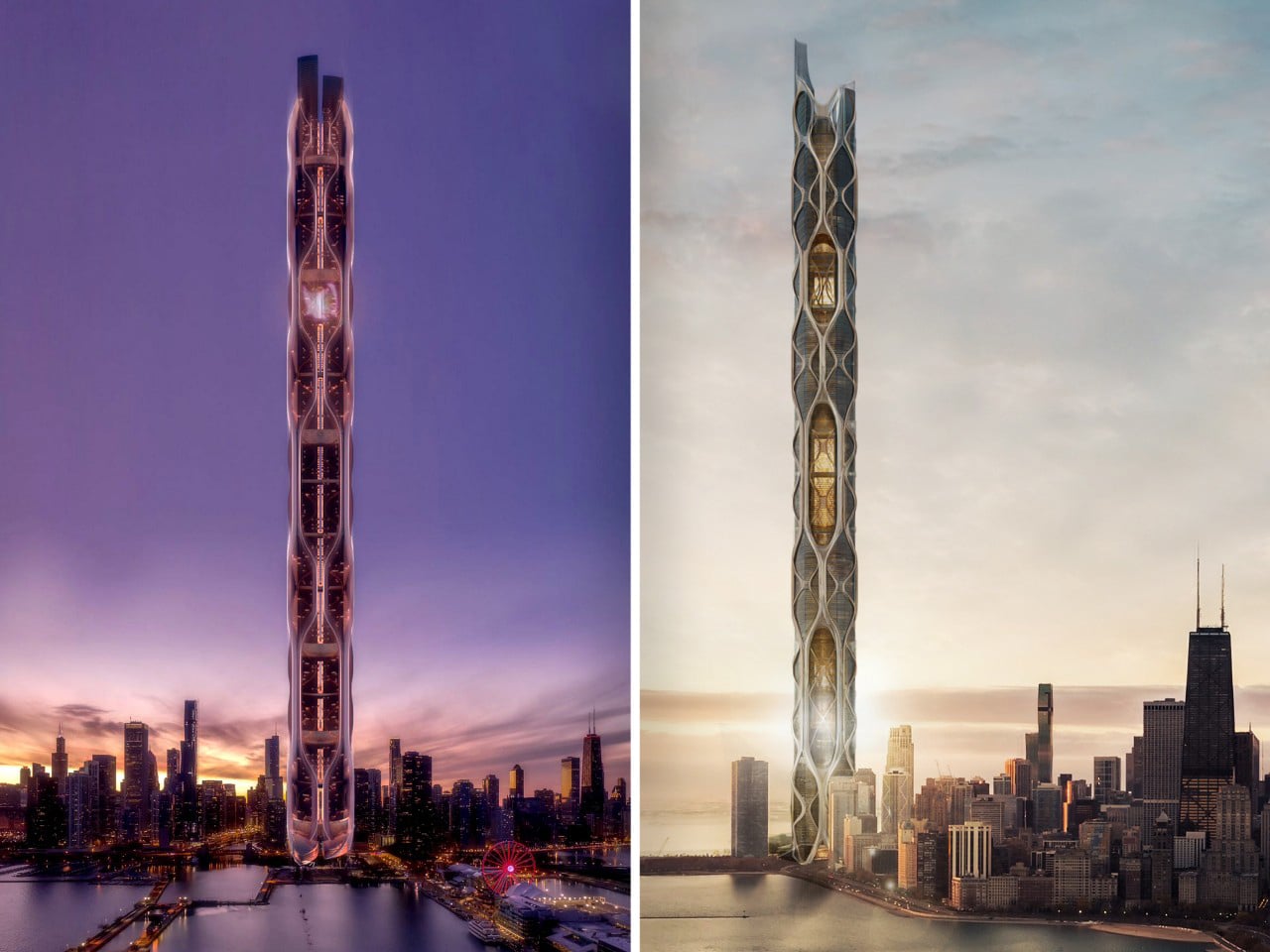
Chicago faces pervasive food deserts in low-income neighborhoods where grocery access is scarce, fresh produce is limited, and fast food fills nutritional gaps. The proposed skyscraper integrates vertical farming into its core, enabling local production of fresh food within the building and reducing transportation-related emissions. The tower harvests rainwater and adopts an organic, water-droplet-inspired form that extends green infrastructure vertically. Mixed-use programming combines residential units with commercial and community spaces, creating a self-sustaining urban ecosystem that supplies nearby communities, improves food access, and addresses health and socioeconomic inequities through architectural intervention.
"Imagine standing in Chicago, looking up at a skyline that does not just symbolize power and progress, but nourishment. A skyline where fresh lettuce grows a few floors above your head, rainwater is harvested from the clouds, and the architecture itself works quietly to heal long standing urban inequities. This project dares to ask a radical question. What if skyscrapers did not just house people, but fed them?"
"At the heart of this proposal lies a deeply human problem. Food deserts. Across Chicago, many low income neighborhoods struggle to access affordable, nutritious food. Grocery stores are scarce, fresh produce is often out of reach, and fast food becomes the default not by choice, but by circumstance. These conditions have fueled health disparities and reinforced socio economic divides for decades. Rather than treating this as a policy issue alone, the project reframes it as an architectural opportunity."
"Programmatically, the tower integrates vertical farming directly into its core, transforming food production into an essential urban utility. Instead of transporting produce from distant rural farms, food is grown locally within the city, within the building, and within reach. The skyscraper becomes a self sustaining ecosystem, drastically reducing carbon footprints while restoring food access to the communities that need it most."
Read at Yanko Design - Modern Industrial Design News
Unable to calculate read time
Collection
[
|
...
]