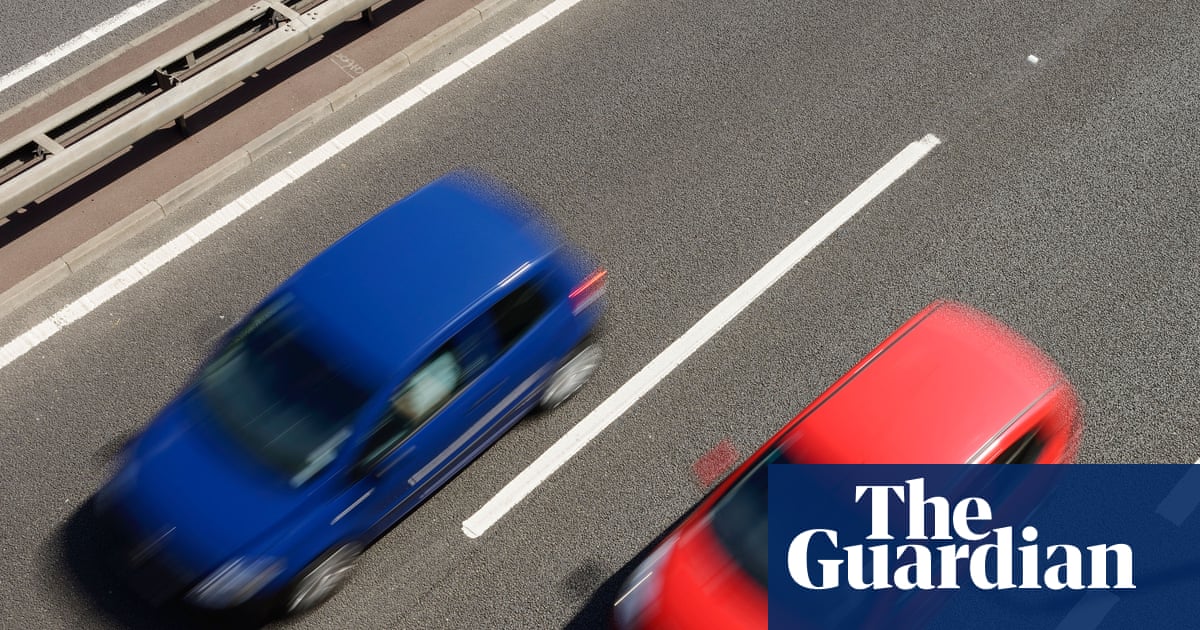
"Dr. Conor Boland's research reveals that as two cars traveling at different speeds approach a traffic light, the spacing can either increase, stay the same, decrease, or be lost, depending on various factors. The results indicate that, on average, the lead of one car over another remains unchanged after the light, challenging the perception that slower cars inevitably catch up."
"The study suggests that the idea of the slower car catching up at traffic lights is an illusion, as the average gains and losses in spacing between cars balance out. This phenomenon is influenced by human perception, particularly when encounters follow an attempted separation or avoidance."
Dr. Conor Boland's research, termed The Voorhees law of traffic, uses mathematics to explain why faster cars often find slower cars behind them at red lights. The study shows that the spacing between two cars can either increase, stay the same, decrease, or be lost, depending on traffic light cycles and car speeds. On average, the lead of one car over another remains unchanged after a traffic light, suggesting that the perception of the slower car catching up is an illusion influenced by human perception of recurrent encounters.
Read at www.theguardian.com
Unable to calculate read time
Collection
[
|
...
]