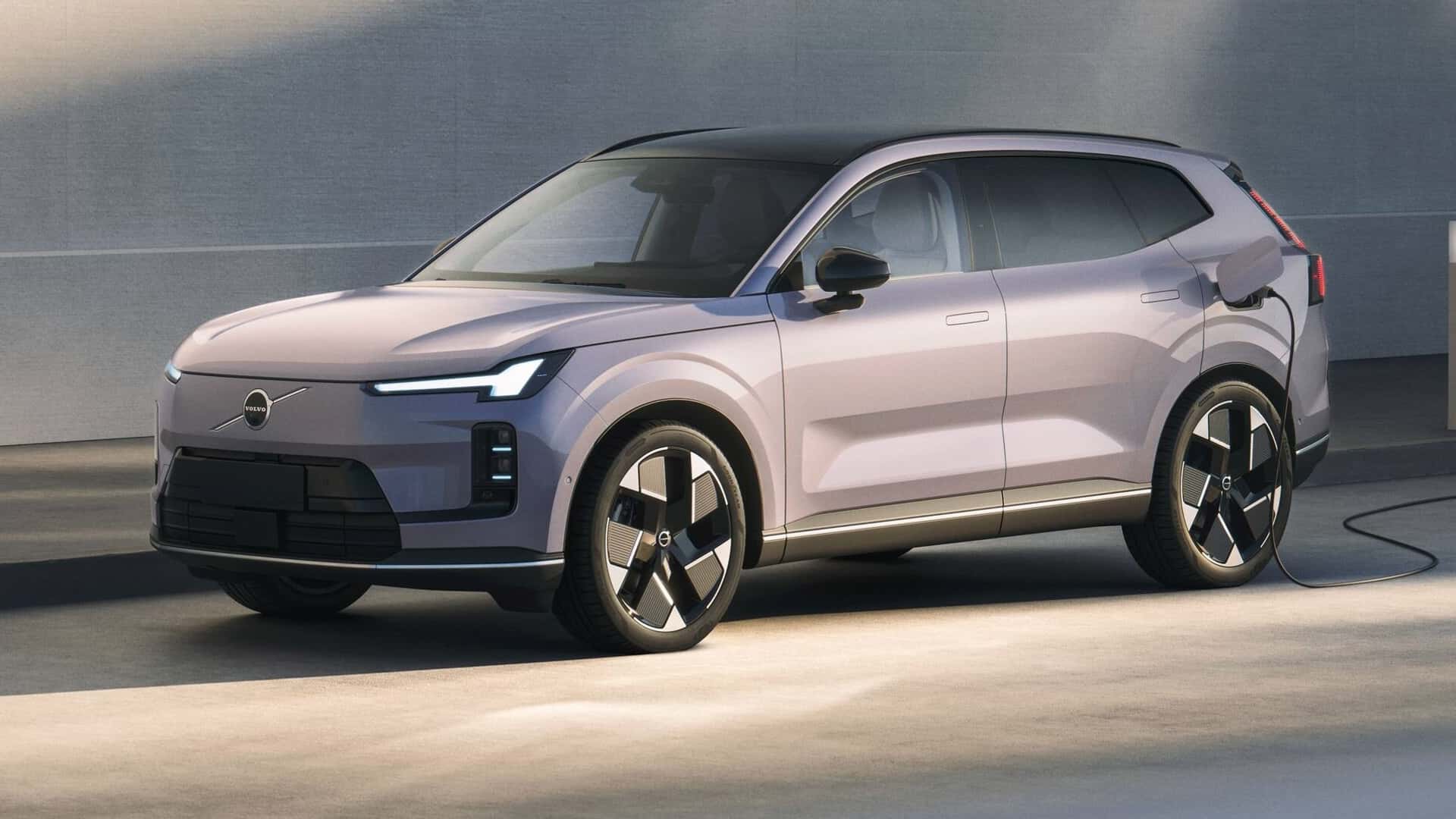
Current plug-in hybrids largely remain combustion cars with small batteries that enable quiet urban driving but provide limited fuel-economy benefits. Many present-generation PHEVs engage the gasoline engine during hard acceleration and highway cruising, causing delays, jerkiness, and lack of EV-like smoothness. Next-generation Volvo plug-ins will target roughly 100 miles of electric-only range and deliver sufficient electric power so the gasoline engine is seldom needed for everyday mobility. The new models aim to feel more like true electric vehicles in acceleration and refinement while remaining technically plug-in hybrids rather than extended-range electric vehicles.
"So it may surprise you to hear how unimpressed CEO Hakan Samuelsson is with the current version of the technology. So far, it's really a combustion car that you added some small battery to be able to drive in cities quietly, but it's not doing much for economy, Samuelsson told reporters at the launch of the all-electric EX60 this week. That's why Volvo's next-generation plug-ins are going to feel a lot less like overcomplicated gas cars and a lot more like EVs."
"Samuelsson is right: Today's PHEVs are almost all adapted from gasoline cars, and you can tell. Many don't drive like EVs under all conditions, with the gas engine kicking on during hard acceleration and highway cruising. And because there's a delay in between putting your foot down and the car acceleratingas the engine has to fire, engage the correct gear or ratio, and rev upthey are sometimes jerkier than conventional gas cars, and nowhere near as smooth as a proper EV"
Read at insideevs.com
Unable to calculate read time
Collection
[
|
...
]