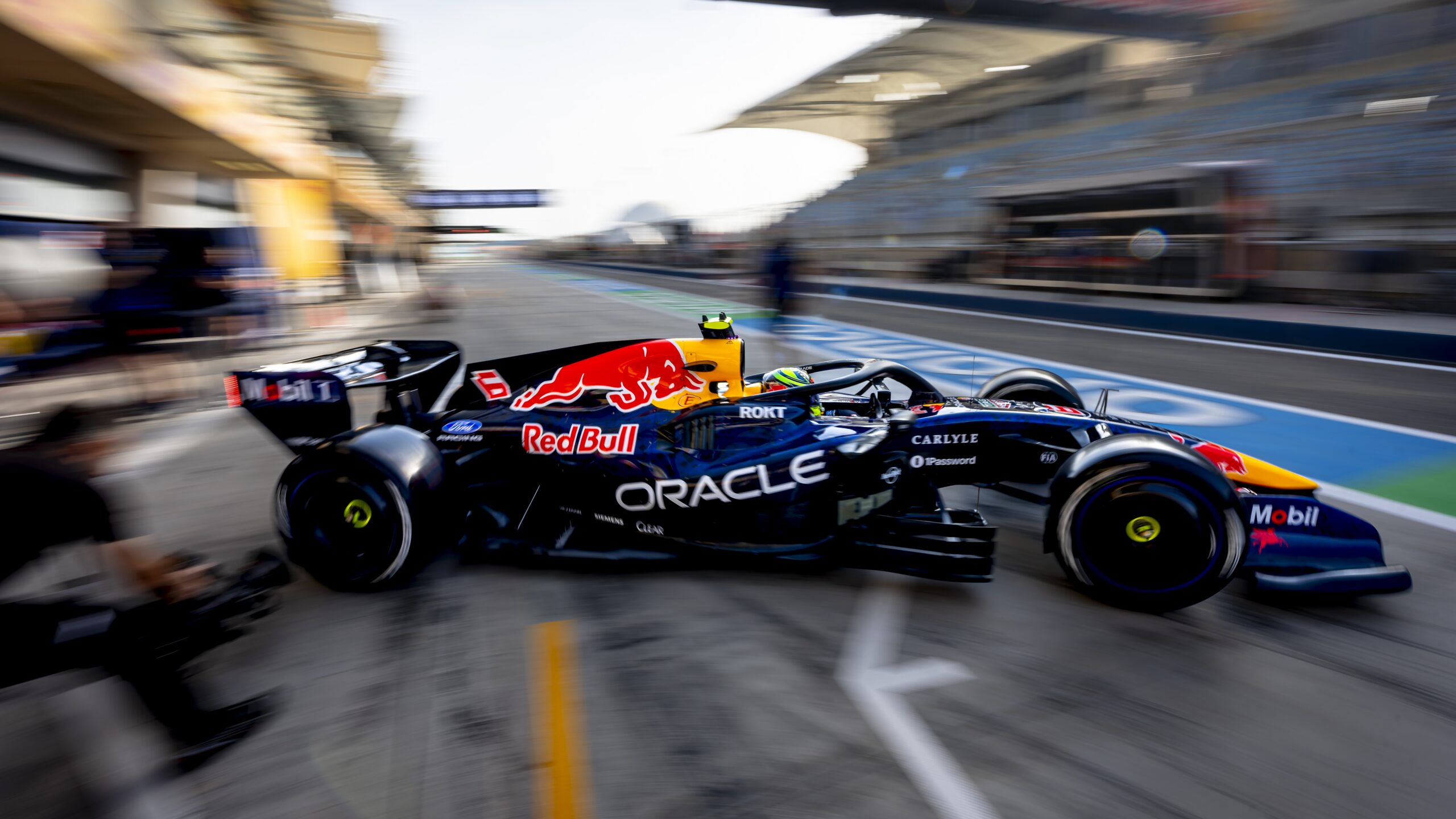
"You shouldn't read too much into times from preseason testing. The cars don't have to conform to the in-season rules as teams test new components or fit-test rigs; for example, glowing brake discs could once again be seen on some cars that weren't running wheel covers at an earlier test, something we're unlikely to see during actual races. You also don't know how much fuel-and therefore extra weight-anyone is carrying."
"After 12 years of using the same hybrid power units, the sport has moved to an all-new design. The internal combustion engine is still a turbocharged 1.6 L V6, but that turbocharger no longer features the MGU-H hybrid system that both captured waste energy from the spinning turbine and also eliminated turbo lag. The remaining hybrid system-the MGU-K that harvests and deploys energy from and to the rear wheels-is much more powerful than before and is paired with a 4 Mj (1.1 kWh) battery pack."
F1 teams conduct a final preseason test in Bahrain two weeks before the Australian season opener, using the sessions to evaluate new components and setups under non-race conditions. Testing lap times offer limited insight because teams run non-conforming parts, fit-test rigs, and vary fuel loads and run plans to learn car behavior. Some teams have previously run very light to achieve impressive times. The 2026 regulations introduce major technical changes: the MGU-H is removed, the MGU-K is significantly more powerful, and a 4 MJ (1.1 kWh) battery pack is added, with the V6 providing 400 kW and the MGU-K about 350 kW.
Read at Ars Technica
Unable to calculate read time
Collection
[
|
...
]