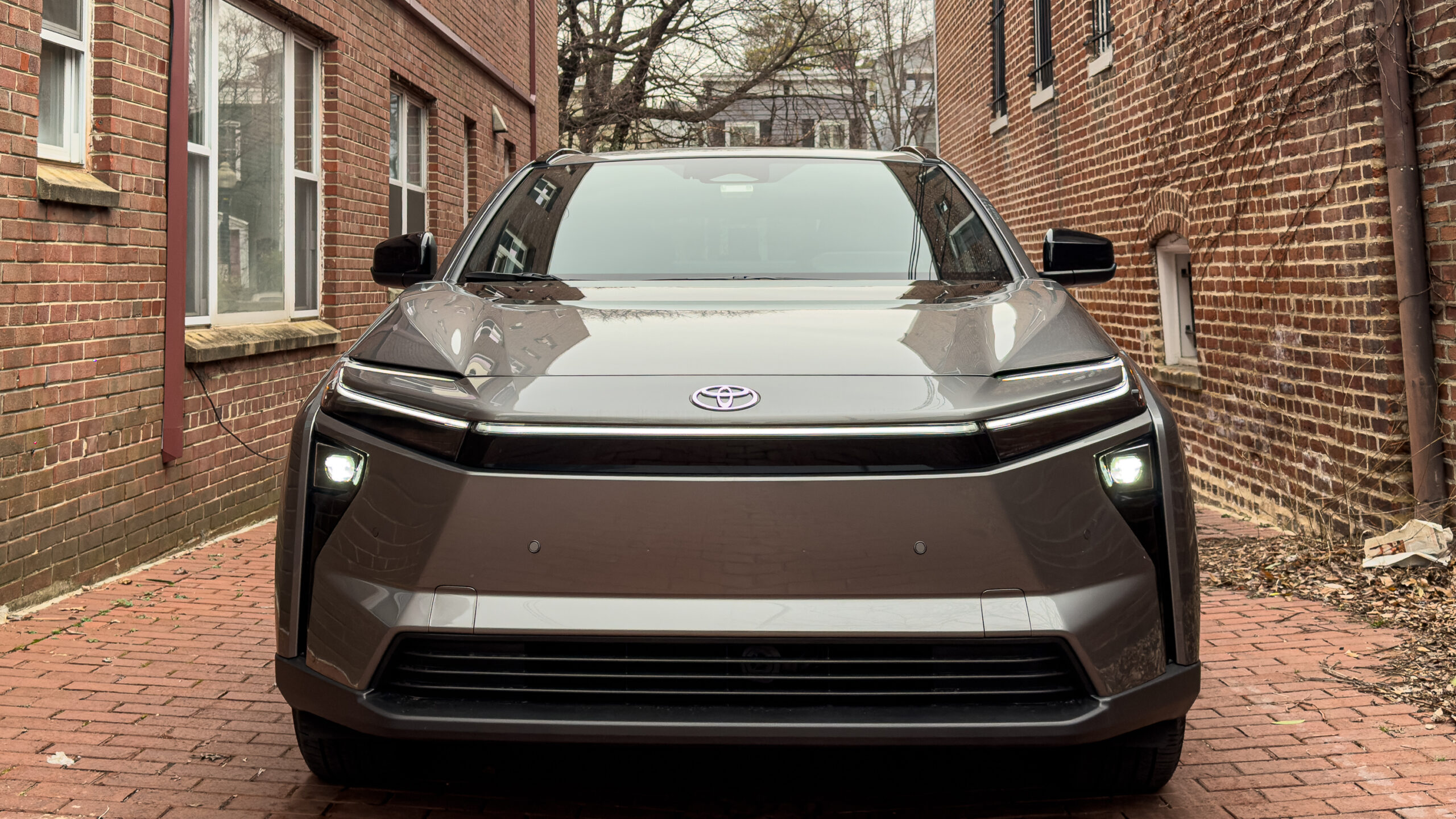
"Toyota didn't get to be the world's largest automaker by being completely blind to feedback, and last year, it gave its EV platform (called -TNGA and shared with Lexus and Subaru) a bit of a spiff-up. To start, it simplified the name-the small electric SUV is now just called the bZ. It uses a new 74.7 kWh battery pack, available with either front- or all-wheel drive powertrains that now use silicon carbide power electronics."
"Our test bZ was the $37,900 XLE FWD Plus, which has the most range of any bZ at 314 miles (505 km) according to the EPA test cycle. When you realize that the pre-facelift version managed just 252 miles (405 km) with 71.4 kWh onboard, the scale of the improvement becomes clear."
"While I might have liked that Lexus interior and some of its mod cons like ventilated seats, the Toyota is a much better EV despite having fewer frills. With 221 hp (165 kW) going to the front tires and 4,156 lbs (1,885 kg) to move, the XLE FWD Plus is not speedy."
Toyota has refined its bZ electric SUV platform, addressing initial shortcomings of the bZ4x. The updated bZ features a 74.7 kWh battery pack offering 314 miles of EPA-estimated range, a substantial improvement over the previous 252-mile capability. The vehicle now includes silicon carbide power electronics and offers front- or all-wheel-drive options. For North American markets, Toyota replaced the CCS1 charging port with a Tesla-style NACS socket. The $37,900 XLE FWD Plus model delivers 221 horsepower with adequate torque for daily driving, achieving 0-60 mph in eight seconds. While less luxurious than its Lexus counterpart, the bZ provides superior EV performance and practicality.
Read at Ars Technica
Unable to calculate read time
Collection
[
|
...
]