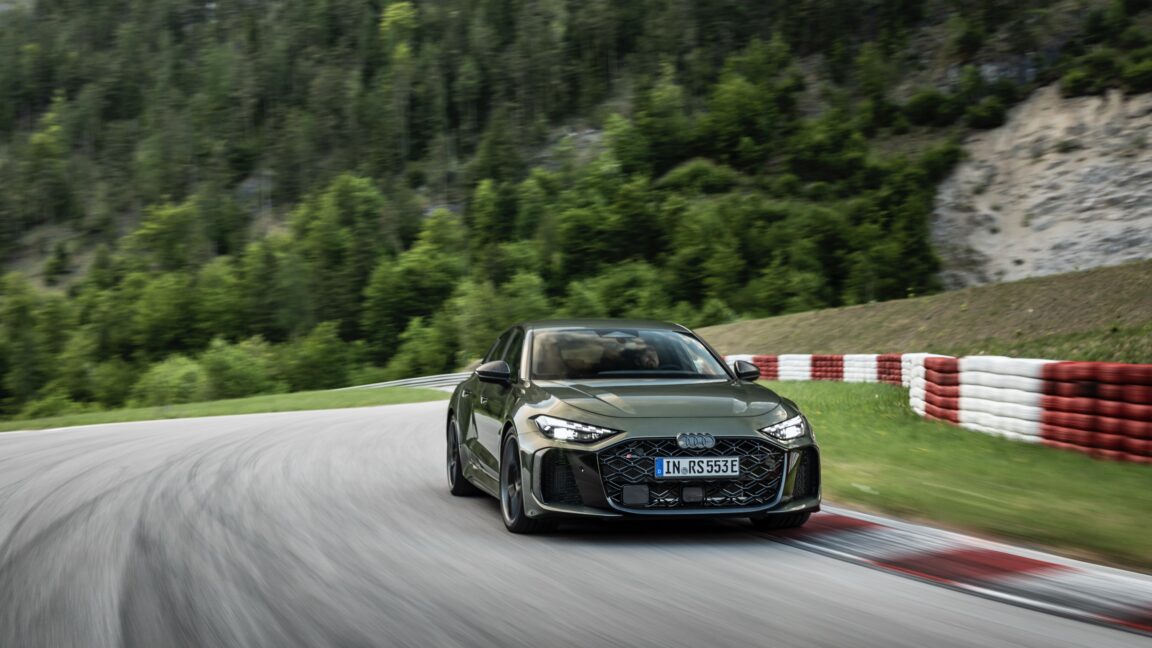
The RS5 PHEV uses a chassis shared with the A5, while most body panels are RS5-specific except the hood. The exterior features wider aggressive wheel arch blisters, large front air intakes, and rear oval exhaust pipes integrated into a diffuser. Rear OLED tail lights use a checkered flag pattern. Power comes from a new 2.9-liter hot-vee V6 with variable geometry turbochargers, paired with an electric motor. Audi Sport leverages a high-voltage electrical system alongside the internal combustion engine to unlock plug-in hybrid performance potential. A new electric torque-vectoring rear differential manages drive distribution for improved handling.
"Audi may have built a reputation for technology over the years, either pioneering or early-adopting things like all-wheel drive, direct-injection engines, and so on. But it's also true that along the way it has earned a bit of a reputation for cars that look good inside and out but maybe aren't the most exciting things on four wheels. Not so for the models reworked by Audi Sport, the company's motorsports division, which now also spends its time building the company's new Formula 1 power units."
"The underlying chassis of the new RS5 is shared with the A5 that we first drove last summer, but the only common body panels between the lesser A5 and this car is the hood; everything else is RS5-specific. Aggressive wheel arch blisters add more than 3.5 inches (90 mm) of width compared to the A5, and massive air intakes dominate the front fascia. At the rear, a pair of large oval exhaust pipes are set into a diffuser."
"And like those latest F1 cars, its newest RS5 road car also marries together a turbocharged V6 and an electric motor. How convenient. Audi's lineup has been pretty sparse when it comes to plug-in hybrids, but Audi Sport decided that there were some tantalizing possibilities to unlock were it to leverage a high-voltage electrical system alongside a powerful internal combustion engine."
"The car looks good-although not as good as the RS5 Avant station wagon that we aren't getting-but it's what's under the aluminum and carbon-fiber bodywork that's more interesting. The internal combustion engine shares the same 2.9 L capacity as the previous RS5 but is all-new. It uses a pair of variable geometry turbochargers in a hot-vee configuration."
Read at Ars Technica
Unable to calculate read time
Collection
[
|
...
]