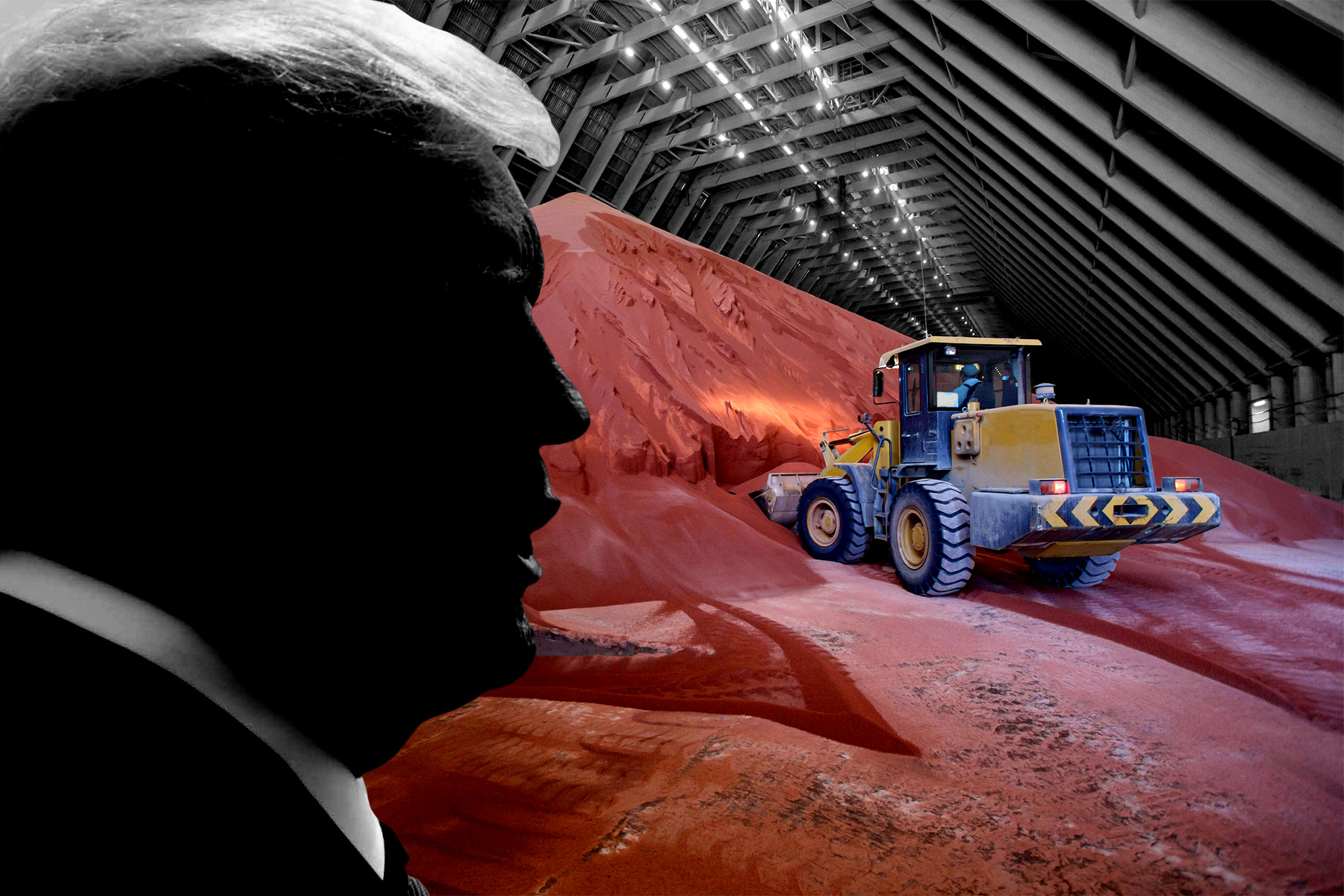
"The agreement committed the Belarusian government to releasing 123 political prisoners, a significant concession from one of Europe's most entrenched authoritarian regimes. In return, Washington agreed to lift sanctions on Belarus's potash exports-sanctions it escalated after the country's rigged 2020 election and later expanded, in 2022, when Belarus allowed Russia to use its territory to invade Ukraine."
"The United States can live without many imports. It can't farm at scale without our potash. In 2024, the US imported about 12 million tonnes of the fertilizer from Canada, all of it dug from Saskatchewan, where it enters the US tariff-free under the Canada-United States-Mexico Agreement (CUSMA)."
"Potash is an interesting commodity. It rarely gets talked about in public but seems just as geopolitically important as oil or microchips. I'd argue it's even more important. Along with nitrogen and phosphorus, potash is one of three main nutrients needed to grow food."
In December 2025, the Trump administration secured a deal with Belarus to release 123 political prisoners while lifting sanctions on Belarus's potash exports. This move addresses critical US agricultural vulnerabilities, as potash is essential for large-scale farming. The United States currently imports approximately 12 million tonnes of potash annually from Canada, sourced entirely from Saskatchewan under tariff-free terms via CUSMA. With CUSMA facing renegotiation in summer 2025, Washington seeks alternative potash sources to strengthen its negotiating position. Reopening Belarusian potash exports provides crucial leverage and reduces dependency on a single supplier. Potash, alongside nitrogen and phosphorus, represents one of three primary nutrients required for food production globally, making it geopolitically significant comparable to oil and microchips.
Read at The Walrus
Unable to calculate read time
Collection
[
|
...
]