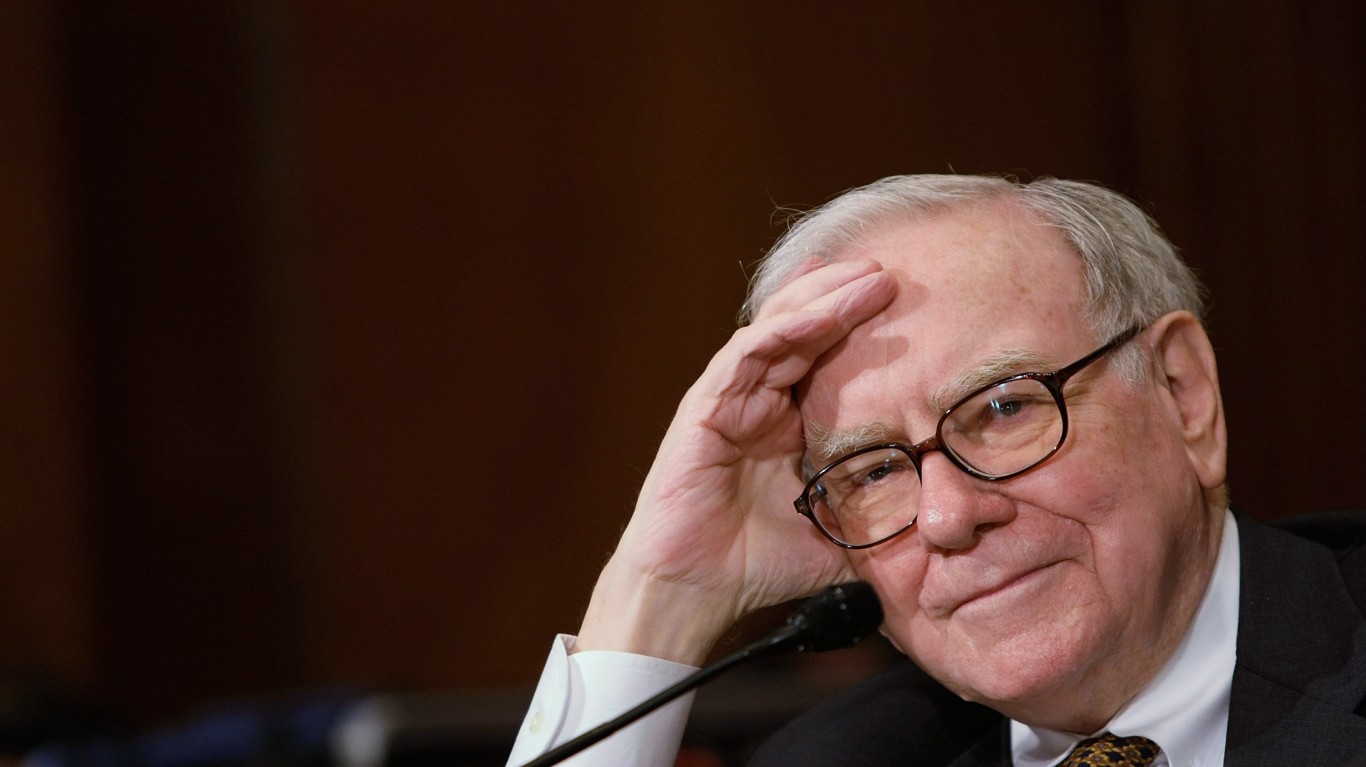
Berkshire Hathaway has produced an exceptional long-run record, with very high compound annual growth and a vastly larger cumulative return than the S&P 500 proxy. Over the same period, the S&P 500 compounded at a lower rate but still delivered strong results with dividends reinvested. Despite Berkshire’s success, most investors are advised to buy the market rather than attempt to replicate that performance. A long-term pattern shows that a large majority of active managers underperform over extended horizons. The underperformance is attributed to fees compounding against investors, turnover creating tax drag, and active managers competing against a diversified, automatic, low-cost benchmark. Berkshire is presented as the counterexample that proves the rule.
"Although Berkshire Hathaway has compiled the single best long-run track record in modern markets, the man who built it spends most of his shareholder letters telling you not to try this at home. On Wall Street, that contradiction has hardened into one of investing's most durable patterns. From 1965 to 2025, Berkshire posted a 19% compound annual growth rate, for a 39,000x return. But over that same span, the SPDR S&P 500 ETF, the cleanest proxy for the benchmark S&P 500, compounded at 10% a year, translating to a 405x return with dividends reinvested."
"That rule is what this series calls the long memory. Approximately 85% of active managers underperform the market over the long term. This is six decades of consistent data, validated through bull markets, bear markets, inflation spikes, and zero-rate experiments. The pattern holds because fees compound the wrong way, because turnover taxes returns, and because the median portfolio manager is competing against a free, diversified, automatic rival that never sleeps and never asks for a bonus."
"Berkshire is the counterexample that proves the rule. The conglomerate wholly owns GEICO, Duracell, Dairy Queen, BNSF, Lubrizol, and Fruit of the Loom, alongside disclosed minority stakes in American Express (18.8%), Coca-Cola (9.32%), Bank of America (11.9%), and Apple (6.3%), per the company's most recent 13F filings. The B-shares trade at 15 times trailing earnings with a beta of 0.62, which is to say the stock moves less than the index it has thrashed."
"Over the last ten years Berkshire returned 239% while SPY returned 257%. The recent decade is roughly a tie. The six-decade record is not. Buffett wrote the line himself in hi"
Read at 24/7 Wall St.
Unable to calculate read time
Collection
[
|
...
]