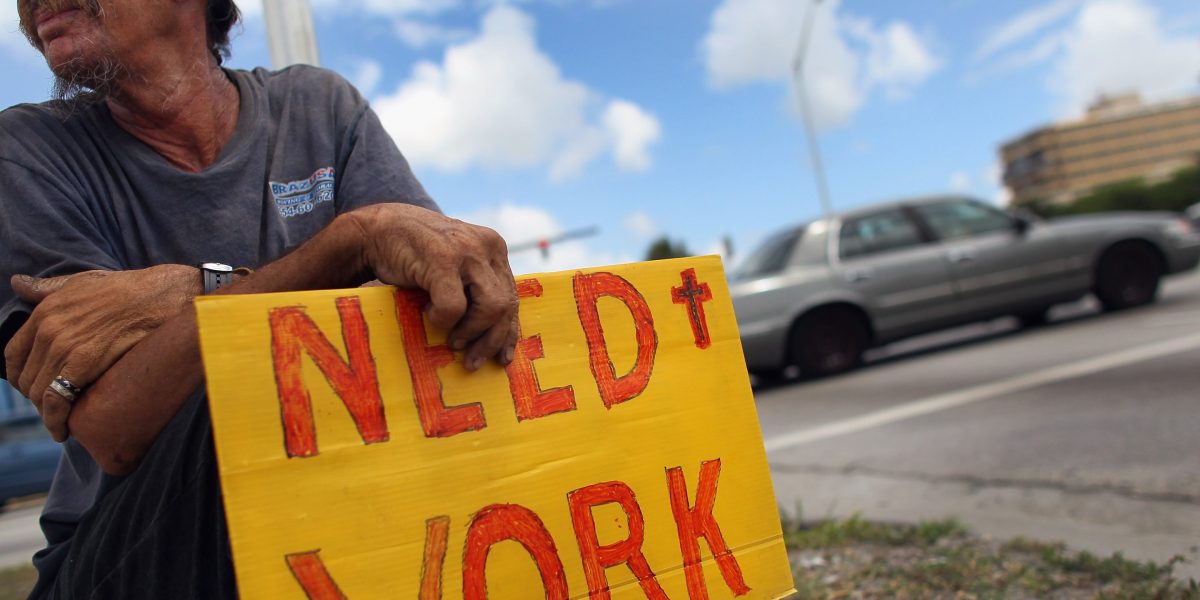
"When a delayed jobs report finally dropped Tuesday, economists and investors got their first real look under the hood of the U.S. labor market, and the engine is stalled. Payroll growth was modest in November at 64,000, while October showed a net decline of roughly 105,000 jobs, and the unemployment rate rose to a four-year high of 4.6%. Payroll growth hasn't collapsed, but it hasn't meaningfully advanced, either. The result is a labor market that's drifting sideways, quietly losing momentum beneath the surface."
"That stagnation explains why unemployment has continued to rise despite weak labor-force growth. Typically, joblessness climbs when layoffs surge or hiring freezes abruptly. This time, with neither happening, the economy has instead been failing a weaker benchmark, unable to create enough jobs just to absorb even modest population growth. The dynamic mirrors a warning from analysts at Goldman Sachs, who suggested in October that the U.S. is settling into a phase of "jobless growth" where output rises despite flat hiring."
Payroll growth was modest in November at 64,000 and October showed a net decline of roughly 105,000 jobs, while the unemployment rate rose to 4.6%, a four-year high. Payroll growth has been flat year-to-date, producing a labor market that is drifting sideways and quietly losing momentum. Unemployment has risen despite weak labor-force growth because the economy has failed to create enough jobs to absorb population increases. Economists describe a phase of jobless growth where output rises despite flat hiring, with productivity gains and increasing AI adoption substituting for labor and weighing on labor demand.
Read at Fortune
Unable to calculate read time
Collection
[
|
...
]