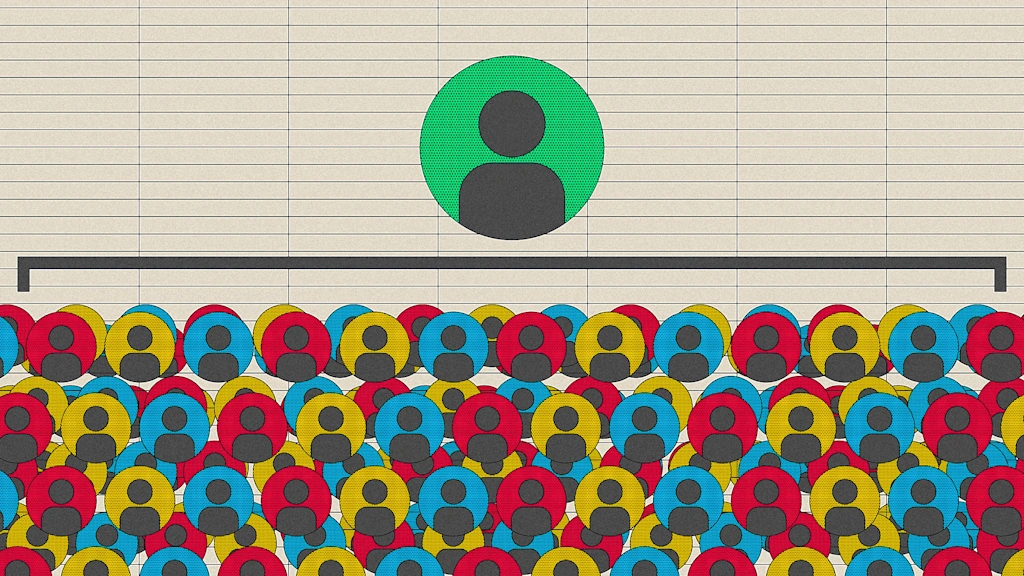
Managerial spans of control are expanding as organizations compress hierarchies and eliminate middle-management layers. Average direct reports rose from 10.9 in 2024 to 12.1 in 2025, and 13% of managers now oversee 25 or more employees. The phenomenon, labeled the "Great Flattening," reflects leadership churn, targeted layoffs of middle managers, and impacts from the AI boom. The expanded workload produces 'supermanagers' responsible for broader duties and significantly more reports. Some experts view the change as corrective to bloated structures, while others warn it creates communication noise, unrealistic expectations, and weakened employee support.
"If you're a manager today, your job may well be changing. That is, if it hasn't already. As companies continue to compress their org charts and axe layers of middle management, a new role is emerging: the "supermanager." Leaders are finding themselves responsible for significantly more direct reports and broader responsibilities. And in many industries, the trend shows no sign of slowing."
"A Gallup survey published in January, citing data from the Bureau of Labor Statistics, found that the average number of reports managers have increased from 10.9 in 2024 to 12.1 in 2025. The share of managers overseeing 25 or more employees has also grown in the past year, with 13% now supervising teams that large. This long-term increase in managerial span of control has been described as part of the "Great Flattening.""
"It is being driven by several forces, including leadership churn, layoffs targeting middle management layers, and the AI boom, and organizations increasingly see fewer reasons to maintain multiple management layers. Some workplace experts argue the shift is overdue, pointing to years of bloated management structures. Others warn the trend is backfiring, leaving employees lost in the noise and saddled with unrealistic demands."
Read at Fast Company
Unable to calculate read time
Collection
[
|
...
]