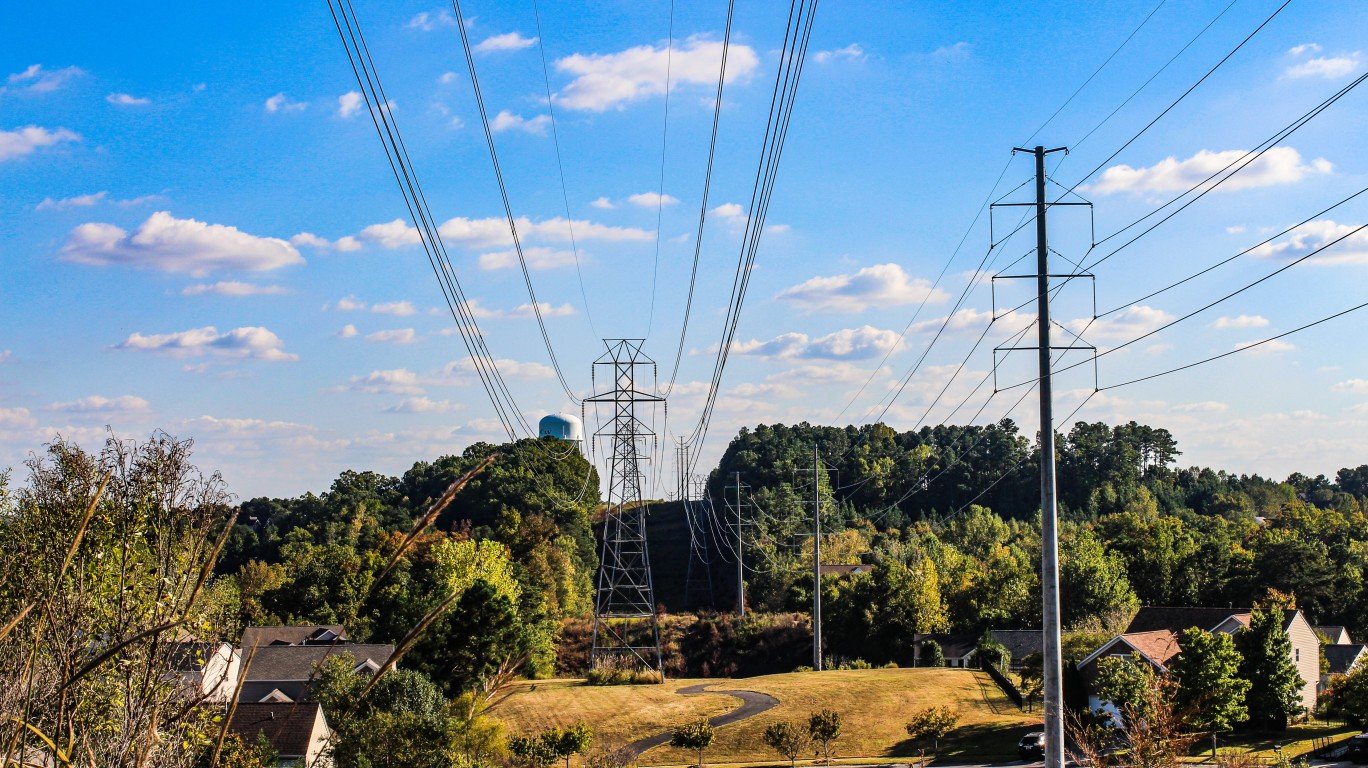
"The Vanguard Utilities Index Fund ETF Shares ( NYSEARCA:VPU) generates its 2.73% dividend yield by holding a diversified portfolio of 67 utility companies across the electric, gas, and water sectors. Investors receive quarterly distributions funded by the dividends these underlying holdings pay out. VPU manages $9.8 billion in assets while charging just 0.09% in annual fees, making it one of the most cost-efficient ways to access utility sector income."
"The fund has delivered consistent quarterly payments for over two decades while also generating price appreciation. Over the past year, shares rose 14.31%, demonstrating how utility ETFs can provide both income stability and capital growth during favorable market conditions. The top holdings drive roughly one quarter of VPU's income stream. NextEra Energy ( NYSE:NEE), the largest position at 11.45%, pays $0.5665 quarterly after implementing a 10% increase in early 2025. The company has raised its dividend every year for over two decades without interruption."
"Constellation Energy ( NASDAQ:CEG) holds 7.34% of the portfolio and has shown aggressive growth, doubling its dividend from 2022 to 2023 and adding another 10% in 2025. As a nuclear operator, Constellation benefits from stable power purchase agreements. Traditional regulated utilities Duke Energy ( NYSE:DUK) and Southern Company ( NYSE:SO) each represent 6.21% of the portfolio, providing stable dividend income through their regulated rate structures. These major utilities follow predictable annual increase patterns tied to regulated rate adjustments."
Vanguard Utilities Index Fund ETF Shares (VPU) yields 2.73% by holding 67 utility companies across electric, gas, and water sectors and pays quarterly distributions funded by underlying dividends. The ETF manages $9.8 billion and charges a 0.09% expense ratio, keeping costs low for investors. The fund has provided consistent quarterly payments for over two decades and produced 14.31% price appreciation over the past year. Top holdings like NextEra, Constellation, Duke Energy, and Southern Company account for a sizable portion of income. Utility dividends benefit from regulated revenue streams, while interest-rate sensitivity remains the primary risk.
Read at 24/7 Wall St.
Unable to calculate read time
Collection
[
|
...
]