#income-investing
#income-investing
[ follow ]
#dividend-etfs #dividend-growth #high-yield-etfs #high-yield-bonds #etfs #dividend-aristocrats #dividend-stocks
from24/7 Wall St.
2 days agoBOAT is soaring over the Strait of Hormuz blockade, but will it last?
BOAT is a passive fund tracking the Solactive Global Shipping Index, holding 52 maritime shipping companies including Frontline, Mitsui O.S.K. Lines, and Matson. It charges a 0.69% expense ratio and manages a slim $78.6 million in assets. The distribution is a pass-through of whatever cash its underlying tanker, dry-bulk, and container operators pay out each quarter. There is no options overlay and no leverage. When freight rates rip, the holdings earn outsized cash and most distribute it. When rates fall, the payout falls with them.
Business
#dividend-etfs


Retirement
from24/7 Wall St.
1 month ago$500 a Month in Passive Income Is Closer Than You Think With These 4 Dividend ETFs
Investing $100,000 across four dividend ETFs can generate approximately $500 monthly in passive income through diversified, professionally managed portfolios across different geographies and sectors.
E-Commerce
from24/7 Wall St.
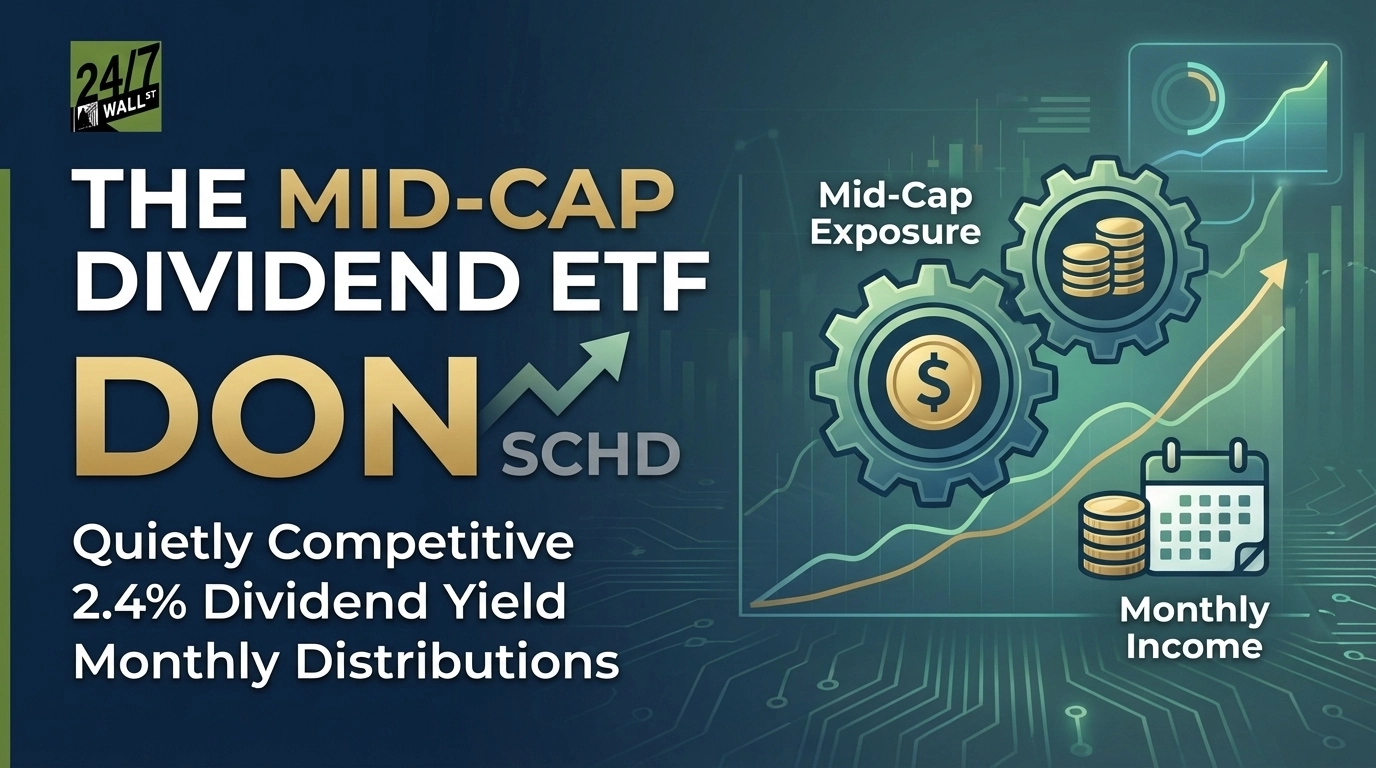
2 months agoThe Mid-Cap Dividend ETF That's Been Quietly Beating Schwab's SCHD ETF Lately
WisdomTree U.S. MidCap Dividend Fund (DON) delivers competitive long-term returns through dividend-weighted mid-cap exposure with strong stability, though trailing SCHD in yield and recent performance.
Retirement
from24/7 Wall St.
1 month ago$500 a Month in Passive Income Is Closer Than You Think With These 4 Dividend ETFs
Investing $100,000 across four dividend ETFs can generate approximately $500 monthly in passive income through diversified, professionally managed portfolios across different geographies and sectors.










from24/7 Wall St.
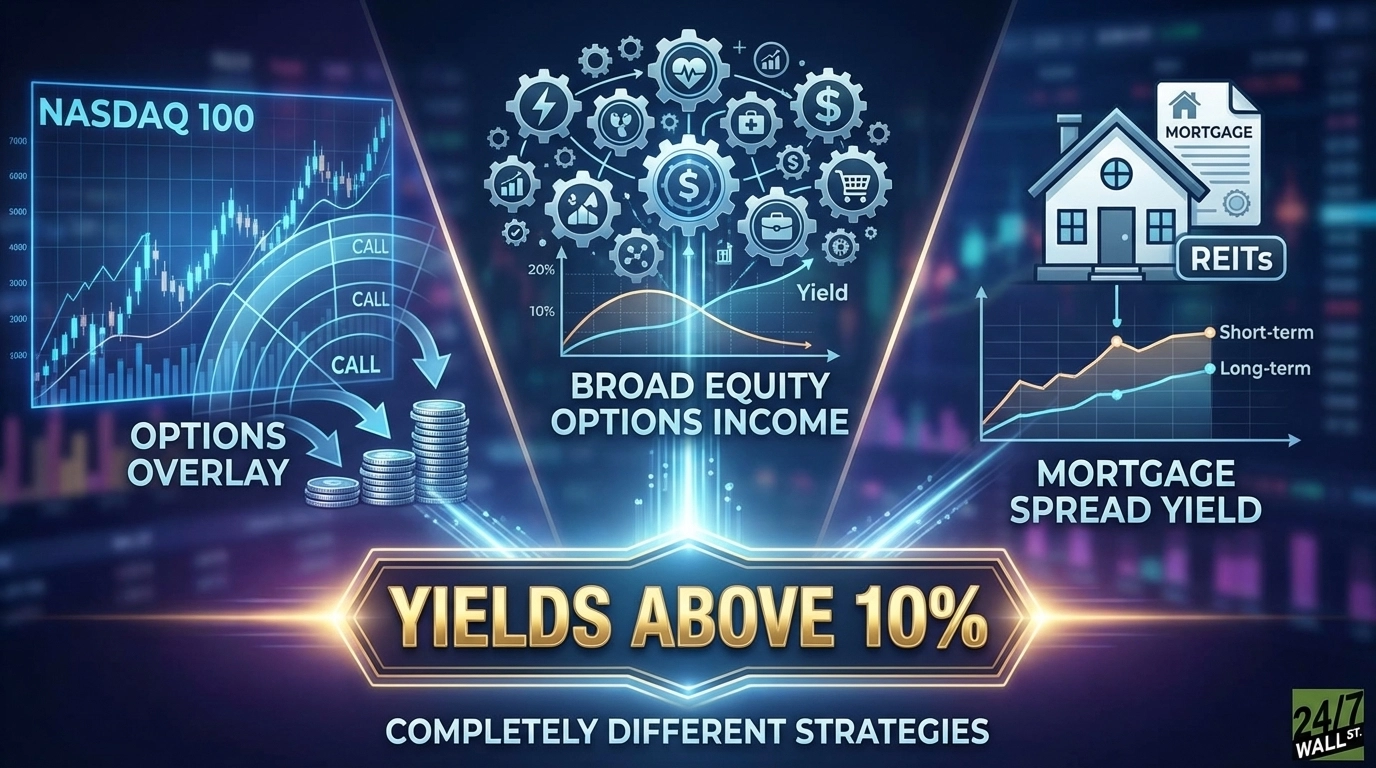
1 month agoThe 13% Yield Trap? Why MORT's Dividend Hike Is Masking a NAV Slide
MORT holds shares in mortgage real estate investment trusts, companies that borrow at short-term rates and invest in mortgage-backed securities or originate real estate loans. The income MORT distributes comes from the dividends paid by the underlying mREITs to their shareholders.
Business
Business
from24/7 Wall St.
1 month agoDefense Stocks Are Surging and This ETF Lets You Collect Dividends From the Global Arms Race
ITA's defense sector ETF maintains reliable distributions backed by 20 years of consistent quarterly payouts, including through COVID, with growing annual distributions driven by underlying company dividend growth.
from24/7 Wall St.
1 month agoBrookfield Renewable vs. Clean Harbors: Two Clean Economy Plays, One Better Buy
Brookfield Renewable pays a quarterly distribution of $0.392 per unit, annualizing to roughly $1.57. With the stock trading around $39.36, that puts the yield in the neighborhood of 4%, and the company just announced a 5% distribution increase. The next payment hits March 31, 2026.
Business




Retirement
from24/7 Wall St.
2 months agoWhat Happens to Dividend Income When the Next Recession Hits
Dividends historically decline far less than stock prices during recessions, with most downturns showing only 4% average dividend declines versus 32% stock price drops, making dividend income more stable than commonly feared.
from24/7 Wall St.
2 months agoRetirees Are Eyeing EMLC's 5.75% Yield While Wall St Bets Against It
EMLC holds government bonds issued by emerging market countries in their own currencies, such as Brazilian reals, Indonesian rupiah, and Mexican pesos. Each month, EMLC passes interest income to shareholders as a distribution. Recent monthly payments have ranged from $0.1149 to $0.1390 per share, and the fund has made 161 consecutive monthly payments since its July 2010 inception with no gaps or suspensions.
Business
from24/7 Wall St.
2 months agoRetirees Shouldn't Overlook The Small Cap ETF That Has Paid 44 Consecutive Dividends
The ProShares Russell 2000 Dividend Growers ETF tracks the Russell 2000 Dividend Growth Index, which screens for small-cap companies that have raised their dividends every year for at least the past 10 consecutive years. That single requirement does most of the quality filtering. A company that has grown its dividend for a decade has almost certainly demonstrated stable cash flows, disciplined management, and enough earnings durability to survive at least one or two economic downturns.
Business
Business intelligence
from24/7 Wall St.
2 months agoGap's Dividend Scorecard: Does the Post-Earnings Selloff Change the Income Case?
Gap raised its quarterly dividend 6% and authorized $1 billion in share buybacks despite a 9.5% stock decline, creating higher yield while management signals confidence in future earnings sustainability.
Miscellaneous
from24/7 Wall St.
2 months agoYieldMax's MSTR Is A Nightmare ETF, Despite Dreamy Dividends
MSTY's weekly distributions collapsed from $4.42 to $0.30 per share due to declining MSTR stock value, revealing that income distributions are partially funded by eroding capital rather than pure premium income.





from24/7 Wall St.
2 months agoIs Brown-Forman's Dividend Safe After Tariffs Battered Earnings?
Brown-Forman paid $420 million in dividends in FY2025 against $431 million in free cash flow, producing an FCF payout ratio with almost no cushion. That 1.03x FCF coverage should give income investors pause. It has tightened from 1.21x in FY2023 and 1.04x in FY2024. Recent FCF has been partially supported by inventory drawdowns.
Business
from247wallst.com
2 months agoRetirees Are Watching AMLP as Natural Gas Prices Briefly Hit Highest Price in Years
AMLP holds a concentrated basket of midstream MLPs that earn fee-based revenue by moving oil, natural gas, and refined products through pipelines and processing facilities. These companies collect tolls on volumes transported rather than betting on commodity prices, creating relatively predictable cash flows.
Venture
Business
from24/7 Wall St.
2 months agoRetirees Should Know The XLU Utility ETF Has Paid Dividends Every Year Since 1999 Without Interruption
XLU delivers a 2.75% yield with minimal expenses by holding regulated utility companies whose dividend sustainability depends on financially strong top holdings.


from24/7 Wall St.
2 months agoRed-Hot Jobs Report Will Delay Fed Rate Cuts-Lock In These 5 Ultra-High-Yield Dividend Giants
In addition, if the January consumer price index number, to be posted on Friday, comes in below expectations, there may be no rate cuts until the summer, if then. The best move for growth and income investors seeking solid passive income is to start adding top companies now, as interest rates will rise with no help from the Federal Reserve.
Business
from24/7 Wall St.
2 months ago$9.8 Billion Utilities ETF Is A 3% Yielding Backdoor Bet on AI's Explosive Growth
The Vanguard Utilities Index Fund ETF Shares ( NYSEARCA:VPU) generates its 2.73% dividend yield by holding a diversified portfolio of 67 utility companies across the electric, gas, and water sectors. Investors receive quarterly distributions funded by the dividends these underlying holdings pay out. VPU manages $9.8 billion in assets while charging just 0.09% in annual fees, making it one of the most cost-efficient ways to access utility sector income.
Business
from24/7 Wall St.
3 months ago3 High-Yield ETFs Offering Over 4% Yields
The SPDR Portfolio S&P 500 High Dividend ETF (NYSEARCA:SPYD) invests in 80 high dividend-yielding companies and tracks the performance of the S&P 500 High Dividend Index. Since it holds limited stocks, you get to own the best of the industry. It aims to provide dividend income and the potential for capital appreciation. The ETF has a yield of 4.57% and an expense ratio of 0.07%. Besides the quarterly dividends, the fund has generated a 1-year return of 4.67% and a 3-year return of 7.85%.
Business
fromForbes
3 months agoGet Paid To Buy META Stock?
With Meta Platforms (NASDAQ: META) trading at approximately $659 per share, it is currently about 16% lower than its 52-week high. Do you believe that META stock is a solid long-term investment at its current price? How do you feel about buying it at a 30% discount for around $460 per share? If you see that as a bargain and have some funds ready, consider this trading opportunity.
from24/7 Wall St.
4 months ago3 International Dividend Stocks Offering 6%+ Yields US Investors Are Missing
Most U.S. investors never look beyond domestic stocks for dividend income, and the reasoning, at least on the surface, seems logical. Given currency risk, unfamiliar names, differing accounting standards, and the perception that international markets are riskier and/or less transparent, this lack of consideration seems reasonable. However, as a result of this same consideration, this bias ultimately leaves money on the table, and while US dividend stocks infrequently reach 4-5% yields without serious risk, international markets offer established companies with sustainable business models
Business

from24/7 Wall St.
4 months ago3 Income ETFs With the Stability to Last the Next Decade
One of the most important things to remember is that if you want to build up wealth, it's different than retirement income, and if you're on the former side, you want to start accumulating money now. If you're trying to live off your portfolio now, volatility can become highly personal, as a 20% drop in the market over time isn't a buying opportunity, it's actually the money you need for rent and living.
Business
from24/7 Wall St.
4 months agoMost High Yield ETFs Stink, But JEPQ Pays 10.1% And Is Up Big The Last 6 Months
If you've got sidelined capital ready to put to work, you might want to consider the high-yielding JPMorgan Nasdaq Equity Premium Income ETF (JEPQ), operating on all cylinders. With a high yield of 10.1% that far exceeds the broader market on top of $32.6 billion in total assets under management, JEPQ has delivered a double-digit percentage return over the past six months alone of approximately 11%.
Business
from24/7 Wall St.
4 months ago3 Monthly Income ETFs to Buy Before The Next Rate Cut
As new bonds get issued at lower rates and cash rates decline, investors start to quickly look for ways they can rotate out of these asset classes and move somewhere else that pays income. Enter the income-generating monthly ETF, which often benefits twice in these kinds of environments as its yields stay competitive and the share price tends to rise as demand increases. In other words, investors win on both sides as they get a shareholder boost thanks to growth, all while receiving monthly "paychecks."
Business
from24/7 Wall St.
4 months agoThe Monthly Income ETFs I'd Buy Today For Retirement
If you're a retiree or nearing retirement, you should be thinking about investments with steady income streams. Ideally, you'll reinvest that income, but you also have the option of cashing out your dividends if needed. This passive income can supplement your retirement account withdrawals and Social Security. Some retirees will use dividends to cover ongoing costs such as housing and groceries.
Business
[ Load more ]