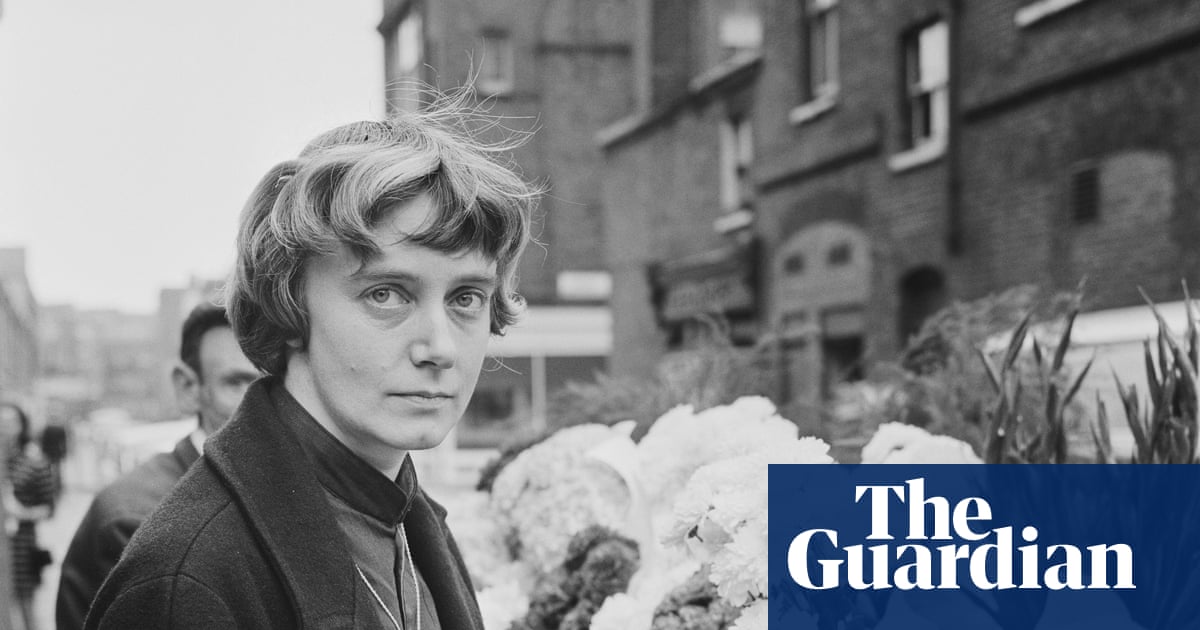
Maureen Duffy, who died at 92, wrote novels, plays, poetry, and nonfiction while campaigning for gay rights and authors’ rights. She received the inaugural 10,000 Royal Society of Literature Pioneer prize and was recognized as a trailblazer. As a founding member of the Authors’ Licensing and Collecting Society, she championed fair remuneration and proper recognition for creators. Her landmark 1966 novel The Microcosm drew inspiration from the Gateways lesbian club in London. Restitution was longlisted for the Booker prize in 1998. Born in Worthing in 1933, she studied English at King’s College London, taught and edited poetry journals, and wrote screenplays, including Josie for Granada Television.
"Duffy was awarded the inaugural 10,000 Royal Society of Literature (RSL) Pioneer prize last year by Bernardine Evaristo, who described her as a true trailblazer in every sense of the word. She was an extraordinary author and a tireless advocate for authors' rights, said Barbara Hayes, chief executive of the Authors' Licensing and Collecting Society (ALCS), of which Duffy was a founding member. For decades, she championed fair remuneration and proper recognition for creators with remarkable passion and conviction, leaving an enduring legacy for writers everywhere."
"Duffy, who died on Wednesday, wrote novels, plays, poetry and nonfiction, including The Microcosm, her landmark 1966 novel inspired by the Gateways lesbian club in London, and Restitution, which was longlisted for the Booker prize in 1998. Born in Worthing, Sussex, in 1933, Duffy's father left when she was a baby, and her mother died when she was 15. She won her first poetry competition aged 17, and studied English at King's College London, graduating in 1956."
"In the late 1950s, she taught in Naples and London while editing poetry journals. In 1961, Granada Television commissioned her to write a screenplay, Josie, and she used the 450 advance to buy a houseboat. Her semi-autobiographical first novel, That's How It Was, was published the following year, a bildungsroman following a girl, Paddy, whose father abandons her mother when she is born."
"In the early 1960s, Duffy began campaigning for gay rights. In the 1970s, she often wrote for lesbian feminist journal Sapph"
Read at www.theguardian.com
Unable to calculate read time
Collection
[
|
...
]