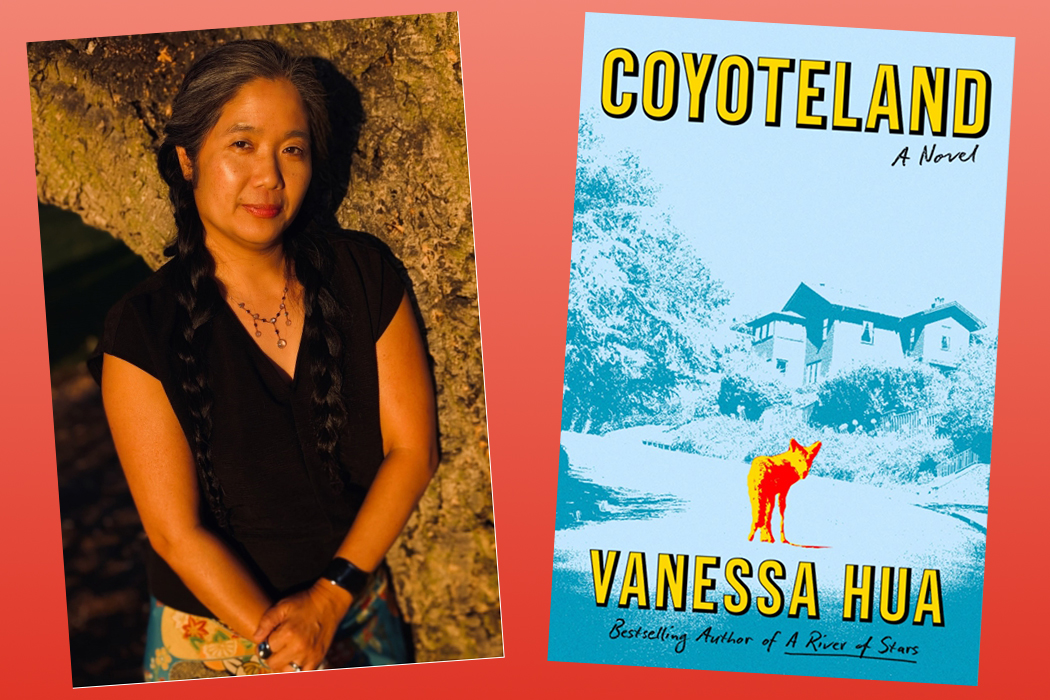
"To me, that encapsulated that moment where everything felt topsy-turvy and off-kilter. That stuck with me in terms of thinking about writing about territory, about predator and prey, but also the larger question of How do we be good neighbors to each other?"
"The events of the book take place under three stressful external conditions: the coronavirus pandemic, California's increasingly unpredictable fire season and a rogue coyote that bites residents. Against this backdrop, an unexpected catalyst moves into the neighborhood. The Changs - patriarch Jin, his wife Kai, and their two daughters, Jane and Lily - relocate to El Nido from a one-bedroom apartment they shared in Fremont."
"El Nido represents a lifetime's achievement, grander educational opportunities for the children, socializing with the one percent. But it also means becoming the lone Asian family in a predominantly white community. Meanwhile, unbeknownst to Kai, Jin has recently been laid off and is too proud to admit it. He's using the move to El Nido to activate a financial scheme linked to a nearby real estate development project."
"One day, while taking a routine early morning walk around her home in the East Bay hills, author Vanessa Hua found herself face to face with a coyote. Precipitating the encounter was a noise she likens to a scramble of high heels that turned out to be the hooves of two deer chasing a coyote, which was suddenly running toward her at full speed."
During the 2020 lockdown, a coyote encounter in the East Bay hills inspires a novel about territory, predator and prey, and how to be good neighbors. The story unfolds amid the coronavirus pandemic, unpredictable California fire seasons, and a rogue coyote that bites residents. Jin Chang, his wife Kai, and their daughters Jane and Lily relocate from Fremont to El Nido, a long-sought achievement that offers better opportunities and social access. The move also isolates them as the lone Asian family in a predominantly white community. Jin has been laid off and hides it while pursuing a financial scheme tied to a nearby real estate development, creating conflict with neighbors who have financial stakes.
#literary-fiction #family-and-class #immigration-and-race #neighborhood-dynamics #wildlife-and-environment
Read at Kqed
Unable to calculate read time
Collection
[
|
...
]