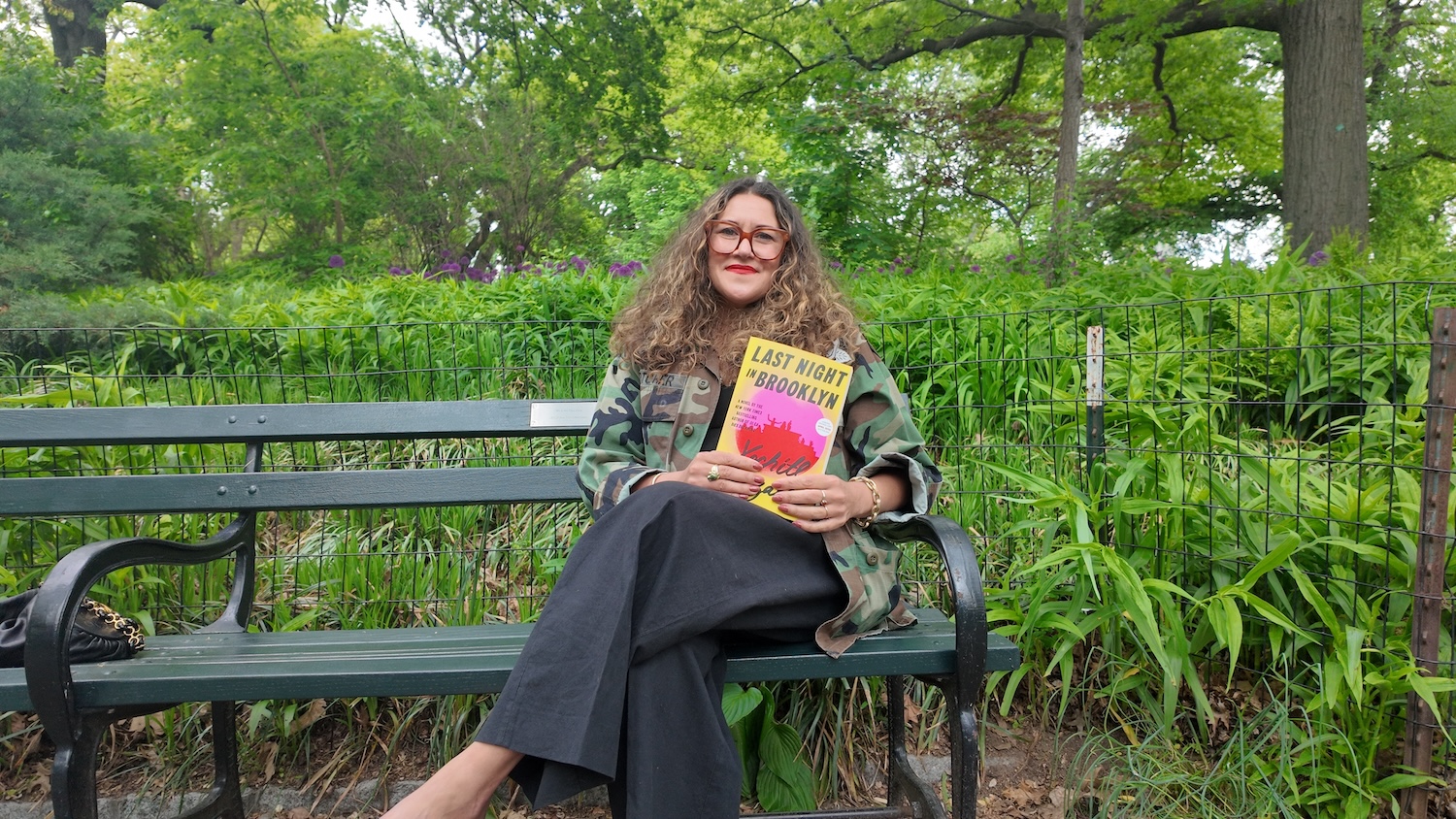
A 17th-century Dutch colonizer is used to frame a recurring New York mentality: newcomers quickly complain that the city they love has been ruined by new people and places. A novel renders that joke in story form, following a protagonist who returns “home” to Fort Greene after Yale and a copywriting job. The character turns the neighborhood into a personal Pleasure Island with a close-knit creative group of young gentrifiers of color. Their conversations mix complaints about gentrification with intense social life, including day-drunk gatherings and friendships tied to local nightlife. The narrative also connects socioeconomic and spiritual change in Fort Greene to the protagonist’s sense of belonging and memory.
"The first "Real New Yorker" was a 17th-century Dutch colonizer, who, within a few weeks of arriving on Manhattan's shore, looked around at their developing settlement and complained that the city they loved had been ruined and made lame by all the new people and places. It's a dumb joke, but one that captures an eternal mentality recognizable to anyone who has lived here for more than a year or two."
"Her breathless, alternately irritable and nostalgic joyride Last Night in Brooklyn is a "spot" glossary from a great period of our shared youths in downtown Brooklyn, as well as an exploration of the socioeconomic and spiritual gentrification of Fort Greene, disguised as a beach read. The novel holds back the years for locals of a certain age, who lived here during the aughts, had a friend who tended bar at Night of the Cookers , a friend who DJ'd at , and a friend who threw monthly rent parties in a quasi-residential Gowanus loft."
"It's the story of her protagonist, Alicia Fonten-an Alice B. Toklas/Nick Carraway/Jay McInerny/Carrie Bradshaw from Gravesend with a Nuyorican accent-who goes to Yale, then moves "home" to an apartment in the Navy Yards and a copywriting job at an ad agency. She flips a fairytale turn-of-the-century Fort Greene into her personal Pleasure Island, with a fast-friends creative class crew of young gentrifiers of color who, when they're not complaining about gentrification and the less cool gentrifiers destroying the culture and community they love, are having the day-drunk time of their lives."
Read at BKMAG
Unable to calculate read time
Collection
[
|
...
]