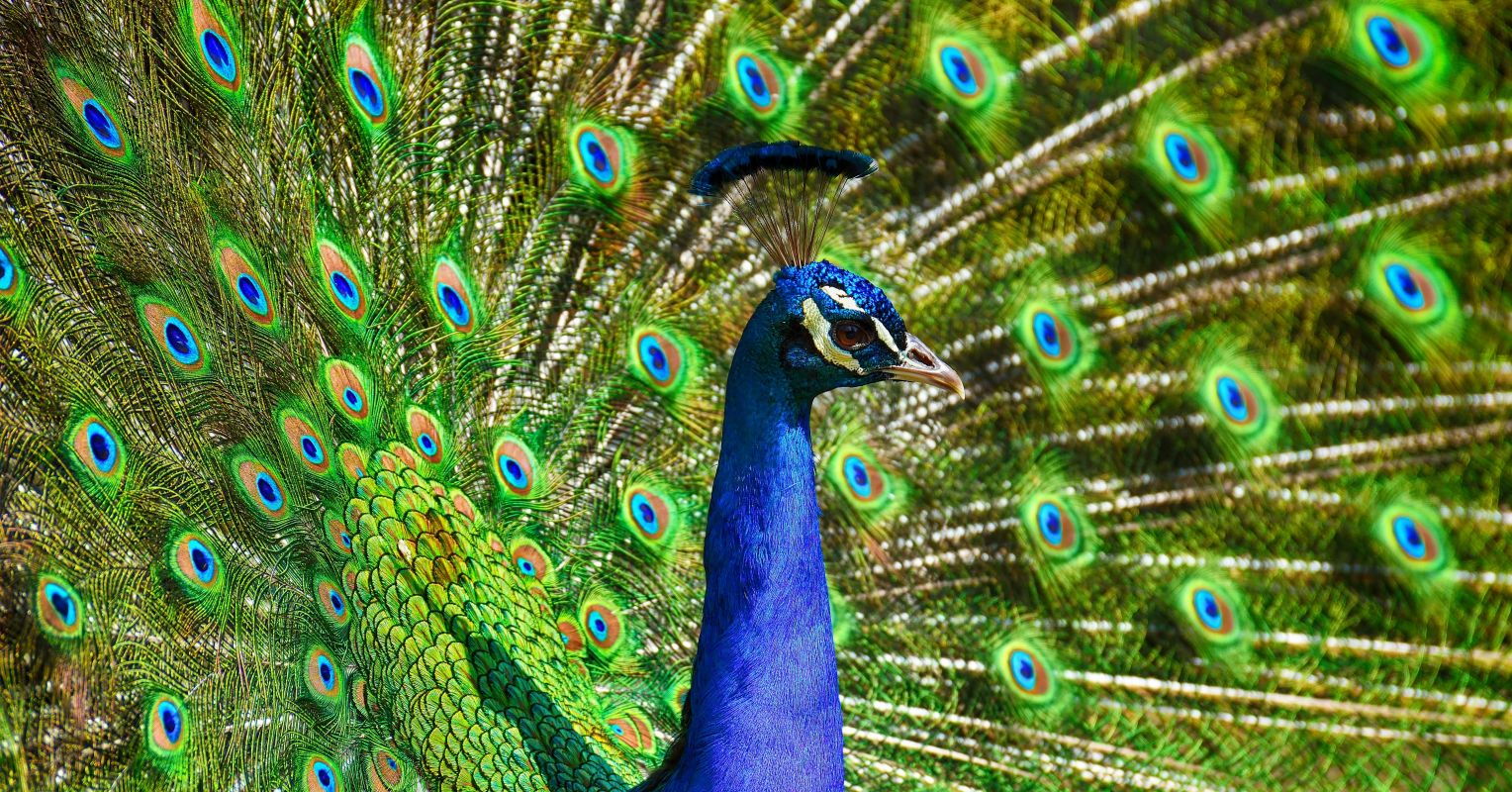
"We might say that the peacock displays his colors proudly but knows they are a gift, not his invention. He lets us see the "glory" of nature but also knows that only he can hold it in such splendor. When, in early life or in some relationships, our needs and choices were unsafe to show, inappropriate or unwelcome in others' eyes, we might have hidden our colors."
"But nonetheless, in the back woods of our mind, we still wanted to be ourselves. We might have been humiliated for our unique feathers. Now we can embrace our uniqueness as a gift that serves wholeness-the way the peacock does. His feathers are not like the medals on the puffed-out chest of a military tyrant. They are articulations of the vast variety of beauty in the natural world."
"Atticus Finch in To Kill a Mockingbird by Harper Lee, both in the book and the film, presents a superlative example of a healthy ego. His character shows how someone can let himself be seen as a strong person, fully himself, but totally without an egotistical attitude. He stands up for and stands by others but does not engage in revenge against those who have hurt himself or them."
The peacock metaphor portrays personal pride as a display of gifted uniqueness rather than vanity. Early life or unsafe relationships can force people to hide their distinct qualities, yet the desire to be oneself often remains. Embracing uniqueness becomes a contribution to collective wholeness rather than self-centered boasting. Healthy pride shows forth the variety and grace of nature, not the medals of a tyrant. Atticus Finch exemplifies a wholesome ego: visible strength without egotism, principled courage, empathy, and lack of need for revenge or competition. Genuine self-confidence aligns with competence and earns respect and integrity.
Read at Psychology Today
Unable to calculate read time
Collection
[
|
...
]