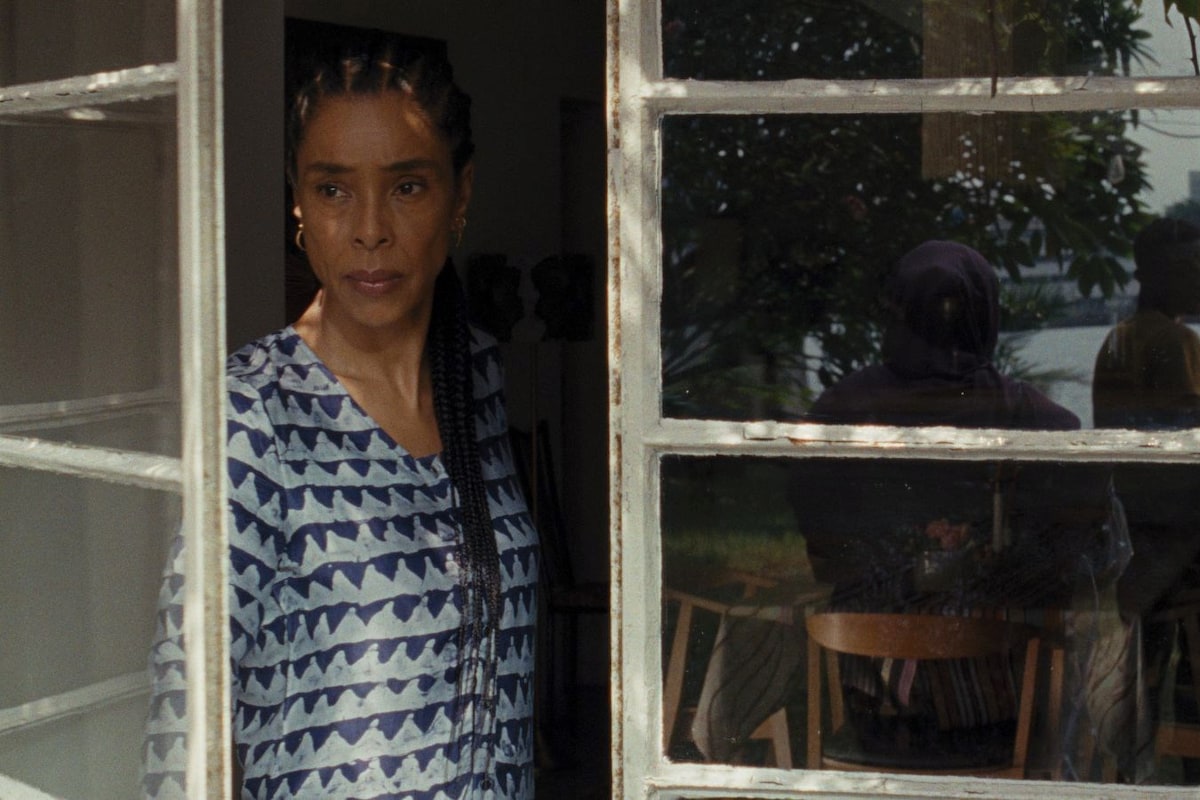
Clarissa plans a party in Lagos with her husband Richard, whose respectable white-collar work contrasts with Clarissa’s sense that her life is not fully her own. When she learns that Peter, an old flame, is in town to manage his late father’s estate, her mind returns to a formative summer marked by competing desires and high hopes. The film moves between past and present and adds a third storyline centered on Septimus, a traumatized soldier whose experiences intersect symbolically with Clarissa’s. The setting replaces London’s cues with Lagos’s sounds and Nigeria’s conflicts, reframing modernist themes through a Nigerian lens.
"We meet her in the midst of planning a party at her home in Lagos, where she lives with hubby Richard (Jude Akuwudike), an upstanding but dull man working a white-collar job for Shell. But when Clarissa hears that an old flame, Peter (David Oyelowo), is in town to manage his late father's estate, her thoughts drift back to a long summer's day from her youth, when high hopes for the future and competing desires made for an intoxicating mix."
"The Esiris' film flits back and forth between the two timespans, folding a third story into the mix in the shape of Septimus (Fortune Nwafor), a traumatised soldier whose life intersects symbolically with Clarissa's. It's a bold reenvisioning of a modernist classic that drew admiring notices at Cannes, where the film screened as part of the Directors' Fortnight strand."
""Big cities all share a certain DNA in common so it was kind of a natural transposition, really," says Chuko, who wrote the screenplay, in which the Muslim call to prayer is substituted for the chimes of Big Ben, and Nigeria's ongoing conflict with Boko Haram stands in for the First World War. "Also the city of Lagos was essentially built and designed by the British, so all the elements of what a British city feels like are there, it just so happens to be in West Africa.""
Read at AnOther
Unable to calculate read time
Collection
[
|
...
]