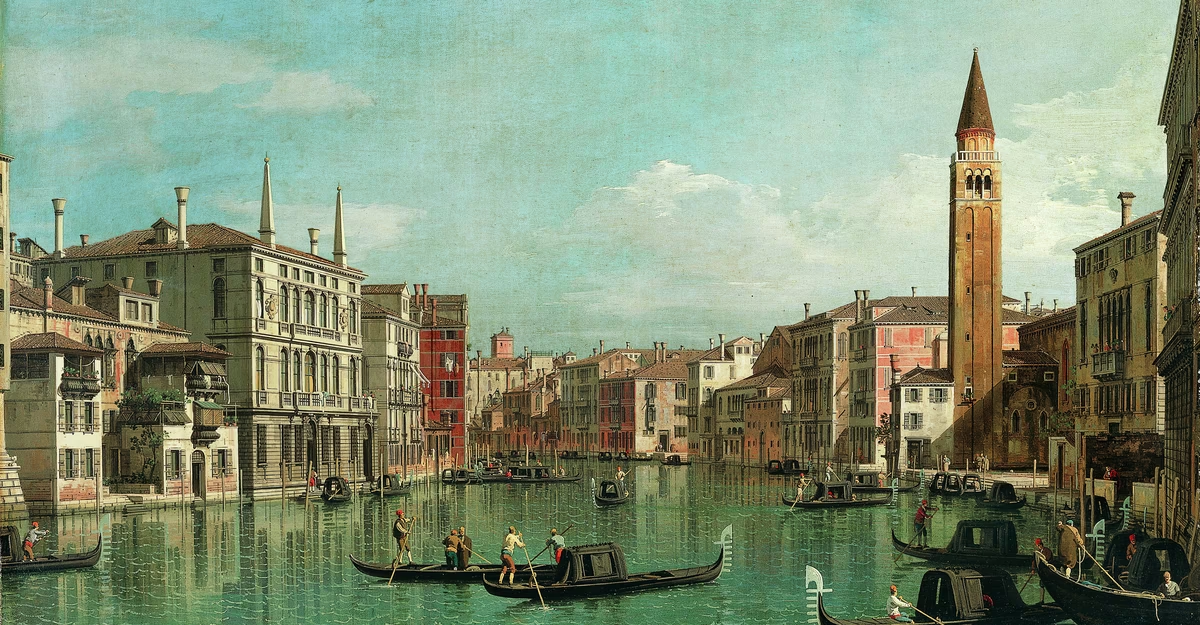
"Venice is a city so globally famous that even those who have never been there tend to hold opinions about it. In my experience, those are frequently negative: It's too expensive, too hot, too crowded with tourists. Calling it overrated has almost become a cliché; people love to remind one another that it's sinking-fast. At the same time, few places have had as strong, or as enduring, a hold on the artistic imagination."
"He visited Venice 10 times between 1869 and 1907, and made it the setting of his 1888 novella The Aspern Papers, which was serialized in The Atlantic. The book's narrator goes to Italy on a hunt for letters by the late poet Jeffrey Aspern to a former lover, Juliana, which he believes the now-elderly lady has secreted away in her palazzo."
Venice combines widespread reputational complaints—expense, heat, crowds, and worries about sinking—with a deep and persistent hold on artistic imagination. Major artists and collectors, including John Singer Sargent, Claude Monet, and Isabella Stewart Gardner, found inspiration in Venice's cultural history and views. Henry James visited Venice repeatedly and set The Aspern Papers there, using the city as the setting for a narrator searching for a poet's hidden letters. Contemporary exploration of James's Venice emphasizes quieter corners: deserted campos, lesser-known islands, and cool, dark churches that preserve Renaissance masterpieces and solitude away from main tourist routes.
Read at The Atlantic
Unable to calculate read time
Collection
[
|
...
]