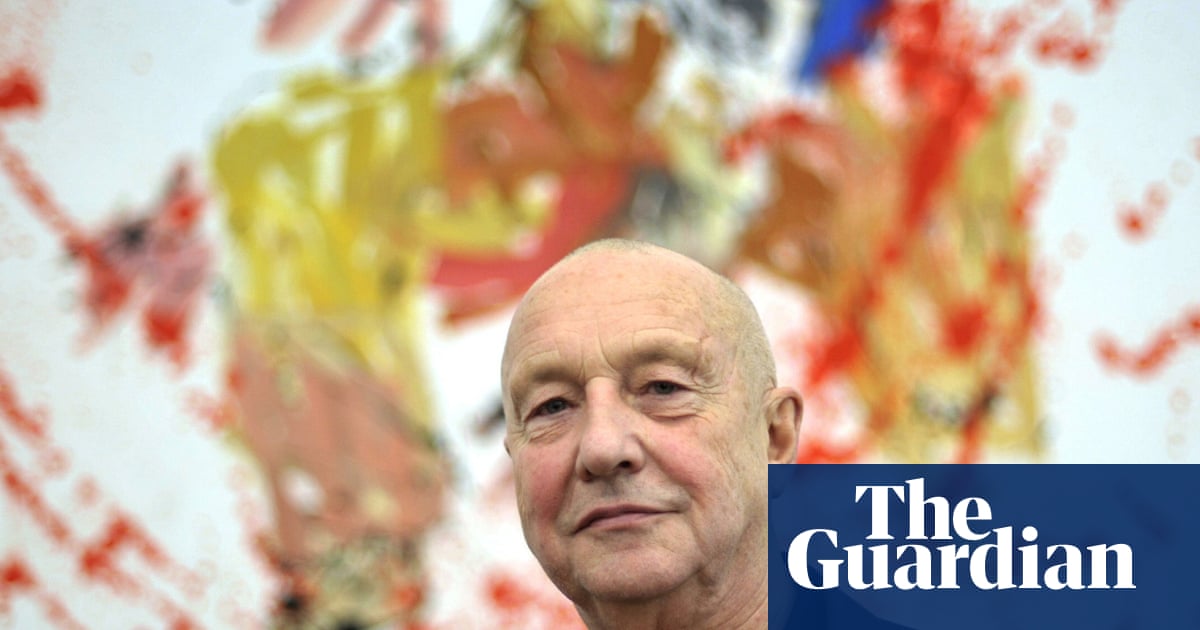
In November 1961, West Berlin residents encountered provocative posters criticizing contemporary German art, created by Eugen Schonebeck and Georg Baselitz. This initiative coincided with the Berlin Wall's erection, symbolizing Germany's political and cultural divisions. Baselitz, rejecting American abstraction, sought to revive Expressionism, which had been marginalized post-World War II. His work, particularly after the release of the Pandemonium posters, established him as a significant figure in the German art scene for decades, reflecting a broader cultural reclamation amidst historical turmoil.
"The posters comprised both an artwork and a manifesto. Called Pandemonium I, it came at a charged moment in German history, shortly after the Berlin Wall had gone up."
"Baselitz rejected this US dominance. Expressionism, loathed by the Nazis, had been the art of German rebellion: after Pandemonium, he set out to reclaim it."
"The notoriety this project brought him made Baselitz a lodestar of German art for the next half century."
"Raised in the new East Germany and wary of what he called correct ways of painting, Baselitz sought to challenge the prevailing artistic norms."
Read at www.theguardian.com
Unable to calculate read time
Collection
[
|
...
]