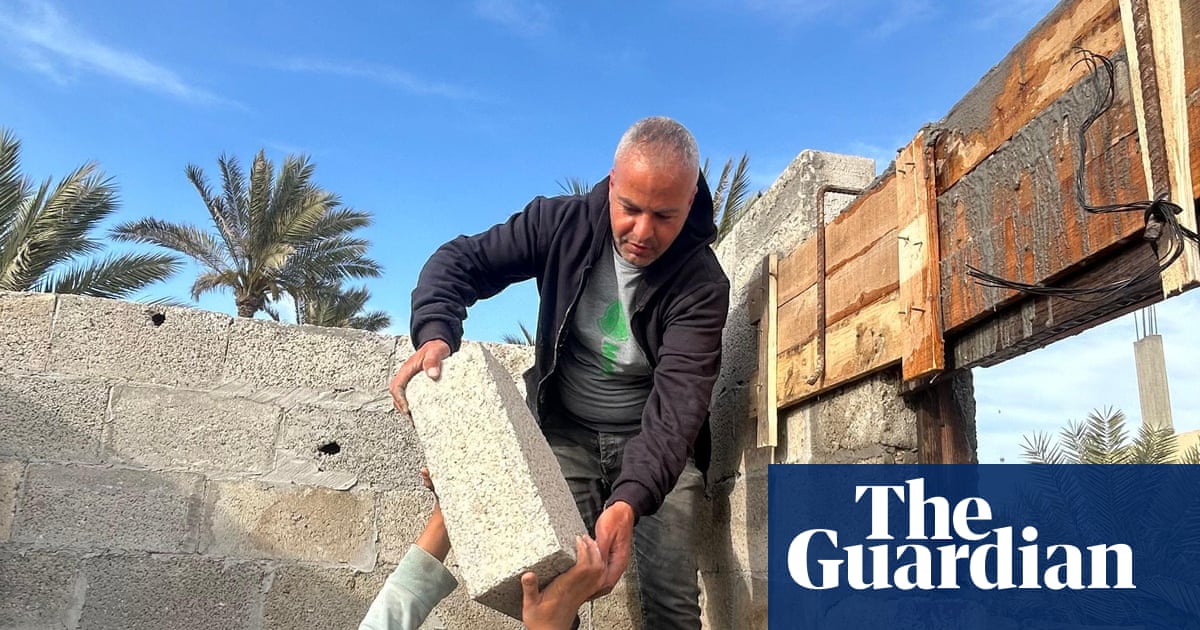
"It is difficult to see through the dust inside the cramped, low-roofed tent on the eastern edge of Khan Younis. Ibrahim al-Aloul works alongside four others, with a piece of fabric tied over his mouth and nose as his only shield against the toxic grey powder as he sifts and grinds. Outside, a skinny donkey waits with a cart to carry the finished product to the next tent along, where it will be mixed with gypsum, calcium and binding agents before being bagged in flour sacks and sold."
"This is Gaza's cement industry, improvised out of desperation and for now the only construction operating in the besieged Palestinian coastal strip. The health risks of these compounds are severe, but in Gaza, where the death toll of the past two years of Israeli bombardments has reached more than 71,000 and a steady toll of killings continues despite the eight-month ceasefire, options are limited. We work long hours and the dust is suffocating, Aloul says, stepping outside into the street of tents to breathe endless rows that have become the only homes Palestinians can find."
"But there is no other work, and no other cement. We have no choice. When ingredients run short, I improvise Saadi al-Sha'er Israel has barred cement and all building materials from entering Gaza since October 2023, deepening a blockade on construction imports in place since 2007. By October 2025, Unosat satellite imagery found approximately 81% of all structures in the Gaza Strip had been damaged, with more than 123,000 destroyed outright."
"The UN estimates the destruction generated 61m tonnes of rubble, and a joint EU, UN, and World Bank assessment puts the cost of recovery at $71.4bn (52bn) over the next decade. Against that backdrop, a small, scattered network of entrepreneurs, labourers and engineers has begun turning the ruins into raw material. The idea came to Saadi al-Sha'er Aloul's employer when he noticed clay fused with cement dust accumulating around Gaza's bombed factories and warehouses."
A small cement-making operation works inside cramped tents in Khan Younis, where workers sift and grind toxic grey powder while using fabric over their mouths and noses. Finished cement is carried to nearby tents, mixed with gypsum, calcium, and binding agents, then bagged in flour sacks for sale. The work is driven by the lack of construction materials, since cement and building supplies have been barred from entering Gaza since October 2023. Gaza has experienced extensive destruction, with most structures damaged or destroyed and large volumes of rubble generated. Entrepreneurs and laborers turn fused clay and cement dust from bombed factories and warehouses into usable raw material to support limited construction activity.
#gaza #cement-production #blockade-and-construction-materials #health-risks #rebuilding-and-rubble-reuse
Read at www.theguardian.com
Unable to calculate read time
Collection
[
|
...
]