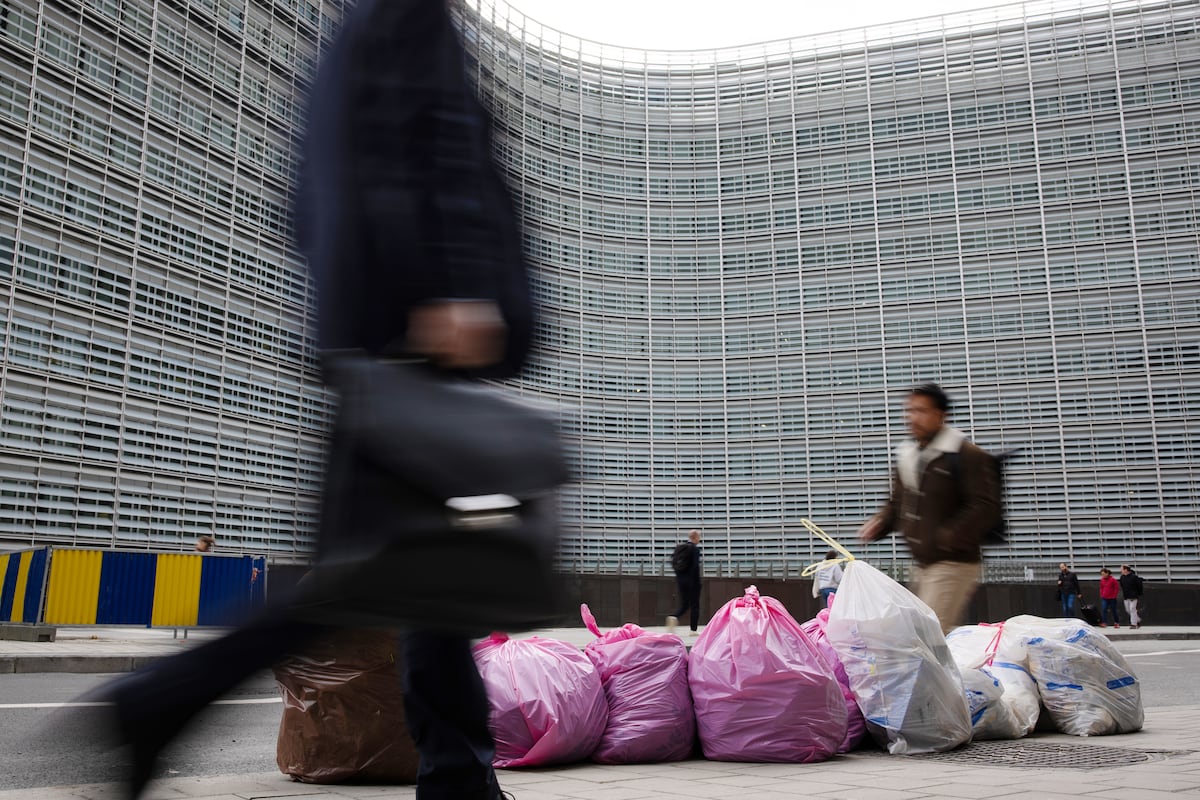
Brussels collects waste using colored plastic bags rather than traditional bins. As offices empty at dusk, many bags appear on streets in neat rows or scattered piles, sometimes containing food scraps, diapers, cardboard, or other discarded items. Crows and mice may gather before garbage trucks arrive to pick up blue, yellow, white, or orange bags. The city generates about one kilogram of waste per person per day. The visible garbage can seem like poor urban management to newcomers, but it reflects the established waste management system. Door-to-door collection of sorted waste in colored bags is the primary method, with containers used only minimally by public or private services.
"As dusk falls, when the European Union offices begin to empty out, dozens, even hundreds, of colorful garbage bags sprout up on the streets of Brussels. Some stand in geometrically neat rows in front of houses. Others, half-open, spill out a slice of pizza, a dirty diaper, a pile of cardboard, or the potato peelings someone has just discarded."
"In some neighborhoods, crows and mice arrive before the garbage trucks that scoop up the blue, yellow, white, or orange bags on the streets of the Belgian capital, a city without traditional bins. The scene is disconcerting for a newcomer. The garbage makes no distinction. Piles of bags might lie in front of the brightly lit Dior store, on the most affluent shopping street in the booming European capital, or in front of a Maison de Maitre in the artistic Saint Gilles district."
"To the untrained eye, it seems like a basic urban management problem: what to do with the garbage in a city that generates one kilogram (2.2 pounds) of waste per person per day, according to official estimates. When I arrived in the city, I thought there was a strike it was incomprehensible to me to see garbage bags in the street several days a week, says Sofia Pagni, an Italian lawyer who has been living in Brussels for six years."
"The plastic landscape is not a sign of administrative collapse. It is simply Brussels' waste management system, where, unlike other European cities, containers are hardly used (neither public nor private ones) and where a door-to-door collection model for sorted waste in colored bags is the primary sys"
Read at english.elpais.com
Unable to calculate read time
Collection
[
|
...
]