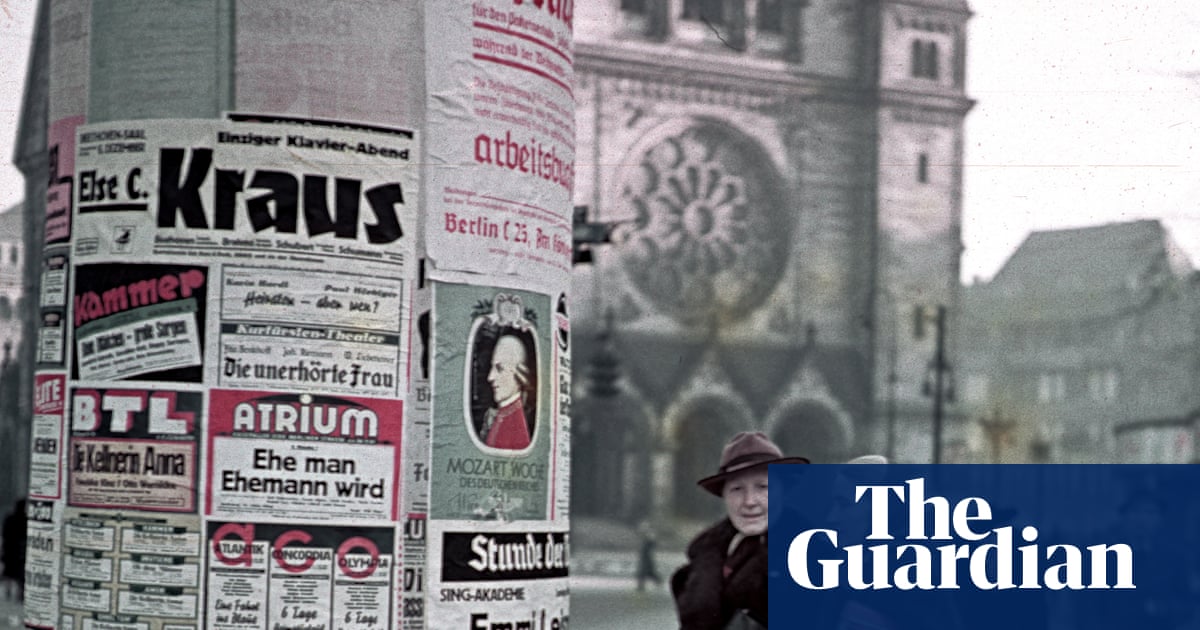
"The war was going badly now, with the Russians pushing in from the east, and American and British bombs dropping from the skies. Food was scarce, Jewish citizens were being disappeared daily and Hitler and Goebbels, both frequently in the city, were getting more anxious and crueller by the day. Now whenever Berliners met each other in a food queue or a bomb shelter their most likely greeting was Bleiben sie ubrig Stay alive."
"Nonetheless, argues Buruma, wherever you looked you could still find pockets of resistance. He isn't referring here to well organised underground networks, but rather to ordinary men and women, not especially brave but still capable of doing the right thing. When Jews were ordered to start wearing identifying insignia, plenty of their fellow Berliners made a point of going up to them in the street and shaking hands."
In December 1941 a soldier wrote that Berliners were carousing while comrades died at the front, with men dodging duty and women using purloined ration coupons. The city's Weimar legacy of artistic and political radicalism and louche living had survived early Nazi rule, keeping Berlin a case apart. By 1943 the war's reversals, bombings, food scarcity, daily disappearances of Jewish citizens, and growing cruelty from Hitler and Goebbels pushed Berliners toward conformity and fear. Common greetings in food queues and bomb shelters became "Bleiben sie ubrig" (Stay alive). Nevertheless small acts of ordinary decency persisted, such as shaking hands with Jews forced to wear insignia and personal relationships between conscripts and foreign workers.
Read at www.theguardian.com
Unable to calculate read time
Collection
[
|
...
]