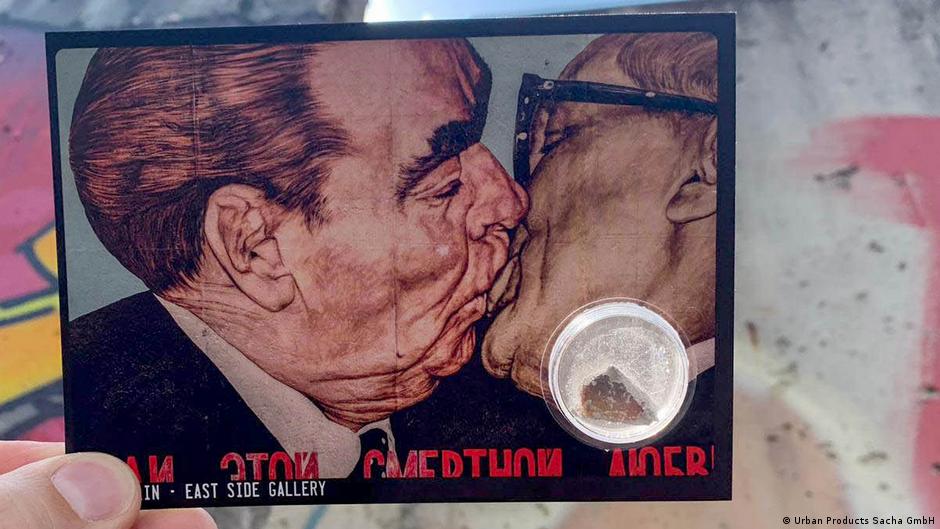
When the Berlin Wall fell in 1989 people immediately began chipping away at it with hammers and chisels; those people were known as Mauerspechte, or wall woodpeckers. By June 1990 bulldozers had removed most of the wall and only a few sections remain at sites like the Berlin Wall Memorial and the East Side Gallery. Fragments continue to appear across the city and are sold in museums, souvenir stores and hotels. Thousands of pieces are offered as painted concrete chunks, magnets or postcards. Most pieces on sale are genuine, though some fakes are made of plaster. A family firm, Urban Products Sacha, supplies many authentic fragments and ships worldwide; pieces also appear in exhibitions touring Europe.
"People wasted no time and started hacking away at the monstrosity with hammers and chisels. Those people chipping away at the former border barricade were known as "Mauerspechte," or wall woodpeckers. By June 1990, most of the Berlin Wall had been taken care of by bulldozers. Only a few sections of it have survived to this day; at the official Berlin Wall Memorial or the East Side Gallery, for example. Still, fragments of the Wall keep turning up in large amounts all over the city."
"The Checkpoint Charlie Museum, souvenir stores and even hotels have thousands of pieces of it for sale. Almost 40 years after the fall of the wall, supply of the concrete chunks brightly painted, made into fridge magnets or stuck onto postcards shows no signs of slowing down. But, how can that be? Could these pieces of rubble perhaps come from much less significant and historical origins?"
Read at www.dw.com
Unable to calculate read time
Collection
[
|
...
]