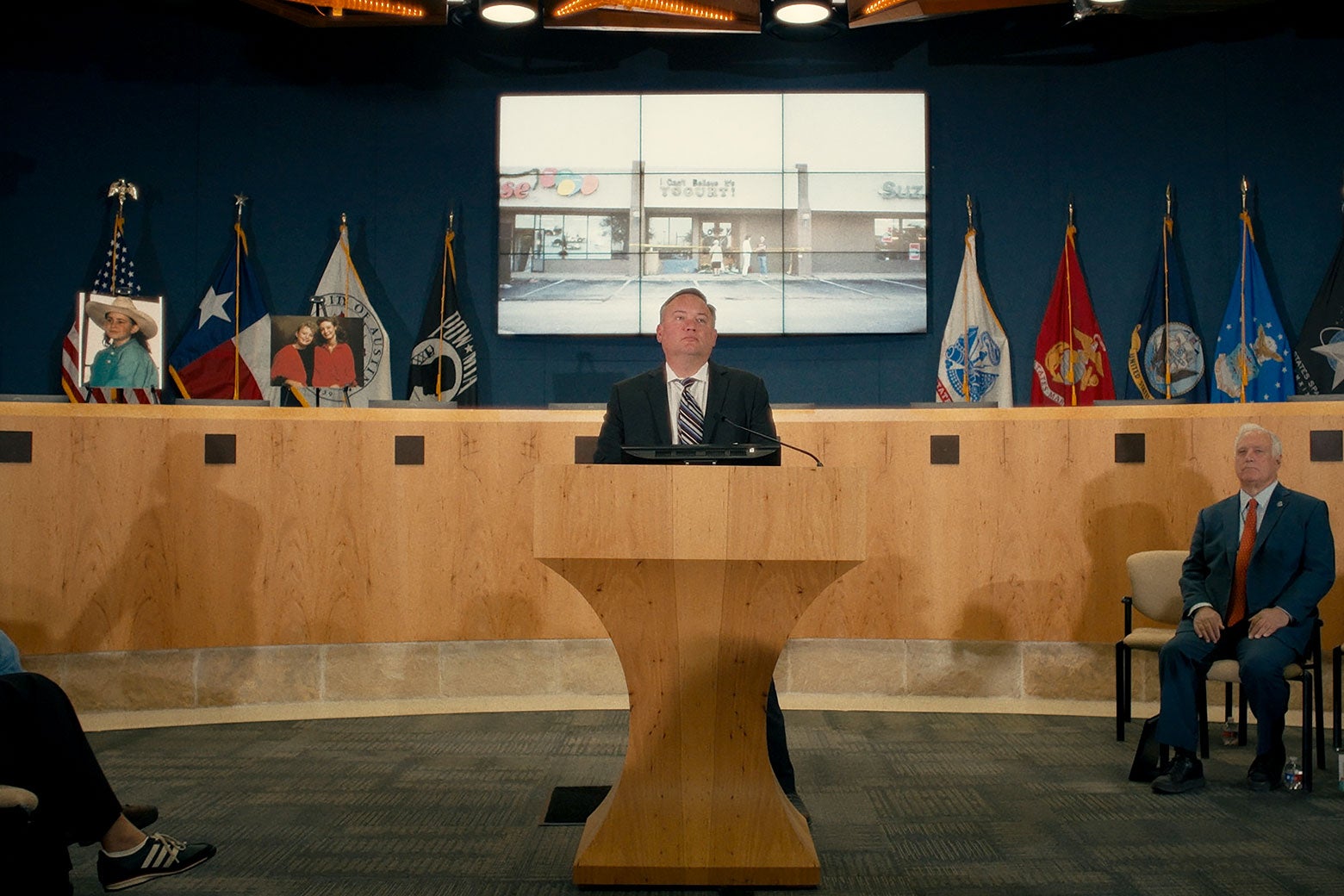
A four-part investigation centered on the long-lasting harm from an unsolved sexual assault and murder of four teenage girls in Austin, Texas, and the families affected. Two men were convicted based on coerced confessions, but their convictions were overturned and charges were dropped in 2009. Police misconduct and degraded physical evidence made it seem unlikely the true killer would be identified. A detective in the Austin Police Department cold case unit entered a single .380 shell casing and an incomplete DNA profile into national databases. New results linked the murders to Robert Eugene Brashers, a serial killer whose crimes were uncovered after his death by suicide in 1999. A Texas judge later ruled multiple accused men entirely innocent, while the case’s resolution raised questions about coping with sudden certainty after years of uncertainty.
"The sexual assault and murder of four teenage girls had haunted Austin, Texas, for decades, to say nothing of the victims' families and the four men wrongfully accused of the killings. (Two, Robert Springsteen and Michael Scott, were convicted on the basis of coerced confessions, but their convictions were overturned, and the charges against them were dropped in 2009.) And due to police misconduct and the degraded quality of the physical evidence, it seemed unlikely that the true killer would ever be found."
"But then Dan Jackson, a detective with the Austin Police Department's cold case unit, started plugging what evidence they had-a single .380 shell casing and an incomplete DNA profile-into national databases to see if new data and advancing technology might yield new results. And suddenly, there was an answer. The four girls-Amy Ayers, Eliza Thomas, Jennifer Harbison, and Sarah Harbison-were murdered by Robert Eugene Brashers, a serial killer whose crimes were uncovered years after his death by suicide in 1999."
"The fifth episode of The Yogurt Shop Murders, which premieres May 22 on HBO, catches viewers up on recent developments in the case, including the fact that, in February, a Texas judge took the extraordinary step of ruling that Springsteen and Scott were entirely innocent of the crime, as were Maurice Pierce and Forrest Welborn, who were accused but never tried."
"But even though Brown now has an answer to the question of, as billboards around Austin once asked, “Who Killed These Girls?,” there's still more to the story, namely how those who have suffered with uncertainty for so long deal with its abrupt and unexpected removal. It may be, as the episode's title has it, “The End of Wonder"
Read at Slate Magazine
Unable to calculate read time
Collection
[
|
...
]