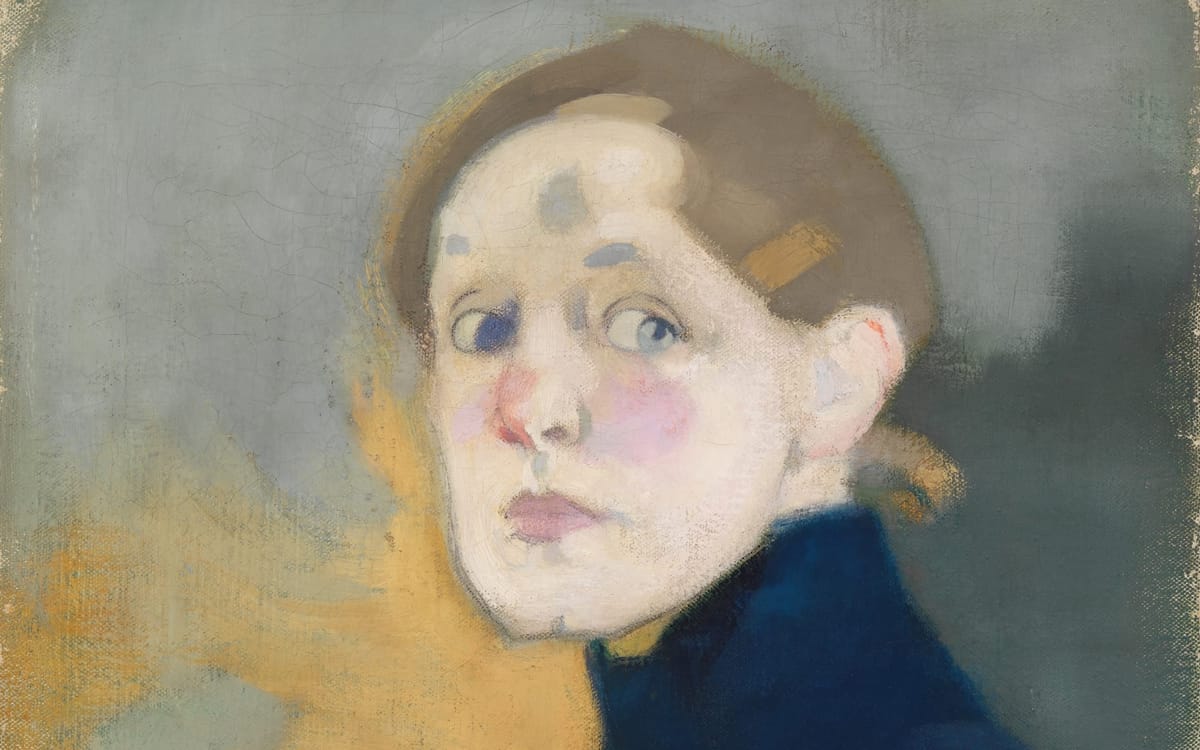
The Metropolitan Museum of Art presents Seeing Silence: The Paintings of Helene Schjerfbeck, offering Americans an opportunity to encounter her work. Schjerfbeck occupies a central place in Nordic modernism, particularly in Finland, comparable in cultural importance to Edvard Munch in Norway. The majority of her oeuvre remains in Finnish and Swedish collections, with The Met acquiring "The Lace Shawl" (1920) in 2023. The exhibition foregrounds many penetrating self-portraits and documents artistic growth alongside the psychic and physical ravages of aging, positioning Schjerfbeck for broader international recognition similar to recent rediscoveries of Nordic modernists.
"Seeing Silence: The Paintings of Helene Schjerfbeckat the Metropolitan Museum of Art is a rare opportunity for Americans to encounter the stunning work of a mostly unknown artist - unknown, at least, here. Schjerfbeck is not some newly discovered or overlooked woman artist of the past. In fact, she has long been celebrated in Nordic countries, particularly Finland, where she is as culturally important as Edvard Munch is to Norway - that is, a defining voice of modernism."
"One reason Schjerfbeck is so little known here is that the vast majority of her work is in Finnish and Swedish collections - though The Met acquired the single painting of hers in a major collection in this country, "The Lace Shawl" (1920), in 2023. Presumably, such an important exhibition and venue could do for Schjerfbeck what the 2018 Guggenheim show did for her fellow Swedish-speaker, Hilma af Klint: establish her as a globally recognized figure in 20th-century art. Schjerfbeck's work is that exceptional."
"Born in Helsinki in 1862, when Finland was part of the Russian empire, Schjerfbeck grew up in a Swedish-speaking family - not unusual, as Sweden ruled Finland for hundreds of years before ceding it to Russia in 1809. Practically, this meant she could converse with the many Swedish, Norwegian, and Danish artists (Finnish is part of a different language family) active in Paris when she arrived in 1880 at the age of 18."
Read at Hyperallergic
Unable to calculate read time
Collection
[
|
...
]