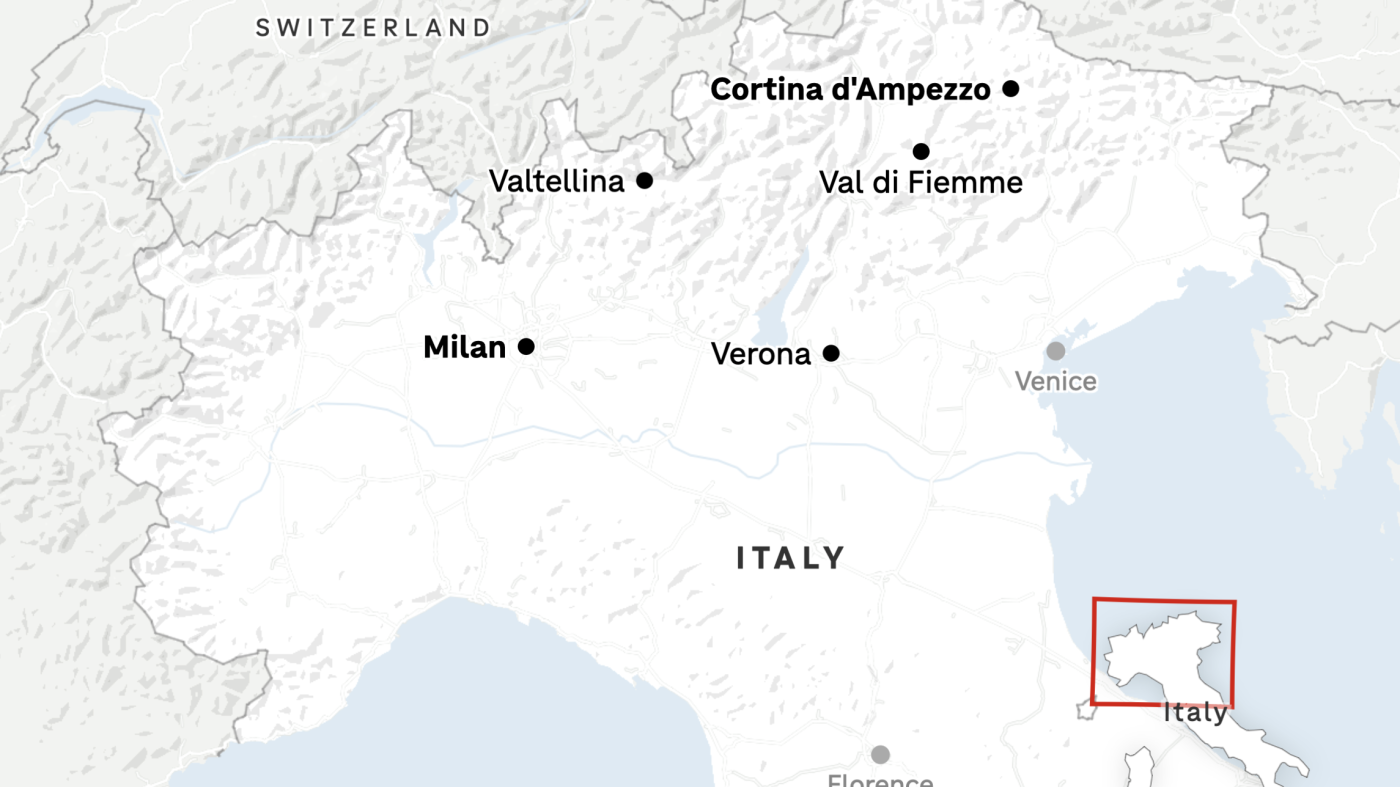
"The 2026 Olympics are set to be the most geographically widespread Games in history, the first to span multiple regions and two host cities: Milan and Cortina, which are about 250 miles apart from each other by road. Over the course of two and a half weeks, athletes in 16 sports will compete in events at 25 venues. The action is divided among four main clusters across northern Italy: Milan, Cortina d'Ampezzo, Valtellina and Val di Fiemme."
""This approach allows the maximum use of existing venues, reducing the need for new construction and, as a consequence, minimising the carbon footprint," states the International Olympic Committee on Olympics.com. The venues span an area covering some 8,495 square miles. Getting between towns could take more than a few hours by car especially on remote, wintery roads. Sarah Hirshland, CEO of the U.S. Olympic & Paralympic Committee,"
The 2026 Olympics will be the most geographically widespread Games, spanning multiple regions and two host cities, Milan and Cortina, about 250 miles apart by road. Over two and a half weeks athletes in 16 sports will compete at 25 venues. Events are organized into four clusters across northern Italy: Milan, Cortina d'Ampezzo, Valtellina and Val di Fiemme. Competitors will be housed in six Olympic Villages: Milan, Cortina, Anterselva, Bormio, Livigno and Predazzo. The approach emphasizes maximum use of existing venues to reduce new construction and minimise the carbon footprint. The venues cover roughly 8,495 square miles, and travel between towns may take several hours on remote winter roads, requiring realistic planning and patience.
Read at www.npr.org
Unable to calculate read time
Collection
[
|
...
]