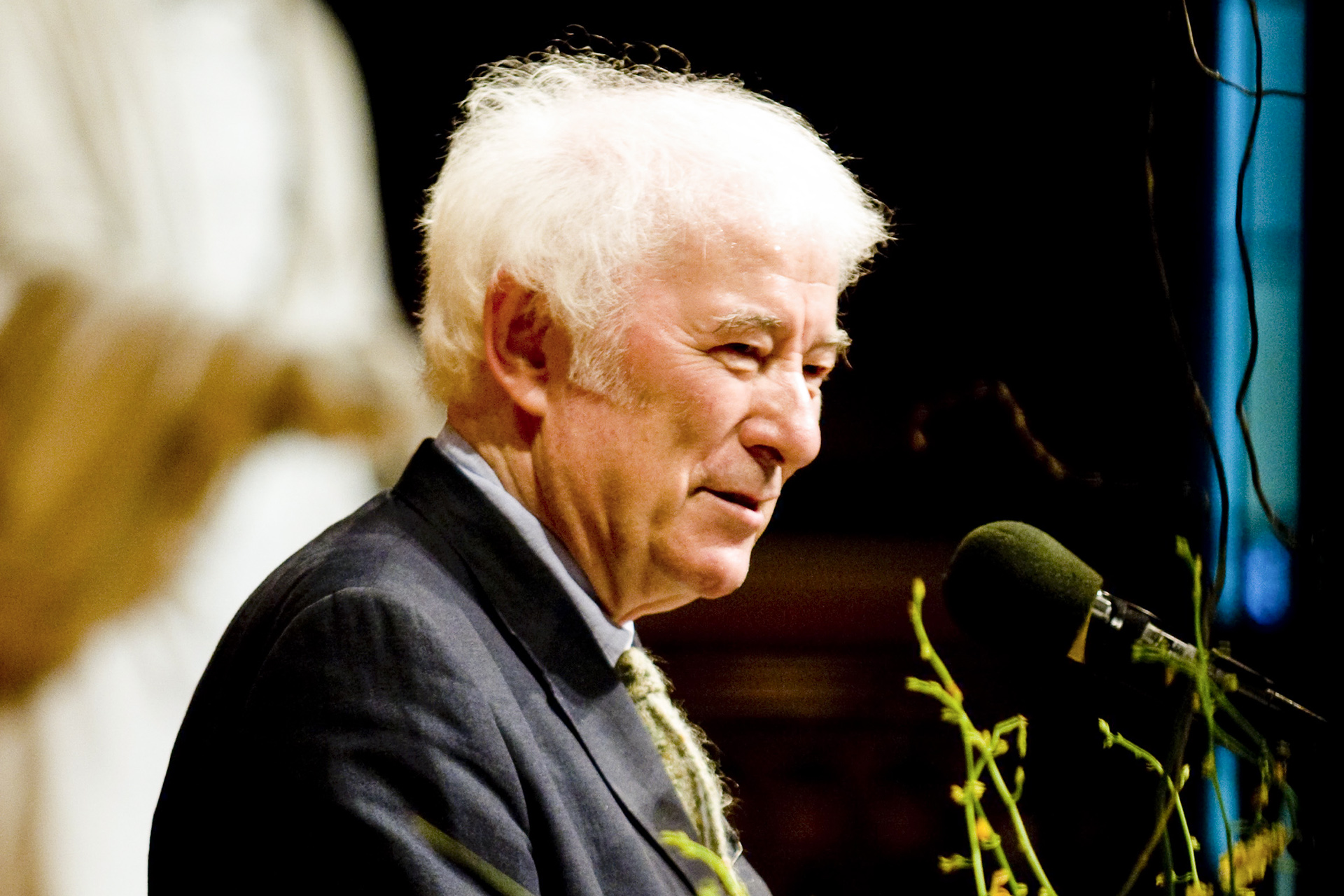
"Seamus Heaney was widely celebrated for the lyrical beauty of his poetry, profound and reflective intelligence, and yeomanly commitment to his " digging" work. The final fruit of his labors, "The Poems of Seamus Heaney," was published in November, 12 years after his death. It runs nearly to 1,300 pages and can perhaps best be read alongside his selected letters, from 2024, with another 900. Heaney's death in 2013 was marked by widespread grief and gratitude, but there was a special pang at Harvard, where he lived, worked, and taught for almost 30 years. His Adams House pied-à-terre is still preserved, roughly as it was."
"Heaney didn't need Harvard to become what he became: the winner of the 1995 Nobel Prize for Literature, a bestseller, by his death probably the most famous poet writing in English. Rather, the University and Heaney seemed to strike a happy friendship, meeting at the right moment: Just as his native Northern Ireland was descending into a maddening cycle of violence and retribution in the late 1970s, Heaney found in Cambridge space to spread out and to see his world anew."
"Given his production of poems, essays, plays and epistolary friendship, it would seem wrong to call Heaney tight-lipped. And yet there's something there. "He was an incredibly careful writer and speaker ... the most measured person I've ever met," said Marilynn Richtarik, who took Heaney's class in British and Irish poetry at Harvard in 1988, and is now a professor at Georgia State University."
Seamus Heaney combined lyrical beauty, reflective intelligence, and a committed practice of poetic "digging." The comprehensive Poems of Seamus Heaney spans nearly 1,300 pages and pairs with roughly 900 pages of selected letters from 2024. Heaney lived, worked, and taught at Harvard for almost thirty years while maintaining deep roots in Northern Ireland, where escalating violence in the late 1970s shaped his perspective. Harvard provided space for creative expansion and renewed vision. Heaney earned the 1995 Nobel Prize and broad fame, and colleagues and former students remember him as an exceptionally careful, measured writer and speaker.
Read at Harvard Gazette
Unable to calculate read time
Collection
[
|
...
]