"In mid-March a show of paintings by Shiva Addanki and Nikholis Planck opened at No Place Gallery, an artist-run space in Columbus, Ohio. Deriving its title, American Inquisition, from lines written by the Popular Front for the Liberation of Palestine in solidarity with then-detained Algerian-Palestinian activist Mahmoud Khalil - 'No to silence in the face of repression... Freedom for detainees... Down with the American Inquisition courts' - and its critical nucleus from social theorist Mike Davis's book Buda's Wagon (2007), a global history of the car bomb and urban insurgencies, the exhibition contends with paranoic US security politics in which imperial identity is defined by obsessive identification, alienation and preemptive containment of often ambiguous enemies and security threats."
"The two artists here build out an architectonic intimacy of threat-countering infrastructure by deploying the spectacular déjà vu of imperial violence. Is imperfection a secret weapon in an era of smooth-brain, AI a"
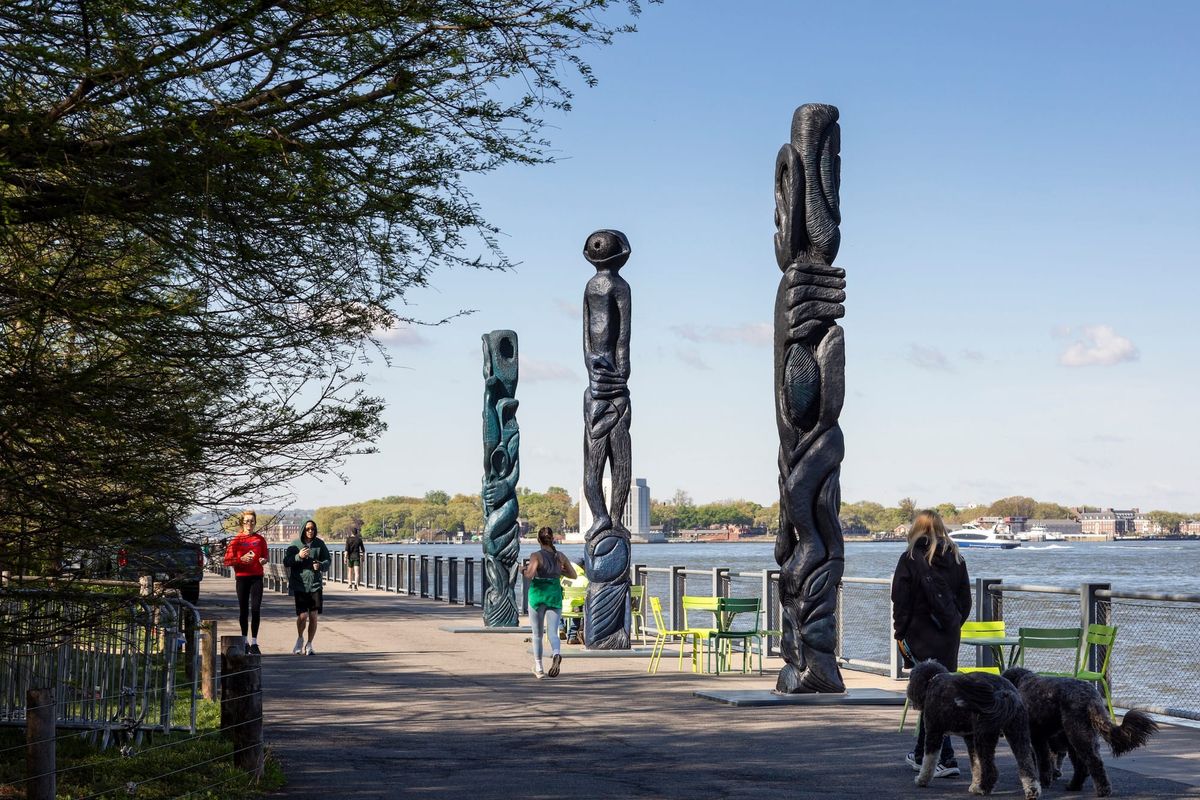
"In Brooklyn Bridge Park, artist Woody De Othello's aptly named "Guardian Spirit" installation rings in summer with talismanic sculptures installed on the riverbank. These three Redwood sentinels stand on the west edge, overlooking the water and Governor's Island in the background. All it takes is a glance at their names - "Reverence," "Awareness," and "Listening" (all 2026) - to pause and reflect on the rituals, people, and small moments of tenderness that give form to our days."
Talismanic sculptures in Brooklyn Bridge Park frame summer with names that evoke reverence, awareness, and listening. An exhibition in Columbus, Ohio titled American Inquisition connects solidarity language with a global history of car bombs and urban insurgencies. The show addresses paranoic U.S. security politics that define imperial identity through obsessive identification, alienation, and preemptive containment of ambiguous enemies. The artists build “threat-countering” infrastructure through an architectonic intimacy that reworks the recognizable patterns of imperial violence. The overall focus centers on how art can respond to repression and security regimes by making space for tenderness, reflection, and political resistance.
Read at Hyperallergic
Unable to calculate read time
Collection
[
|
...
]