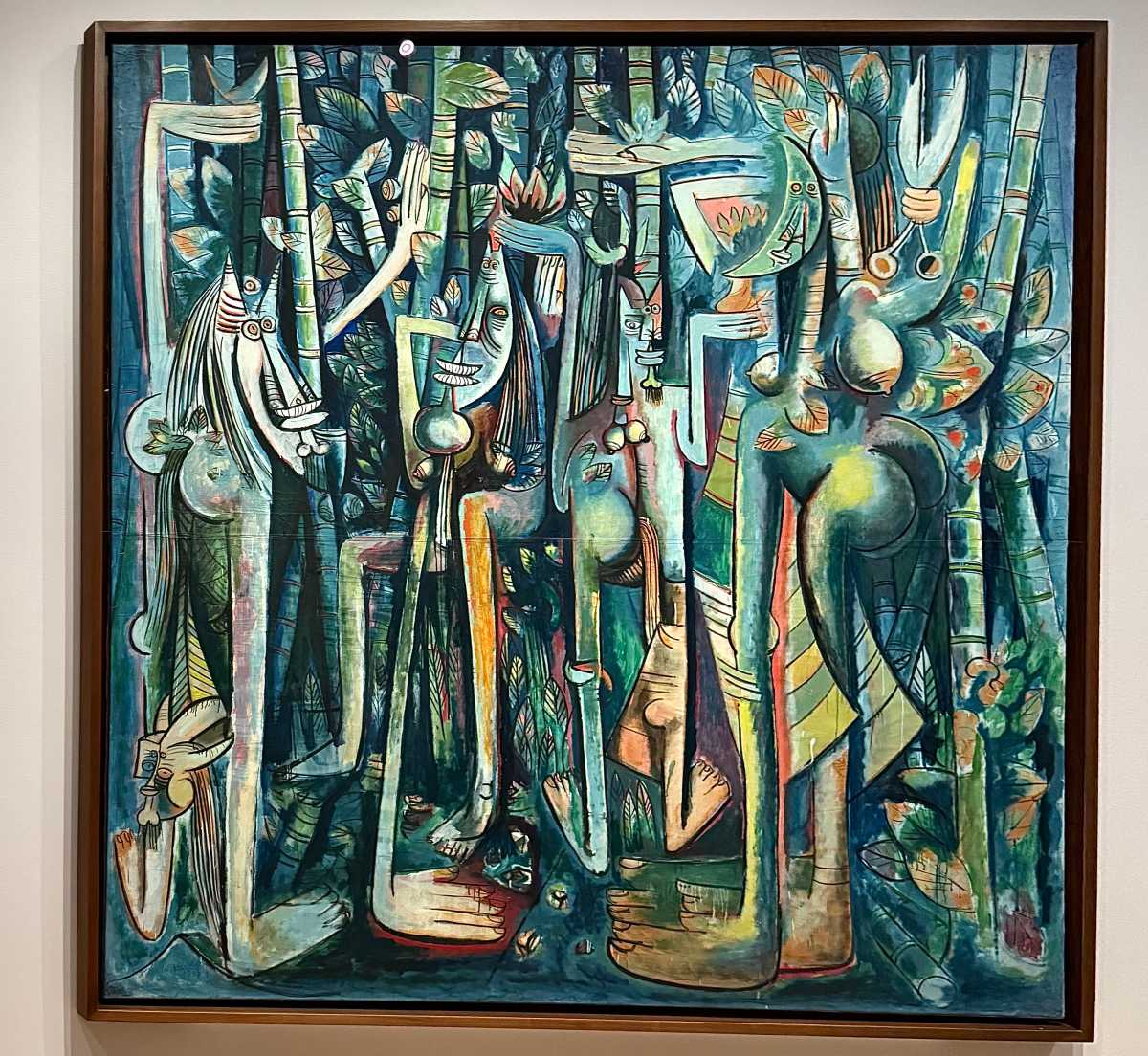
"Lam's impact lies in his refusal of singular origin. Born in 1902 in Sagua La Grande, Cuba, to a Chinese immigrant father and an Afro-Cuban mother, he inherited a plural visual and spiritual vocabulary from the start. From his father came an understanding of objects as vessels, of line as philosophy, of restraint as power. From Afro-Cuban cosmology came ritual, invocation, and the inseparability of body and spirit."
"His time in Europe sharpened his formal intelligence without diluting his purpose. Cubism and Surrealism offered tools, not direction. Lam understood that European modernism fractured form but failed to reckon fully with colonial violence and spiritual erasure. His response was neither imitation nor rebellion, but transformation. He rebuilt abstraction from the inside out, insisting that Black and Caribbean identity could not be rendered through Western naturalism without loss. Abstraction became his instrument of truth."
Wilfredo Lam fused Chinese visual sensibilities and Afro-Cuban cosmology into a singular visual language that integrated ritual, invocation, and the inseparability of body and spirit with an understanding of objects as vessels, line as philosophy, and restraint as power. European modernism's Cubism and Surrealism provided formal tools but not direction; Lam transformed abstraction to confront colonial violence and spiritual erasure. He reconstructed abstraction from within, asserting that Black and Caribbean identity could not be captured by Western naturalism without loss. His paintings function as deliberate syntheses of diaspora, migration, survival, and spiritual resilience, reclaiming and recharging modernist form.
Read at www.amny.com
Unable to calculate read time
Collection
[
|
...
]