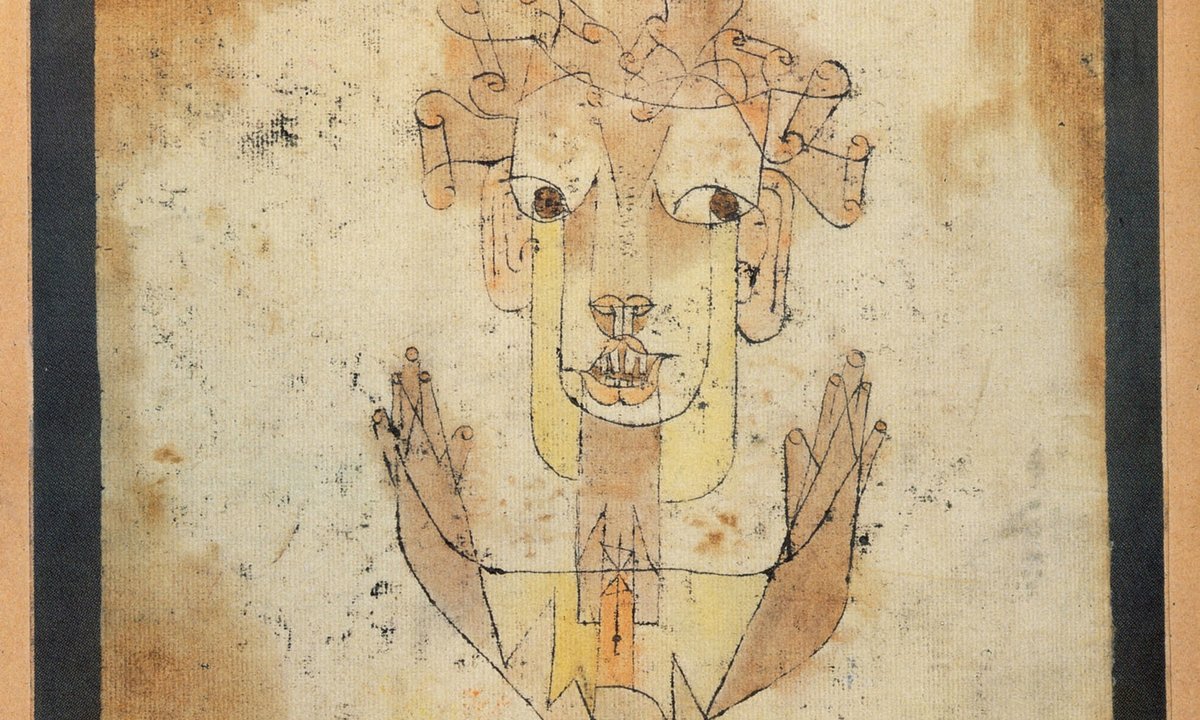
"The exhibition, Paul Klee: Other Possible Worlds, focuses on the German artist's later works, many of which responded to the rise of Nazism. Despite not being Jewish, Klee was a target of Nazi persecution and branded by a newspaper as a 'typical Galician Jew'."
"Klee made Angelus Novus in 1920 using his signature oil-transfer technique. After coating a sheet of paper with black oil paint, he used an etching needle to transfer the dry paint onto a second sheet of paper, thereby creating a drawing that he painted over with watercolour."
"A year later, the work was purchased by the German Jewish philosopher Walter Benjamin. The two men's lives had striking parallels. When the Third Reich rose to power in 1933, Benjamin fled to France and Klee to Switzerland, the country of his birth."
The Paul Klee exhibition at the Jewish Museum in New York opened on 20 March without its centerpiece, Angelus Novus, which is stuck in Israel due to the Iran war. An authorized copy is displayed instead. The exhibition, running until 26 July, focuses on Klee's later works, many responding to Nazism. Klee faced persecution by the Nazis despite not being Jewish. He created Angelus Novus in 1920 using an oil-transfer technique, and it was later purchased by philosopher Walter Benjamin, who shared a tragic fate with Klee during the rise of the Third Reich.
Read at The Art Newspaper - International art news and events
Unable to calculate read time
Collection
[
|
...
]