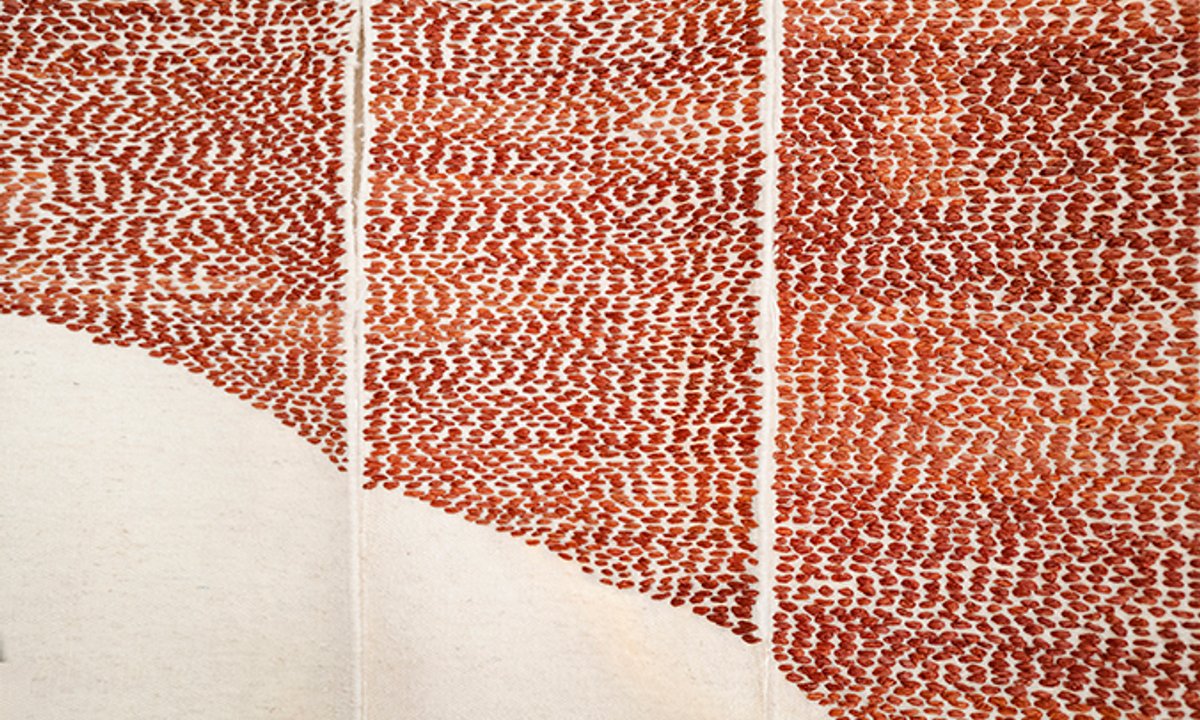
Morocco's first national pavilion at the Venice Biennale features Asetta, a 300 sq. m installation by Amina Agueznay. The work highlights Morocco's traditional craftsmanship, created with over 130 artisans, primarily women. Asetta explores the transmission of artisanal skills and shared memory, honoring the land and people behind these traditions. Agueznay examines the concept of the threshold in Moroccan architecture, allowing visitors to engage with the installation. The design encourages interaction, inviting viewers to experience the energy of the work.
"Transmission, the way I see it, is between the artisans and myself. The curator [Meriem Berrada] and I are passing intangible stories between us. And then we are transmitting to the people who will be experiencing this immersive installation."
"I hope that when a visitor gets into [the installation] the energy that transpires through the work will be communicated. That's my goal as an artist."
Read at The Art Newspaper - International art news and events
Unable to calculate read time
Collection
[
|
...
]