"The only thing most people know about epiphytes, if they know about them at all, is that they're rootless. That's not quite true - they develop highly specialized root systems adapted to wherever they land. In Epiphytic Elucidations at Patel Brown Gallery, Calgary-based artist Marigold Santos takes this fact as more than a metaphor. The exhibition uses epiphytes - plants that grow on other plants without harming them - as a framework for the expansive ways diasporas form through material labor."
"references a 1914 photograph of an incarcerated Filipina mother seated in a rattan peacock chair at Bilibid Prison in Manila. The chair - produced by imprisoned artisans under American colonial rule and later sold to tourists and exported worldwide - became a global design icon whose origins were laundered through extensive commodification. Santos paints the seated figure as an epiphyte clinging to the chair as host, but the relationship is less than symbiotic."
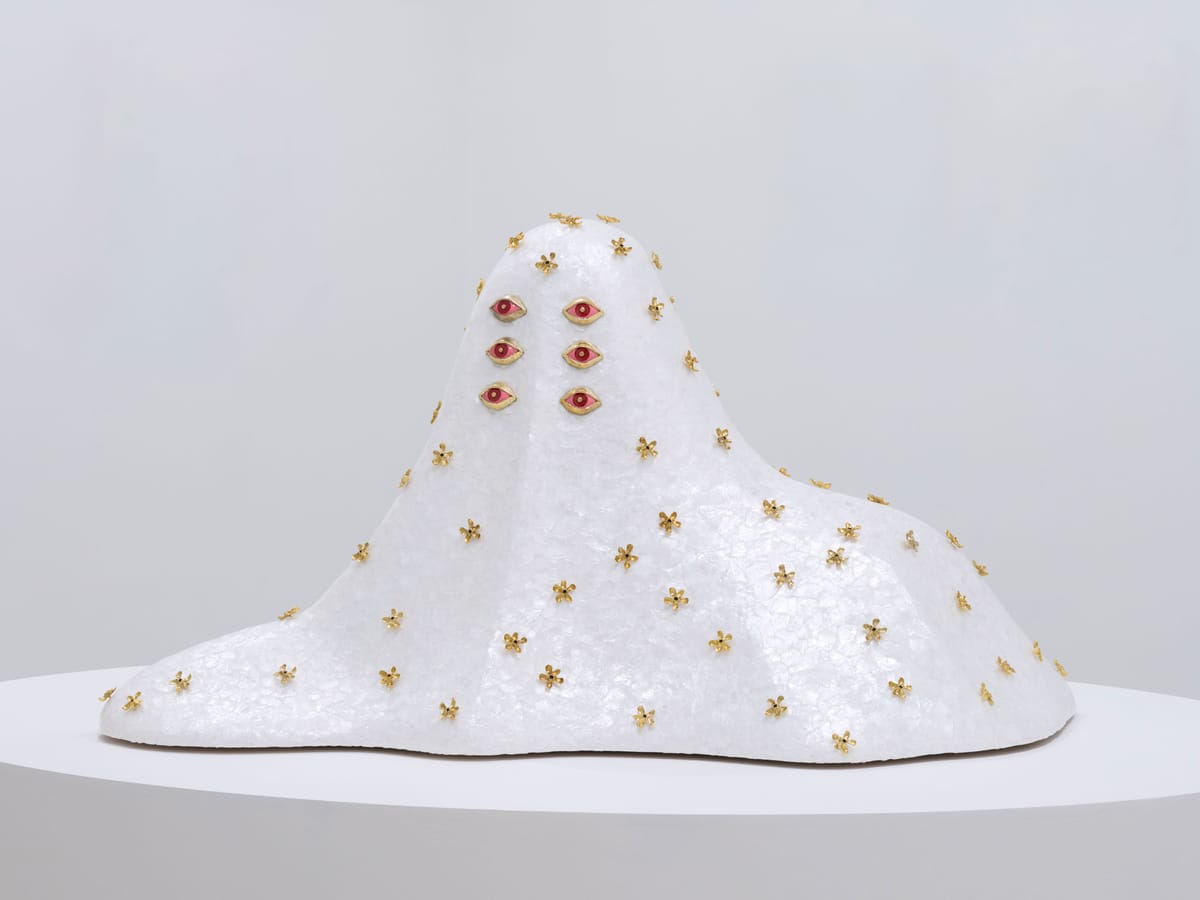
Epiphytes serve as a framework to explore diasporic formation and the embedded labor of material histories. A work titled "shroud epiphyte (bilibid chair)" references a 1914 photograph of an incarcerated Filipina mother seated in a rattan peacock chair produced by imprisoned artisans under American colonial rule; that chair became a global design icon whose origins were laundered through commodification. In "nacre," shells are hand-cleaned and acid-treated to become malleable, assembled into an amorphous creature resembling an aswang with brass eyes. Materials are shown to require breaking down and transformation, making visible labor, extraction, and entangled cultural meanings.
Read at Hyperallergic
Unable to calculate read time
Collection
[
|
...
]