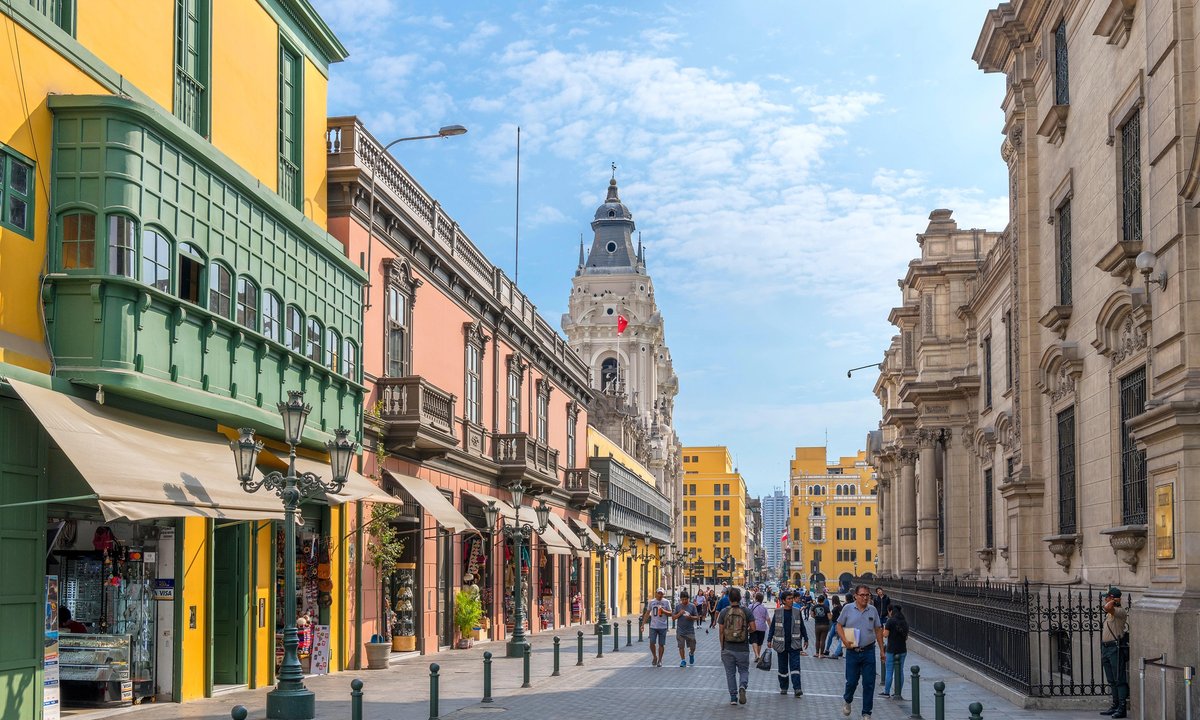
"As the city has continued to grow, wealth has fled to its outskirts, and buildings in the centre have been abandoned. This emptying out has created a disconnect between the city's inhabitants and its long history. To mend the rupture, the Metropolitan Municipality of Lima is working to restore not only its architectural beauty but also its economic potential and identity through an ambitious revitalisation project called Lima 2035, due for completion in time to celebrate the historic city's 500th birthday."
"Lima served as the capital of the Viceroyalty of Peru, which extended well beyond Peru's current borders. It was the wealthiest city in South America from the 16th to the early 19th centuries, due in large part to the highly profitable silver mines of Potosí (in modern-day Bolivia). In fact, the real de a ocho -the dominant international currency from the 16th to the 19th centuries-was made of silver and minted in Lima."
"Unlike the Peruvian cities of Cusco (built with stone from Incan quarries) or Arequipa (constructed using volcanic rock), Lima's buildings were made using adobe and quincha-a wooden framework covered in mud and plaster. The city has suffered frequent earthquakes, and reconstruction after each one was both traumatic and costly. As a result, preference was given to quincha, a lighter and"
Unesco named Lima's historic city centre a World Heritage Site in 1991. Continued urban growth pushed wealth to the outskirts and left many central buildings abandoned, creating a disconnect between residents and historic fabric. The Metropolitan Municipality of Lima launched the Lima 2035 revitalisation project to restore architectural beauty, economic potential and civic identity before the city's 500th anniversary. Lima was founded on 18 January 1535 and became the capital of the Viceroyalty of Peru and a major trade hub linked to the Port of Callao. Wealth from Potosí silver made Lima the wealthiest South American city for centuries. The city's adobe and quincha construction and frequent earthquakes have driven costly reconstructions, prompting a preference for lighter quincha techniques.
Read at The Art Newspaper - International art news and events
Unable to calculate read time
Collection
[
|
...
]