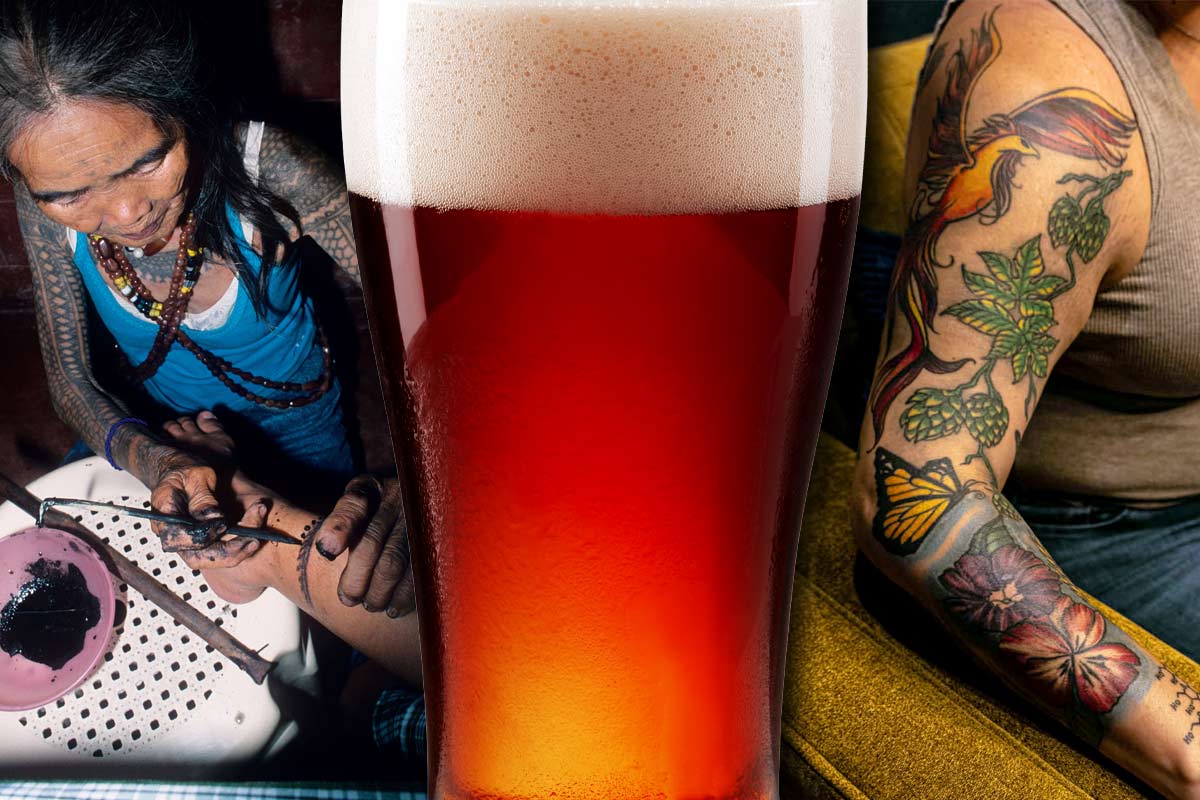
"Tattoos and fermentation rarely appear in the same conversation, yet across the world, they share a quiet kinship. Both are practices of transformation, crafts that reshape raw material over time through care and relationships to the land, the spiritual, and the community. Tattooing inscribes identity and ancestry onto skin, while fermentation preserves, nourishes, and binds communities through shared taste and ritual. Both create change, brewing something more than themselves through embodied knowledge passed between generations."
"In northern Japan, Ainu women scraped soot from earthenware pots used for brewing to create tattoo ink, connecting two art forms via the hearth. Kalinga tattooists in the Philippines used fermented ink made from soot and sugarcane juice to hand-tap tattoos to mark bravery and beauty. The Makushi brewers in Amazonian Guyana applied tattoos as charms to shape the sweetness or "sting" of their fermented beverage."
Both tattooing and fermentation are practices of transformation that reshape raw materials through time, care, and relationships to land, spirit, and community. Tattooing inscribes identity and ancestry onto skin. Fermentation preserves, nourishes, and binds communities through shared taste and ritual. Ainu women scraped soot from brewing pots to make tattoo ink connected to the hearth. Kalinga tattooists used fermented soot and sugarcane juice ink for hand-tap tattoos marking bravery and beauty. Makushi brewers applied tattoos as charms to influence the sweetness or "sting" of fermented beverages. Ink and drink function as technologies of continuity linking communities to ancestors and place.
Read at CraftBeer.com
Unable to calculate read time
Collection
[
|
...
]