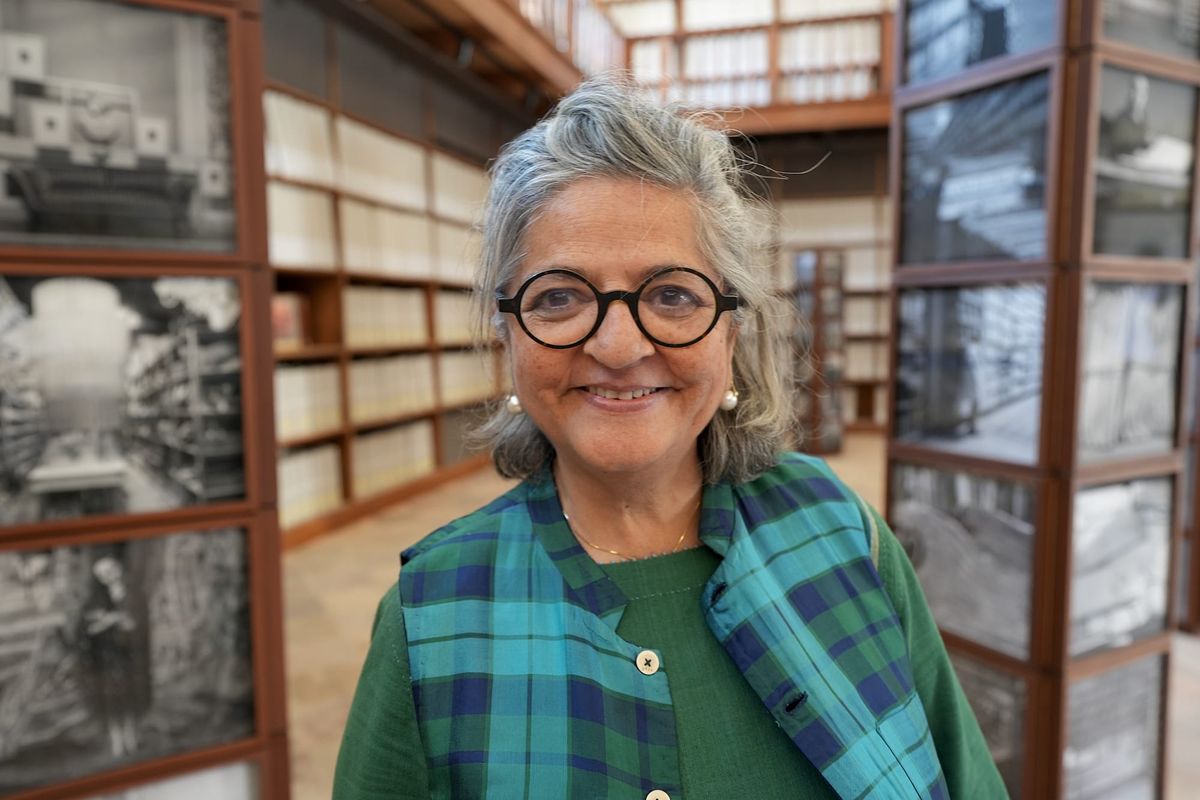
"For the first time in its history, the State Archives of Venice has opened its doors to the public to showcase an art exhibition by Dayanita Singh. The Indian “off-set artist,” as she calls herself, has long been unsatisfied with the limitations of the photograph placed on a wall. Instead, she's explored more dynamic formats that use serialization, custom frames, and book objects."
"Singh bartered and negotiated her way into Italian archives from Naples to Venice, while finding individuals she calls patrons who helped support her passion for photography's new frontiers, unmoored from the anchors of deep pockets that hinder her imagination. This show continues that career-spanning goal. After giving herself the challenge of achieving all this without major institutional funding, Singh bartered and negotiated her way into Italian archives from Naples to Venice."
"“I knew that I could make my own systems, that I didn't have to depend on the distribution of the publishing world or the gallery world,” Singh told me during our conversation in 2018 on the Hyperallergic Podcast, which coincided with her small retrospective of book objects at a New York City gallery and her inclusion in that year's Carnegie International."
"“It was an experiment to see if it was possible to really work with the friendship economy and make something outside the very commerce”"
The State Archives of Venice opened to the public to present Dayanita Singh’s exhibition ARCHIVIO. The venue contains documents spanning more than a millennium, including wills, contracts, and other official records tied to the city’s history. Singh, an “off-set artist,” has been dissatisfied with the limits of photographs mounted on walls and has pursued dynamic formats such as serialization, custom frames, and book objects. She aimed to build these projects without major institutional funding by bartering and negotiating access to archives from Naples to Venice. She also relied on individuals she calls patrons, supporting her work in photography’s new frontiers through a friendship-based economy rather than conventional commerce.
Read at Hyperallergic
Unable to calculate read time
Collection
[
|
...
]