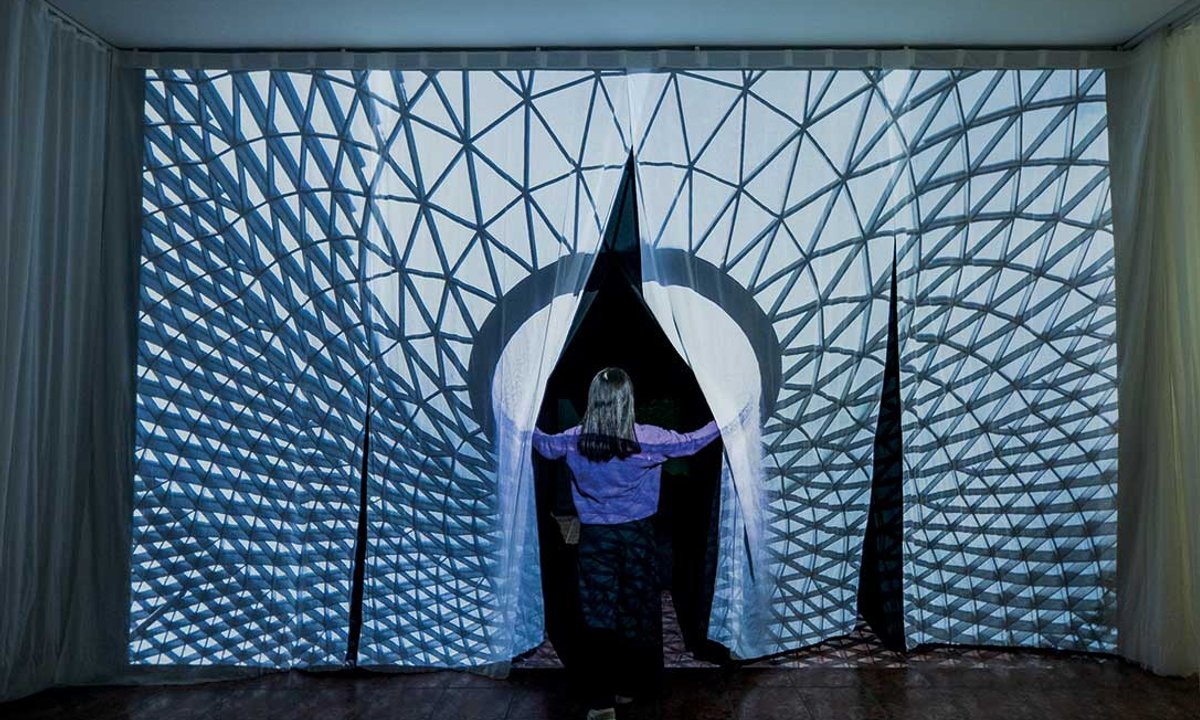
""The idea is that intention is not the whole story," says Selene Yap, a co-curator of the Biennale. "Systems can generate a certain kind of afterlife, and there are side effects." While the waterfall impresses, it also has consequences, she adds. The work uncovers how Singapore imports hydropower through transnational infrastructure, including the Vajiralongkorn Dam, whose construction has displaced Thailand's indigenous Karen hill tribe, forcing many to live in floating homes on the reservoir."
"But the works assembled for the Biennale offer a preview into something that is more uncongealed or incoherent," says Yap, who collaborated with curators Hsu Fang-Tze, Ong Puay Khim and Duncan Bass. Founded in 2006, the Biennale is organised by the Singapore Art Museum (SAM) and commissioned by the country's National Arts Council. While previous editions of the event have concentrated works in SAM, this year more than 100 works are spread across five neighbourhoods."
Drifting Bodies (2025) projects footage of the world's tallest indoor waterfall at Jewel Changi Airport onto white curtains concealing a dark room where viewers sit on a floor mattress that feels like a fragile raft, surrounded by visceral footage of Thailand's Vajiralongkorn Dam. The installation reveals how Singapore imports hydropower through transnational infrastructure and highlights the dam's displacement of Thailand's indigenous Karen hill tribe, forcing many into floating homes. The eighth Singapore Biennale, Pure Intention, assembles more than 100 works across five neighbourhoods. Curators Selene Yap, Hsu Fang-Tze, Ong Puay Khim and Duncan Bass emphasize unintended afterlives, incidental and peripheral narratives and a move away from neat national narratives during SG60.
Read at The Art Newspaper - International art news and events
Unable to calculate read time
Collection
[
|
...
]