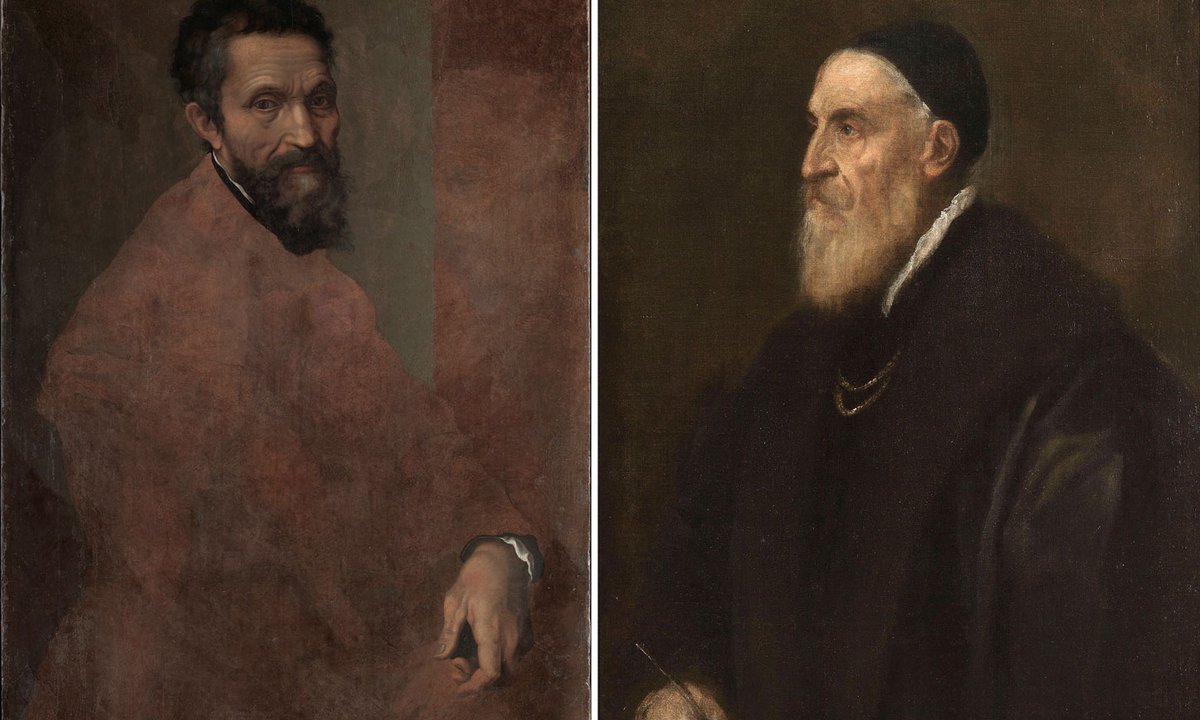
"Michelangelo the Elder was depicted at various stages of his illustrious if somewhat chequered career: hobnobbing with five popes, Emperor Charles V, Doge Andrea Gritti and an embassy from the Ottoman sultan; declining to return to Rome after a disagreement with Julius II; designing fortifications for the short-lived Florentine Republic; refusing payment from Paul III for his work on St Peter's Basilica."
"There is a longstanding art-historical dichotomy that sets Michelangelo at the pinnacle of a tradition prioritising disegno, which means both drawing and design: thinking about what you are going to do before you do it, and setting down precise guidelines for your brush to follow when you eventually execute your painting."
In the early 17th century, Michelangelo Buonarroti the Younger commissioned a series of paintings and grisailles depicting his great-uncle Michelangelo the Elder for the family palazzo in Florence. These works illustrated key moments in the Elder's career, including his interactions with popes, emperors, and other notable figures, as well as his refusal of payment and various acts of defiance. The paintings demonstrate Michelangelo's tremendous success during his lifetime and reveal aspects of his character such as frugality, piety, and contrariness. Most significantly, these commemorative works illustrate how substantially artistic tastes had transformed in the fifty years following Michelangelo's death, reflecting evolving aesthetic values and priorities in Renaissance art.
Read at The Art Newspaper - International art news and events
Unable to calculate read time
Collection
[
|
...
]