"Renais­sance artist Albrecht Dür­er (1471-1528) nev­er saw a rhi­no him­self, but by rely­ing on eye­wit­ness descrip­tions of the one King Manuel I of Por­tu­gal intend­ed as a gift to the Pope, he man­aged to ren­der a fair­ly real­is­tic one, all things con­sid­ered."
"Ancient Egyp­tians con­veyed their grat­i­tude and respect by regard­ing cats as sym­bols of divin­i­ty, pro­tec­tion, and strength. Cer­tain Egypt­ian god­dess­es, like Bastet, were imbued with unmis­tak­ably feline char­ac­ter­is­tics. The Vin­tage News reports that harm­ing a cat in those days was pun­ish­able by death, export­ing them was ille­gal, and, much like today, the death of a cat was an occa­sion for pub­lic sor­row:"
"When a cat died, it was buried with hon­ors, mum­mi­fied and mourned by the humans. The body of the cat would be wrapped in the finest mate­ri­als and then embalmed in order to pre­serve the body for a longer time. Ancient Egyp­tians went so far that they shaved their eye­brows as a sign of their deep sor­row for the deceased pet."
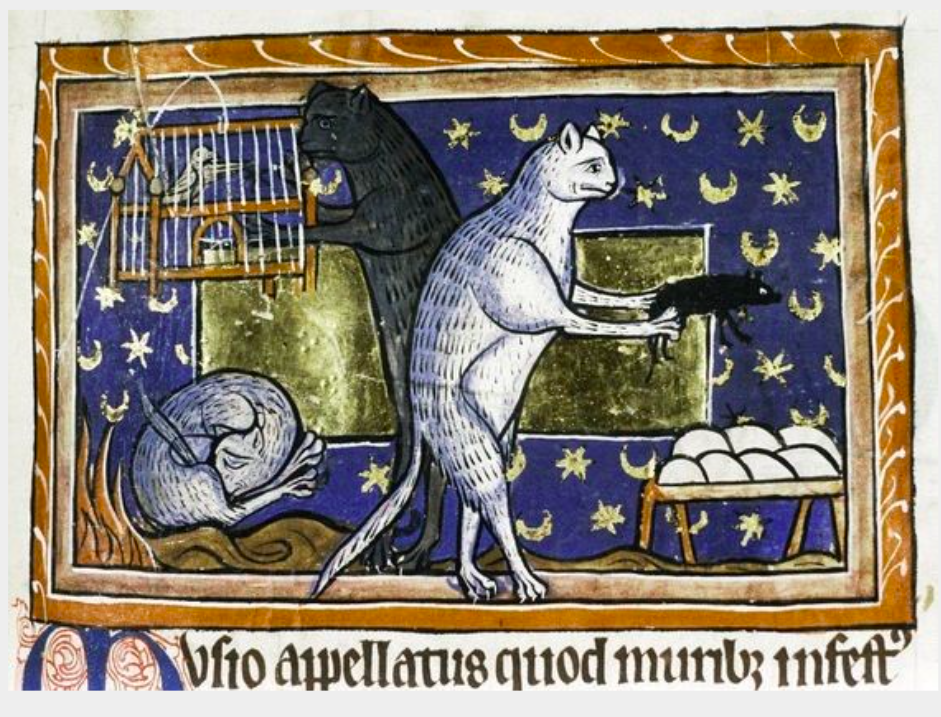
"Aberdeen Uni­ver­si­ty Library, MS 24 f. 23v (Eng­land, c 1200) The medieval church took a much dark­er view of our feline friends. Their close ties to pagan­ism and ear­ly reli­gions were enoug"
Albrecht Dürer produced a realistic rhinoceros from eyewitness descriptions despite never seeing the animal. Medieval artistic depictions of cats were often inaccurate visually, yet cats remained integrated into medieval society and provided essential pest control. Cats had been domesticated since ancient Egypt, where they were revered as symbols of divinity, protection, and strength, and certain goddesses, such as Bastet, embodied feline traits. Harming or exporting cats could be punishable, and the death of a cat prompted public mourning, mummification, and burial with honors, including the shaving of human eyebrows as a sign of sorrow. The medieval church viewed cats more negatively due to perceived pagan associations.
Read at Open Culture
Unable to calculate read time
Collection
[
|
...
]