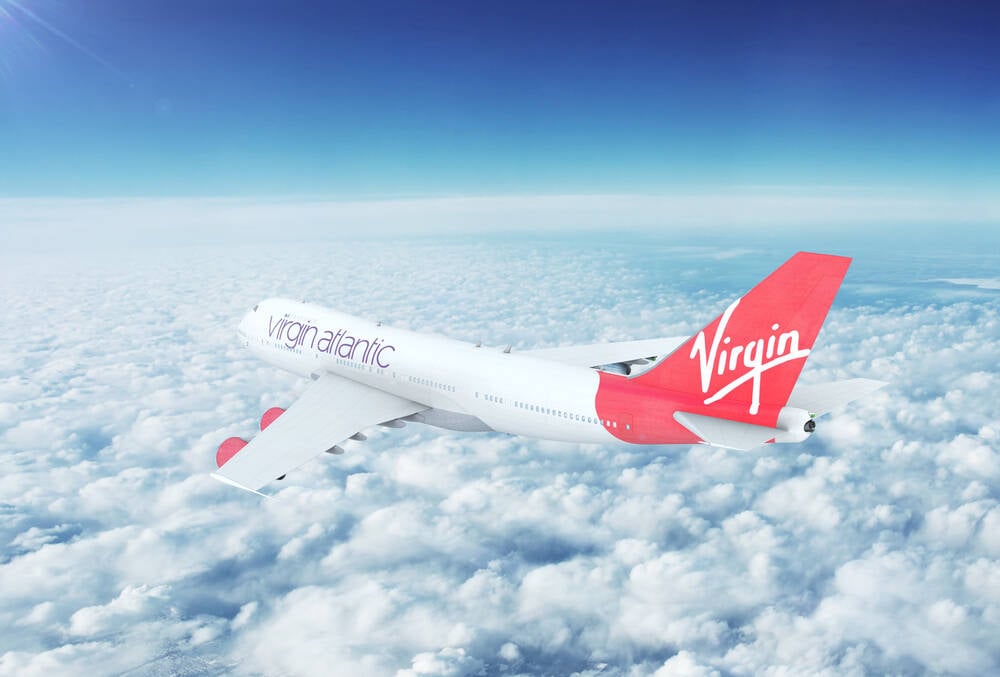
"Sam Netherwood, co-founder and director of Tomoro, spoke to The Register about the development of Concierge and the project's goals. "Initially, Virgin engaged us," Netherwood said. "We partner quite closely with OpenAI. Virgin also had already entered into an agreement with OpenAI. And so that's how it came together in the first place. And initially we just did a proof-of-concept over about six weeks.""
"The goal, he explained, was to test some hypotheses about whether the technology could deliver an AI interaction experience that would be valuable and to explore how that experience might feel from a consumer perspective in light of Virgin Atlantic's ambitions. "So the proof-of-concept that we built was using OpenAI's real-time speech-to-speech model," said Netherwood. "That's built for ultra-low latency, really natural, human-feeling conversation. But there are still some question marks around the intelligence of that model.""
Tomoro and OpenAI implemented Virgin Atlantic Concierge, a web-based AI travel agent that accepts typed or spoken input and can respond with simulated speech or text. The service uses OpenAI models, including a real-time speech-to-speech model designed for low-latency, natural conversation, though model intelligence still has question marks. Concierge functions as an agent with access to tools and airline APIs to fetch flight information and complete bookings; it requires full API access to be useful beyond pre-canned routes. Spoken input takes longer to process because captured audio must be converted with speech-to-text before handling.
Read at Theregister
Unable to calculate read time
Collection
[
|
...
]