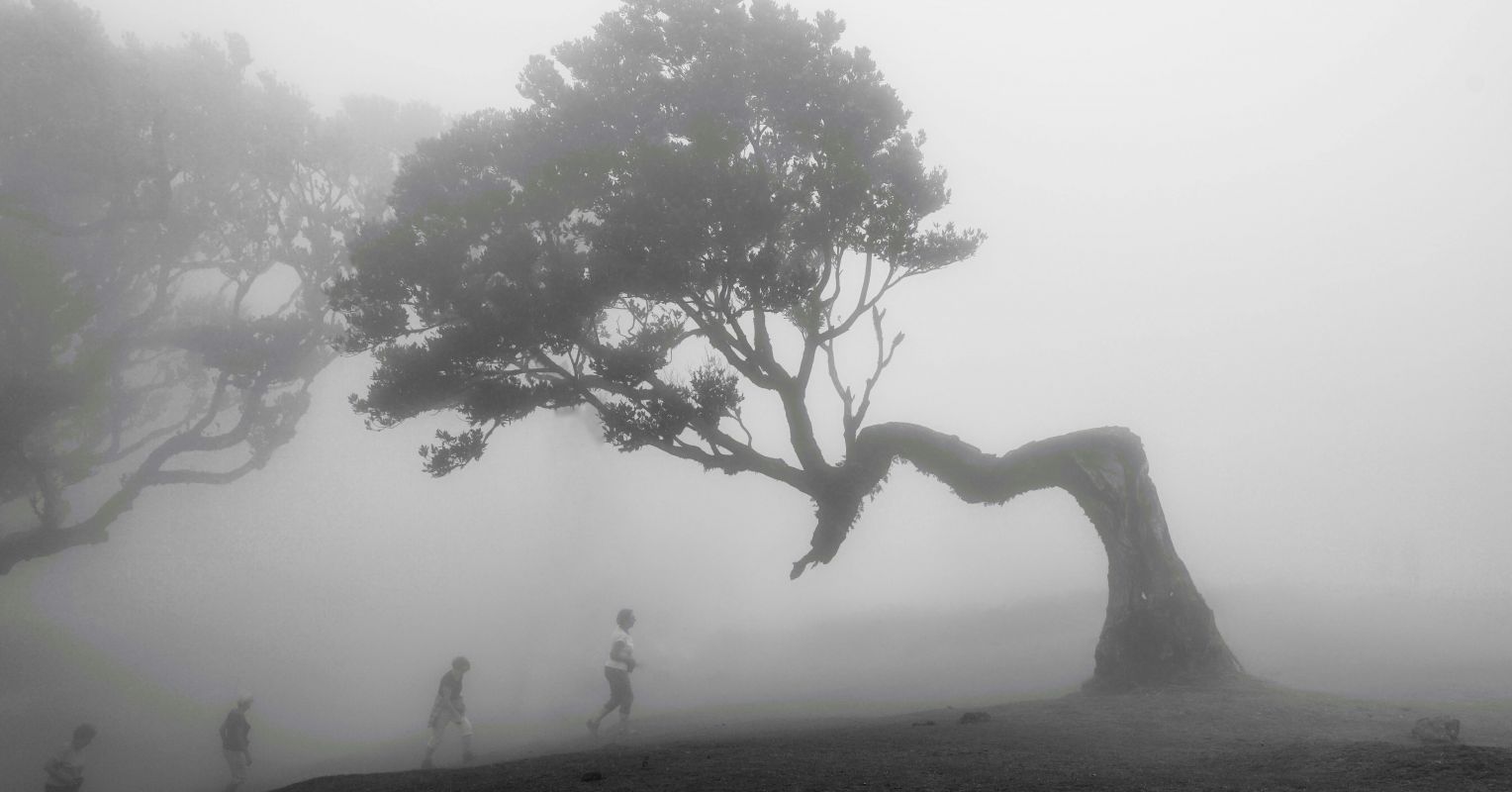
"Somewhere between six and seven million years ago, our ancestors began walking upright, and the advantages were considerable: Freed from locomotion, upper limbs could grasp, manipulate, eventually craft, and the opposable thumb became the hinge on which human civilization would turn. We are, above all else, tool users-fire, the wheel, writing, the printing press, the transistor-each tool reshaping not only what we could do but who we became."
"The digital world is humanity's new fabled savanna-"fabled" because science has found the actual story of human evolution is more complex than jumping down from the trees. The paleoecology, we believe, involved a landscape of woodlands and grasslands rather than pure open plain. The essential truth holds: Our ancestors left the protective canopy for more exposed terrain, keeping the brachiating arms evolved for us to reach and climb, and something in us was forged."
"Likewise, AI is only metaphorically a savanna. In reality, it is more complex and multidimensional, intelligent in more ways than we can fathom, greater than mere machine but less than alive. Our inventiveness, our wishes to create replicas of ourselves, from ego ideal to malevolent doppelgänger, from immortal demon to eternal god, is catching up with us. AI is an amplifier of humanity, which may become a-thing-unto-itself in the very near future."
Bipedalism freed the upper limbs for grasping and manipulation, enabling tool use and the development of transformative technologies such as fire, the wheel, writing, the printing press, and the transistor. The digital environment functions as a metaphorical savanna, offering new opportunities and dangers that require different skills, greater mobility, and reduced protection. Artificial intelligence externalizes cognition and amplifies human capacities while exhibiting complexity beyond simple machine or organism categories. Human impulses to reproduce aspects of the self drive AI development, and whether AI becomes an autonomous entity remains an open, uncertain question.
Read at Psychology Today
Unable to calculate read time
Collection
[
|
...
]