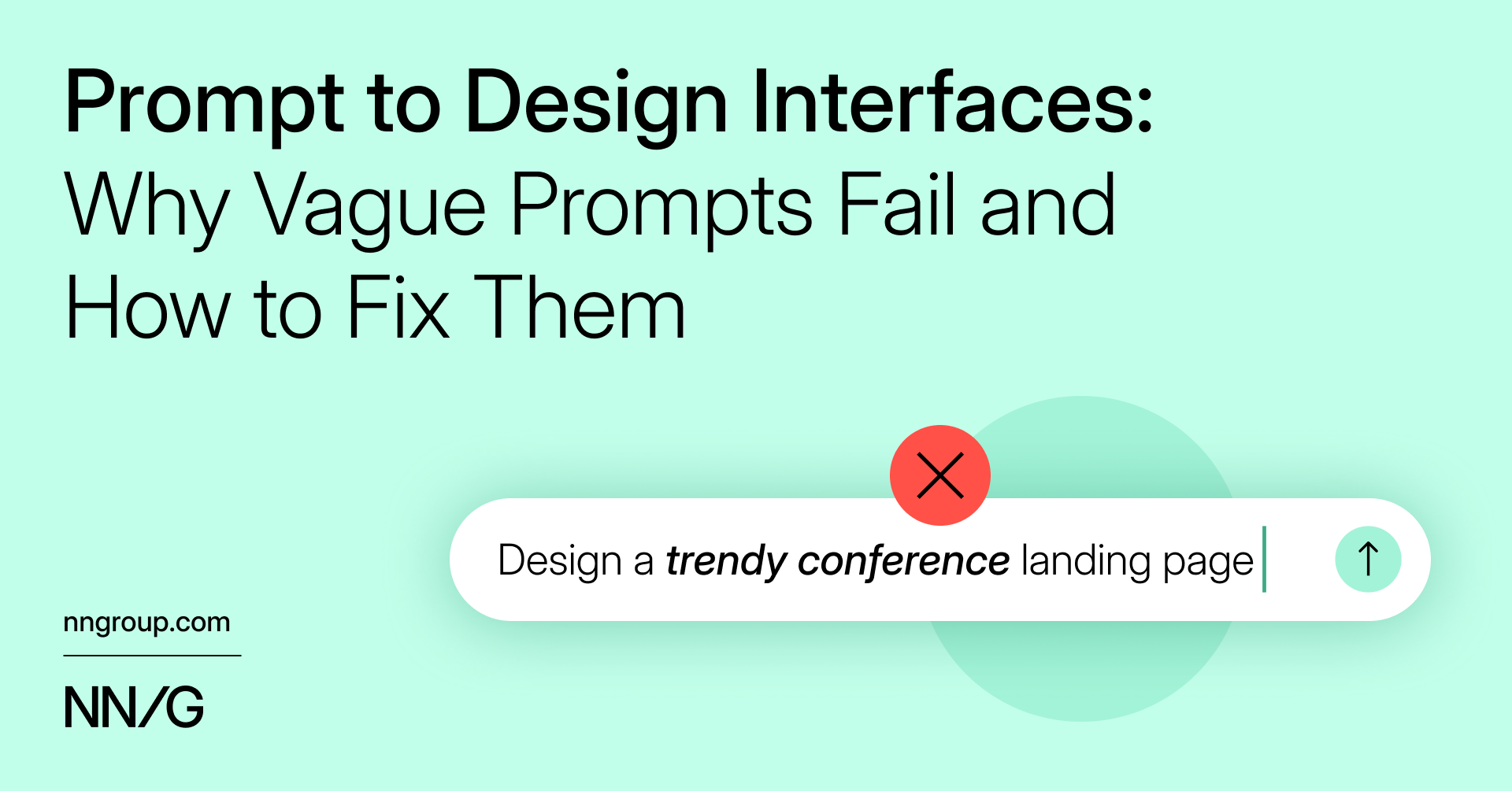
"The rise of GenAI tools has introduced a new paradigm for design work - rather than crafting interfaces by directly manipulating elements in design tools, designers can prompt AI-prototyping tools to generate designs. When you're working with AI, the output quality will be largely dependent on the specificity of the prompt. This article discusses common issues with vague text prompts and offers recommendations on how to achieve better results from AI-prototyping tools without undertaking the bulk of the design work yourself."
"A skilled human designer can take a broad design statement (such as "design a profile page that allows course attendees to do XYZ"), identify and prioritize the information users need to see on the page, choose the design patterns that support users in accomplishing their goals, and arrange elements in a logical layout that is easy to navigate. In contrast, AI struggles with ambiguity and is unable to deliver thoughtful results within a broad context."
GenAI tools enable designers to generate interfaces by prompting AI rather than manually manipulating design elements. Output quality depends heavily on prompt specificity, with detailed prompts producing results comparable to human designers and vague prompts producing inconsistent outcomes. Human designers synthesize user needs, prioritize information, select supporting design patterns, and arrange elements into coherent layouts; AI struggles to replicate that reasoning when prompts are ambiguous. Open-ended prompts can help explore diverse ideas early in the process but are insufficient for precise design work. Designers should tailor prompting strategies to the task, balancing prompt detail against time savings goals.
Read at Nielsen Norman Group
Unable to calculate read time
Collection
[
|
...
]