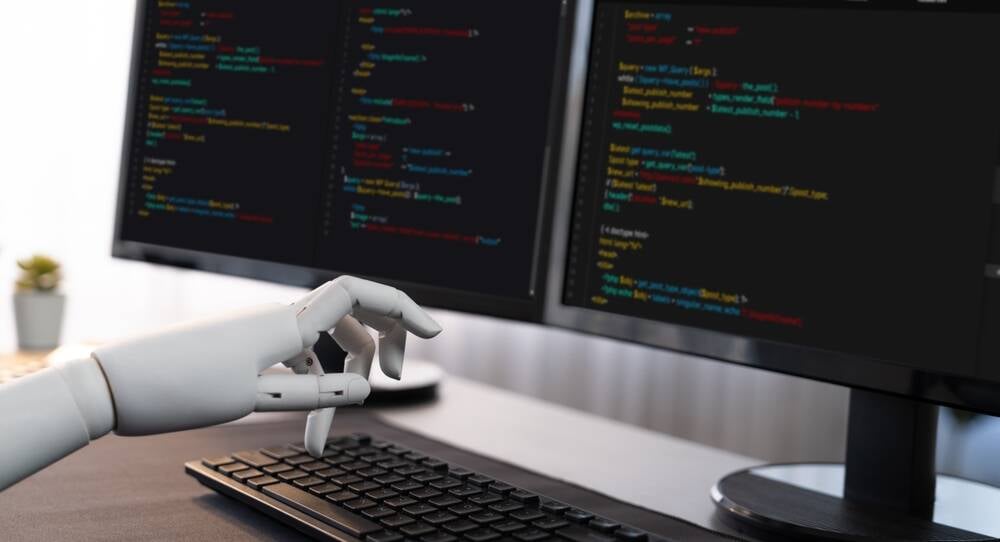
"Still, many people reacted to Torvalds' vibe coding as "wow!" It's certainly noteworthy, but has the case for vibe coding really changed? With vibe coding, the "programmer" describes their requirements in natural language to an AI model. The LLM then generates the code. Unlike AI pair‑programming tools that assume a human will read and refine every line, in vibe coding, you accept the AI's output largely as‑is and iterate by rerunning and adjusting prompts rather than editing the code."
"Natural language processing (NLP) goes all the way back to Alan Turing in 1950. You may have heard of him. More recently, in the late '70s and early '80s, which is when I came on the scene, fourth-generation languages (4GLs) appeared. 4GLs were high‑level, usually domain‑specific languages that let you specify what you wanted from a database, such as queries, reports, and displays, rather than how to do it procedurally, with a focus on business data tasks."
Linus Torvalds used Google's Antigravity LLM to generate code for AudioNoise, a toy program for random digital audio effects and a random guitar pedal board design. Vibe coding involves describing requirements in natural language and accepting AI-generated code largely as-is, iterating via prompts rather than line-by-line editing. The idea of telling a computer to write programs dates back to Turing and earlier NLP work. Fourth-generation languages in the late 1970s and early 1980s let users specify database outputs instead of procedures, but they were brittle. Describing programs in natural language remains difficult and hinders low-code/no-code adoption.
Read at Theregister
Unable to calculate read time
Collection
[
|
...
]