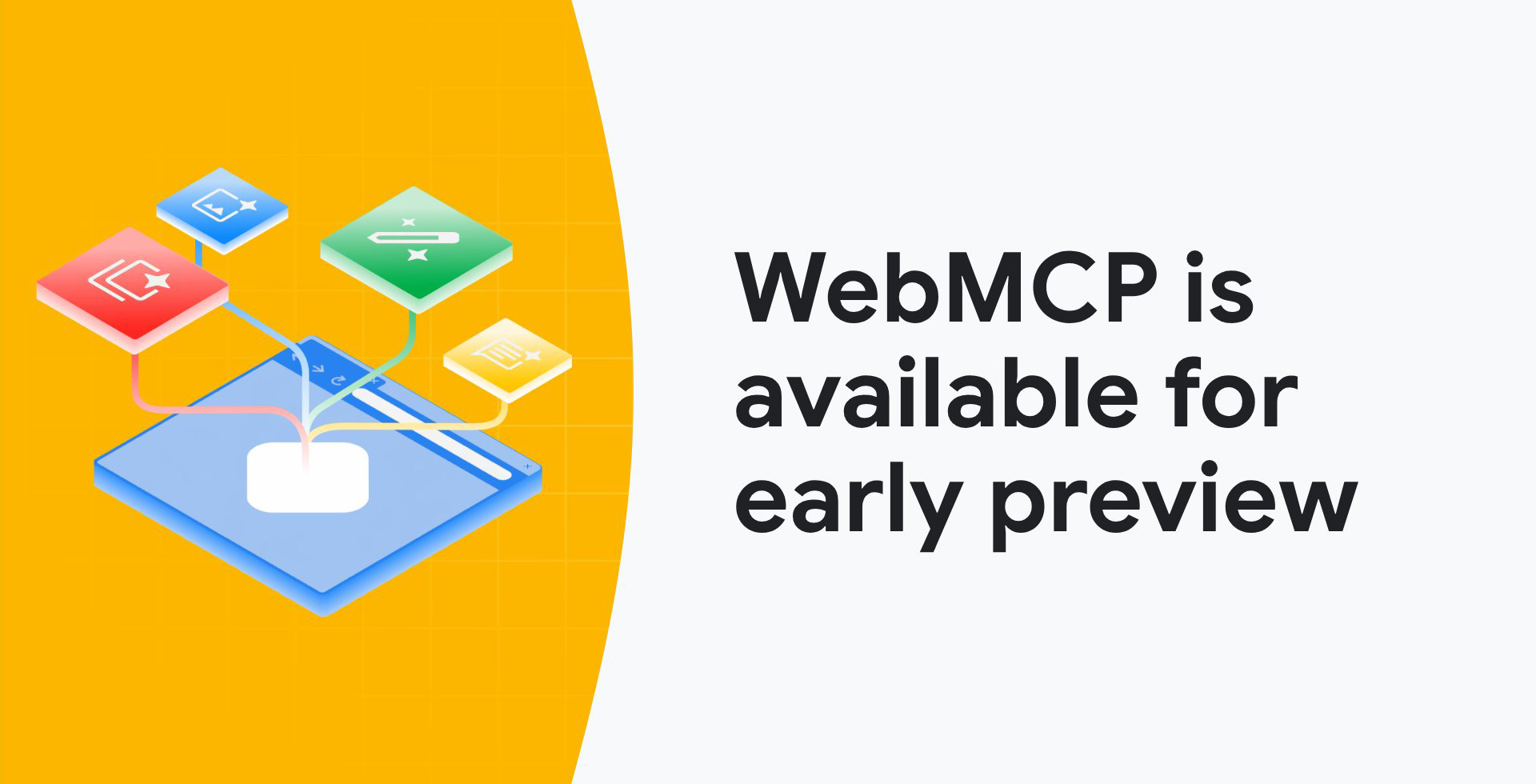
"Currently, if an AI agent (like a browser assistant) wants to "book a flight" or "add an item to a cart" on a website, it often has to guess which buttons to click by looking at the pixels or HTML (screen scraping). This is error-prone. WebMCP fixes this by allowing websites to explicitly publish a "Tool Contract." It uses a new browser API (navigator.modelContext). Instead of the AI guessing, the website provides a structured list of tools (e.g., function buyTicket(destination, date)). The AI can then "call" these functions directly."
"By defining these tools, you tell agents how and where to interact with your site, whether it's booking a flight, filing a support ticket, or navigating complex data. This direct communication channel eliminates ambiguity and allows for faster, more robust agent workflows. WebMCP proposes two new APIs that allow browser agents to take action on behalf of the user: Declarative API: Perform standard actions that can be defined directly in HTML forms. Imperative API: Perform complex, more dynamic interactions that require JavaScript execution."
WebMCP provides a standardized way for websites to expose structured, callable tools so AI agents can perform actions without fragile screen scraping. Sites publish a Tool Contract via a browser API (navigator.modelContext) that lists callable functions such as buyTicket(destination, date). Two APIs enable agent-driven actions: a Declarative API for standard HTML-form actions and an Imperative API for JavaScript-driven, dynamic interactions. Direct tool invocation reduces ambiguity, increases speed and reliability, and supports workflows like booking flights, adding cart items, and filing support tickets. Making sites agent-ready can change agent interactions and technical SEO practices.
Read at Search Engine Roundtable
Unable to calculate read time
Collection
[
|
...
]